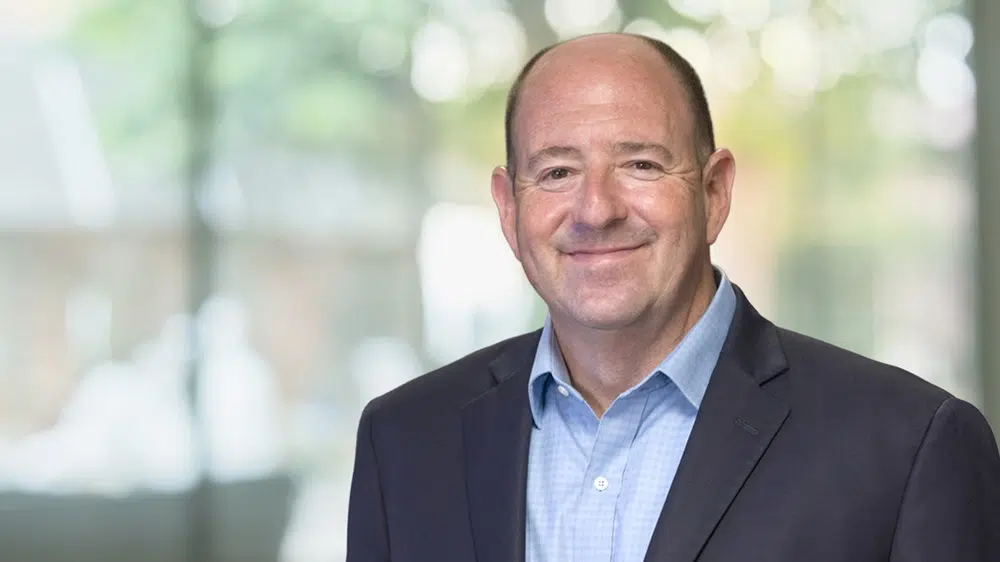



January 11, 2024: It is with sadness that Batteries International has to report the death of Lee Koenig, the driving force in creating the modern Crown Battery — he led the firm from 1955-1998 — on January 4 aged 94.
Hal Hawk, president of Crown Battery, said: “It is with heavy hearts that the Crown Battery family shares the passing of our patriarch, CEO-emeritus, and former owner, Lee Koenig.
“The son of our founder and our leader for nearly half a century, Lee was instrumental in transitioning Crown from a small local business into the globally recognized corporation it is today, and he deeply touched the lives of everyone in our Fremont and worldwide communities.
“Rest peacefully, dear friend — your legacy lives on in us all.”
Lee’s story starts with that of his father, William, a German emigrant and machinist who set up a radiator repair shop in Fremont, Ohio, in 1926. William, a gifted engineer, found that sometimes the battery also needed to be repaired and that year he changed the company name to Fremont Battery. Later this was to become Crown Battery — the family name Koenig means king in German.
The firm prospered for a while but 1929 — the year Lee was born — was the year of the Wall Street Crash and the start of the Great Depression. With car sales slumping and widespread economic collapse across large swathes of the US, the Koenig family struggled to stay afloat.
With the slow pick-up in the 1930s, his father looked to support his entire family. “My father and mother, started out with nothing but built the company that I later ran,” Lee recalled. “My mother and sisters all worked at Crown Battery. We all worked there. It was really a family operation.”
His three sisters helped with battery assembly and, aged eight, Lee started helping out at the firm. By his seventh grade he ran a pedal-operated press that trimmed the batteries. He cleaned up about 500 batteries daily.
By his ninth grade, Lee had graduated to the assembly department, excited to be making 25 cents an hour placing wood separators by hand between the positive and negative plates in the batteries.
During this time at school and later at university he earned a reputation as being an outstanding athlete and swimmer (though he later joked that he always stayed on at school to go swimming as his father used to make him work after supper).
He went on to a win a sports scholarship at Ohio’s Bowling Green State University. He eventually set two varsity records in swimming and was voted most popular man on campus by his fraternity, Phi Kappa Psi.
Physical fitness was a passion of his and in retirement he continued to be a devoted swimmer before stopping a few months before his death.
Andrea Saalman, administrative manager at Crown who worked for him when Lee was in his 50s and 60s, said he would rise every day at 4am, swim five miles and eat his raisin bran before going to work!
“It was part of his work ethic,” she says. “The best thing I learned from him was that hard work pays off.”
After university he enlisted in the US Navy, ending up as a lieutenant. During his R&R from the navy he would help his father after the Crown Battery business struggled. Lee’s situation was all the harder in that he married Marion McCullagh in 1951 and they lived in Akron — almost a two-hour drive to Fremont.
He eventually retired from active duty and moved to Fremont and started full time with Crown. This was a difficult period for the firm. “We almost went out of business in the early 1950s,” he later recalled. The family firm, which had employed more than 20 employees dropped to just his father, himself and a part-time salesperson.
But with typical gumption he bought a panel-up truck and started to generate more business through deliveries, marketing and sales. Business started to pick up and in 1954 he bought Crown from his father, though the two would continue to work together until his father’s retirement.
Over the next 40 years he grew Crown from a small regional manufacturer with just four employees to becoming a leading US firm with over 270 staff with sales across the US and 16 other countries.
“In 1954, we sold 2,000 batteries, by 1998 when I quit, we were making about a half million,” he later recalled.
In the next 20 years the Crown Battery plant at North Fifth Street in Fremont expanded seven times, and in the 1960s distribution centers were added across the US mid-West from Chicago to Buffalo. The successful auto and truck battery business was expanded to include marine batteries and industrial batteries.
Lee — like his battery giant counterparts Delight Brieidegam, who founded East Penn, and Roger Winslow at Voltmaster — realised the importance of the battery industry working together and he valued being able to share common problems and solutions.
In 1958 Crown Battery became affiliated with the Independent Battery Manufacturers Association. Lee would eventually become its president and later he also became president of Battery Council International.
Membership of a trade association, he would recall later, proved vital in dealing, in particular, with a host of new regulations and operation limitations introduced in 1976. These threatened the livelihood of Crown Battery — and indeed put many battery companies out of business. In response, Lee moved his manufacturing operations to its present home in Majestic Drive, Fremont.
In 1998, he sold Crown to a group of employees and Hal Hawk took over as head.
In a visit to the Majestic plant last summer, as CEO emeritus, he said he was proud of the “outstanding job” the new owners had done. The workforce at Crown Batteries has subsequently grown to about 500 and sales have increased five times over on the back of international expansion.
Lee had a powerful work ethic, Andrea Saalman recalls. “The word ‘strength’ comes to mind when I think of Lee. He knew what he wanted, and he got it done. While many thought he was strict he had a big heart for his employees.”
Michael Fraley, vice-president of manufacturing operations, who began his career as a young professional working for Lee, said what he learned from him was that “hard work and protecting the company reputation were paramount expectations.
“Lee cared deeply for our community and made impactful donations without the need for recognition. He cared about the well-being of our community and the role that Crown Battery and his family have played in that community.”
Robert Michael, director of plant engineering, and who knew and worked for Lee for a large portion of his life, said: “He was so successful in his life and career but never felt he was better than others. Lee was a great person who I always held in the highest esteem. I was truly blessed to have had the opportunity to work with and get to know him. Always so kind and encouraging. He made me want to do my best.
“Many people never appreciated the concern Lee had for his employees and their families. He bore the weight of knowing that his every action on how he ran Crown Battery could impact each and every one of them. He did not take that lightly.”
Lee himself said he attributed this to a two-way loyalty: “If I had one talent it was the success in the people that I hired. They were loyal; they were hard workers.”
After retirement, Lee enjoyed boating and fishing on Lake Erie and spending time at his cottage there on North Bass Island. He was a member of Grace Lutheran Church in Fremont.
His burial, a private ceremony, which will be held with military honors, is at Oakwood Cemetery, Fremont today (January 11).
He leaves behind his children, Susan, Brian and Amy, step-children Mike, Rande and Christy, his grandchildren, great grandchildren and one great-great granddaughter.
He is predeceased by his sisters Louisa, Leonarda and Ann and also by his daughter, Lois Koenig-DeRan.