
Russia’s first national testing centre for ESS battery systems and components is to be opened next year, state-owned energy giant Rosatom has announced.
Rosatom said on June 6 the centre, which is already under development, will be capable of conducting certification of lithium ion batteries according to international standards.
The move will end the need for Russian firms to send products for testing abroad ― something that has become increasingly difficult in the face of international sanctions over Russia’s war with Ukraine.
Rosatom said the establishment of a national centre of expertise would strengthen technological sovereignty in the battery and energy storage sector.
The centre is being built at ‘Technopolis Moscow’ ― a technology hub in one of the capital’s several administrative zones ― at a cost of more than RUB2 billion ($27 million).
The proposal for the project was given the green light in a government order issued last March, Rosatom said. The centre will allow domestic companies to have products tested at costs several times cheaper than at present and accelerate the introduction of new products to the market.
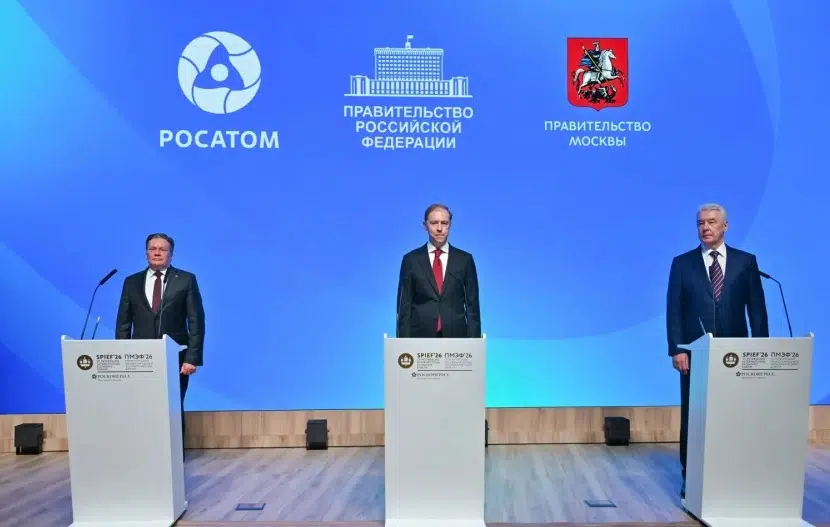
According to Rosatom, the agency signed a memorandum of understanding supporting the project with the Russian government during the four-day St Petersburg International Economic Forum ― dubbed the country’s alternative to the annual Davos World Economic Forum ― which ended on June 6.
A separate agreement was signed to set up a service centre for the maintenance and repair of lithium ion batteries for EVs.
Rosatom director general Alexey Likhachev said the centre was a critical step to support the full cycle of lithium ion battery production in Russia.
Likhachev said Russia is “localising” advanced technologies, but there was a “bottleneck in validating tech” in line with international standards.
“By combining the competencies of Rosatom, federal and national governments, we are building not just a laboratory, but a foundation of trust in the domestic energy storage industry both within the country and in foreign markets,” he said.
Rosatom’s energy storage business, part of the group’s fuel division, is focused on lithium ion tech for ESS for emergency and uninterruptible power supplies, plus hybrid systems paired with renewable power generation and EV batteries.
The agency claims several gigafactory projects are being developed for cells and batteries. One such facility started operations at Kaliningrad last year (4GWh) and another is expected to start up this year in the greater Moscow area.
Rosatom said the plants will contribute to an eventual total production capacity of about 8GWh annually, which the agency said would provide batteries for about 100,000 EVs every year.