
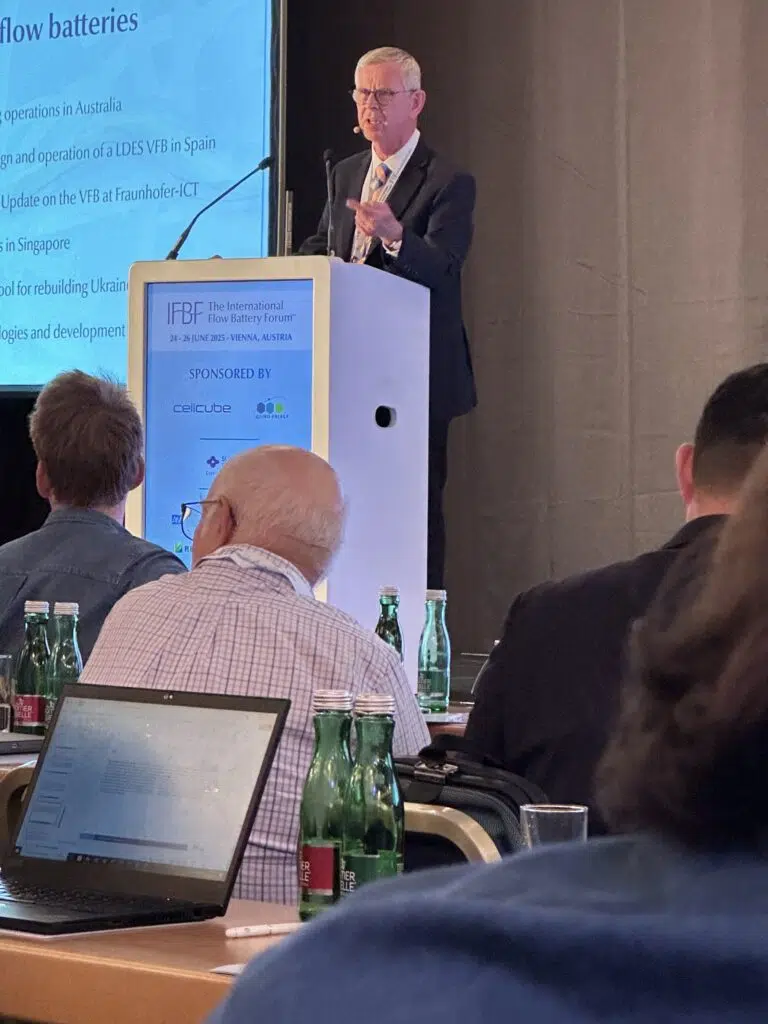
How Anthony Price turned a niche meeting of energy storage enthusiasts into an international forum shaping the future of long-duration energy storage.
When Anthony Price launched what would become the International Flow Battery Forum (IFBF) in 2010, he had modest expectations. The event was intended as a one-off gathering for a small group of specialists working in a technology that, at the time, sat firmly on the fringes of the energy industry.
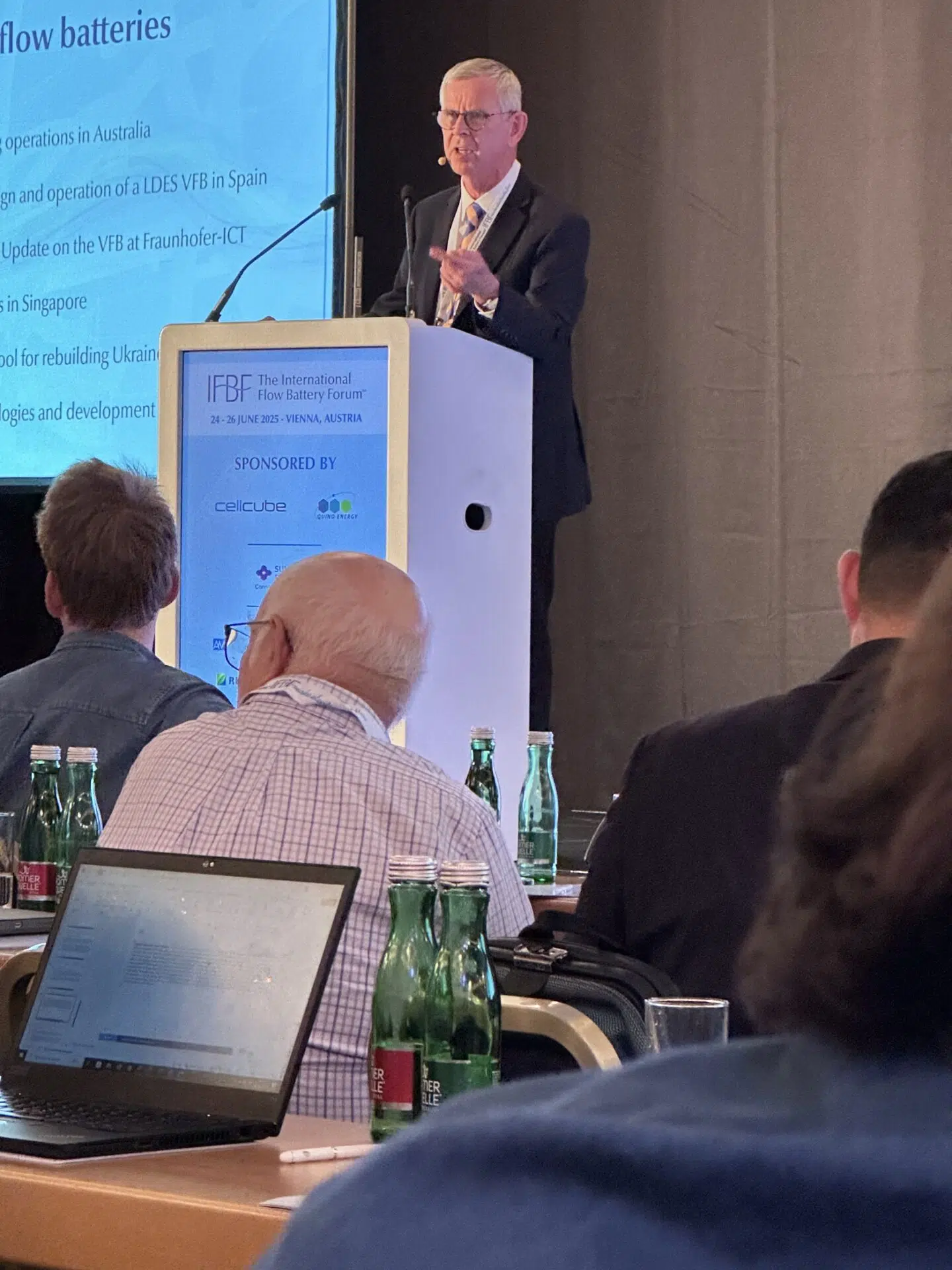
Today, the conference attracts hundreds of delegates from around the world and is widely regarded as the premier international meeting place for the flow battery sector.
Yet for Price, the conference’s success has never been measured simply by attendance figures. Instead, it has been driven by a simple philosophy: bring the right people together, create meaningful conversations and ensure every event reflects the rapidly changing world around it.
Price’s own journey into energy storage began long before the conference was conceived. In the early 1990s, while working for one of Britain’s newly privatised power companies, he was tasked with acquiring rights to a flow battery technology developed in the US and exploring its commercial potential in the UK.
Between 1991 and 2002, he worked to establish a flow battery business within the utility sector. However, when his employer was acquired, the new owners concluded that there was no future in energy storage and shelved the project altogether.
Rather than abandoning the technology, Price doubled down on his belief that energy storage would eventually play a critical role in the global energy system. He established himself as an energy storage consultant and became involved with industry organisations, including the American Energy Storage Association.
The idea for the IFBF emerged when colleagues in the flow battery sector approached him with a problem. Despite growing technical advances, flow batteries were receiving little attention on the conference circuit.
“They asked if I could run a conference on flow batteries because they simply weren’t getting any presence,” he recalls.
Surprise attendance
The first event was planned for around 30 attendees. Instead, more than 80 delegates arrived, including several who paid cash on the door.
What happened next surprised even the organisers.
Delegates enjoyed the event so much that they immediately asked for another one the following year. A one-off conference had inadvertently become an annual institution.
Over the following decade and a half, the forum expanded across Europe, moving between locations and developing its own distinct identity. Price believes that willingness to evolve is one of the reasons the conference has remained relevant.
Many industry events, he argues, risk becoming predictable by repeating the same formula year after year. The IFBF deliberately takes a different approach.
Each venue is selected not only for practical reasons but also because it offers a fresh perspective on the industry. Conferences have been hosted near manufacturing facilities, installation sites and technology developers, allowing delegates to see real-world projects in action.
“Every conference picks up its own identity,” Price explains. “The venue gives you an opportunity to focus on different things.”
That adaptability extends to the programme itself. A successful conference, he believes, must strike the right balance between technical expertise, commercial realities, politics, finance and business strategy.
One of the most common compliments the event receives, he says, is its ability to blend these different perspectives.
“We somehow manage to get the right mix of technical, commercial, business and political discussion.”
That balance is increasingly important as the energy storage industry matures. When the conference began, most people had never heard of energy storage, let alone flow batteries. Today, the sector sits at the centre of some of the world’s most pressing challenges, including renewable energy integration, energy security and the explosive growth of artificial intelligence.
The industry’s current focus, according to Price, is on scale.
Interest in very large flow battery installations is growing rapidly, driven by the need to support renewable energy projects and the emergence of vast data centres powering AI applications. Some facilities now require hundreds of megawatts of capacity, creating entirely new technical and commercial challenges.
As a result, conversations at the conference have evolved far beyond chemistry and engineering. Questions of manufacturing capability, financing, supply chains and geopolitics now dominate many discussions.
This year’s programme reflects those shifts, with sessions exploring how the industry can scale production, improve performance, attract investment and navigate increasingly complex regulatory and political landscapes.
Networking and beyond
For Price, however, the most valuable aspect of any conference is often what happens outside the formal agenda.
He is unapologetic about the importance of networking and has built a reputation for ensuring delegates have opportunities to connect in informal settings.
“If people don’t have a good time, they don’t network,” he says.
The results speak for themselves. Over the years, countless business relationships have been forged at the IFBF. Investors have met entrepreneurs, suppliers have found partners and students presenting research have secured careers in the industry.
In one case, Price reveals, a company that has since achieved unicorn status can trace its origins back to conversations held during a previous forum.
Those stories illustrate what he believes is the true purpose of a conference: not simply sharing information, but creating an environment where opportunities emerge.
Although Price transferred ownership of the IFBF in 2024, watching others take responsibility for an event he founded has not been difficult. He sees the conference as something that continues to grow and evolve.
“You are not handing over something static,” he says. “You are handing over something that is still developing.”
That outlook mirrors his view of the flow battery industry itself. Progress may have taken longer than many expected, but the sector is now entering a period of unprecedented opportunity.