

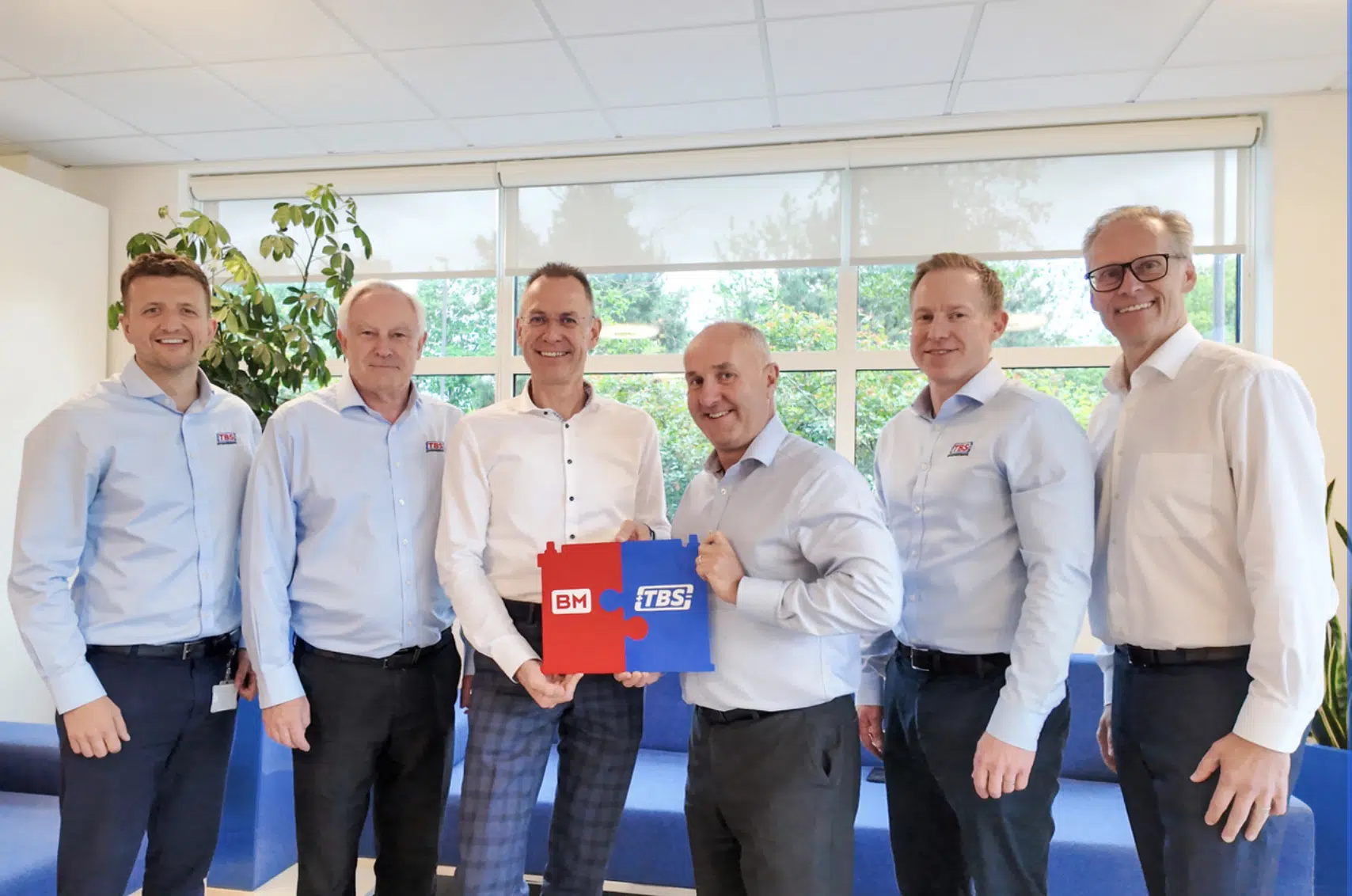
Rosendahl Nextrom, owner of BM-Rosendahl, announced on June 3 that it has acquired TBS Engineering for an undisclosed sum.
While the deal offers clear synergies between the two businesses, it also removes a long-standing competitor from the market. TBS Engineering and BM-Rosendahl have competed directly for years in the supply of plate enveloping equipment and COS machines.
The acquisition is the latest sign of ongoing consolidation within the lead battery industry, a trend that has accelerated in recent years.
What makes the deal particularly noteworthy is the identity of the seller. TBS Engineering had been owned for several years by Marmon Holdings, the Berkshire Hathaway-backed industrial group. Unlike private equity investors seeking short-term returns, Marmon is known for acquiring businesses and operating them for the long term, with sales of portfolio companies relatively uncommon.
With approximately 120 autonomous businesses under its umbrella and annual revenues of around $13 billion, Marmon has built its reputation on long-term ownership and operational improvement rather than frequent deal-making.
Indeed its commitment to focusing on long term operating performance and the fact that it rarely sells them on is fuelling speculation as to the reasons behind the sale.
Market rumours for the past three years have focused on the fact that TBS was itself on the acquisition trail using the vast funds behind it backed by Berkshire Hathaway. There is now speculation that TBS, which is smaller than BM Rosendahl, has been the victim of a reverse take-over.
The reasons for Marmon agreeing to the sale have not been given but could include a recent decision to focus on non-lead energy storage.
The official announcement by Rosendahl Nextrom talked about the two firms’ complementary expertise in battery manufacturing.
“For the battery industry, this creates the greatest opportunity in battery manufacturing: the opportunity to benefit from joint R&D, accelerated innovation and broader support and service,” said the statement.
“BM will focus on enveloping with autoloading and lithium-ion battery machines, TBS will drive their COS, Assembly and ActivMat technology forward.
“This acquisition brings together two leading technology partners with deep process know-how and a clear understanding of battery manufacturing. … both brands will remain focused on their respective areas of expertise in research and development.
“This move marks a major opportunity not only for our company, but for the entire industry. We are confident that our customers and employees alike will benefit from this acquisition,” said Gerhard Jakopic, CEO of Rosendahl Nextrom.
Whether this is the case is debatable. The broader market expectations are that the larger firms will be able to leverage their financial muscle and force out the smaller players — squeezing out their profits and then effectively buying them at a discount.
The announcement in 2024, although the initiative started in 2023, of the formation of ESEMA — the Energy Storage Equipment Manufacturing Alliance — was a first step by a group of five smaller lead battery industry firms to compete with larger integrated OEMs.
The firms were Kusten, which deals with electrolyte handling and chemical process systems, MAC Engineering making mechanical assembly and production machinery, Digatron, dealing with electrical systems, testing, formation, and software as well as Sorfin Yoshimura, a global systems integrator and supplier, and CMW Tec, a mechanical systems specialist for battery production lines.
Their aim has been to turn their complementary capabilities into full line solutions as well as expand beyond the confines of lead battery products.
Consolidation is not necessarily a bad thing. “I think it’s healthy for the market, and can be healthy for the consumer,” a respected industry source told Batteries International. “What it forces smaller folks to do is not necessarily go away, but refine what it is that they do well.”
Indeed, Richard Jonach, SBU director for BM-Rosendahl said he had high expectations for raising the game for battery manufacturers.
“The industry standard currently stands at 4.5 batteries per minute. Together, we have clear ambitions to exceed this benchmark significantly,” he said. “With TBS, we are bringing together highly complementary competencies in a targeted manner.”