


Today, there is a new manufacturing model rewriting the rules. Forget the gigafactory. The battery industry’s next manufacturing revolution may not involve building factories at all. Mike Halls reports

For much of the past decade, success in the battery industry seemed to depend on one thing above all else: building ever bigger factories.
The race to construct gigafactories became almost synonymous with growth. Governments offered generous incentives, investors rewarded ambitious expansion plans and manufacturers competed to announce increasingly larger production facilities.
Owning production capacity was seen as essential to establishing credibility in an increasingly competitive market.
And then the Northvolt collapse happened — the great battery hope for Europe had attracted some $15 billion in equity, debt and public funding. Cracks in the company, founded in 2016, started to show in 2024 before its final collapse in March 2025.
Now a new business model could emerge from the ashes of Northvolt.
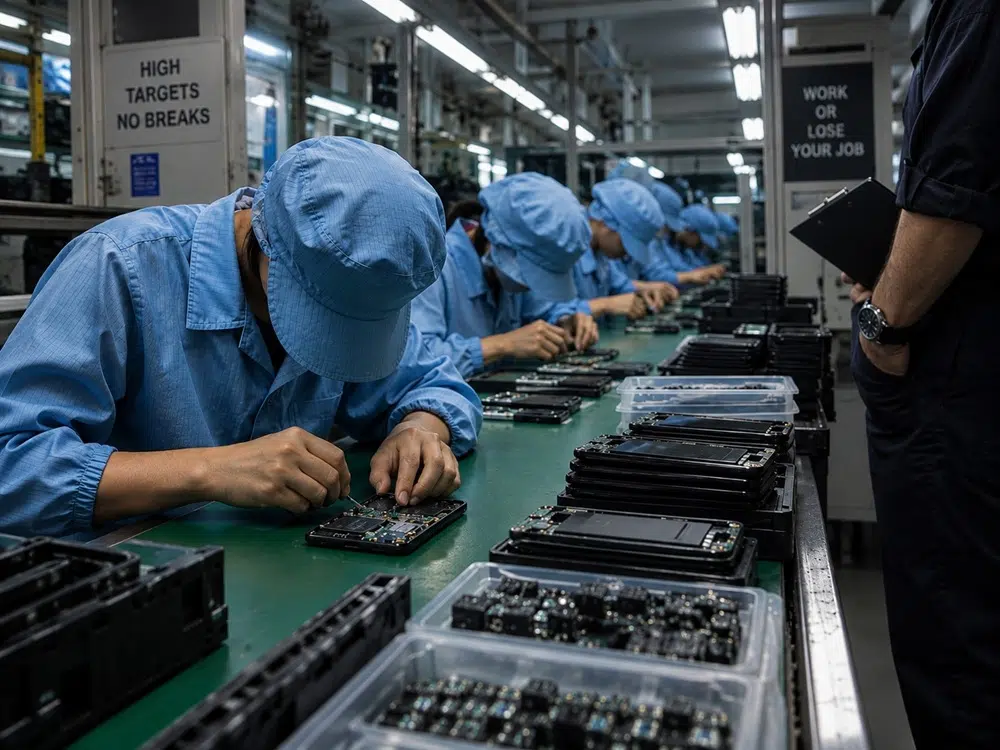
Instead of spending billions of dollars constructing new plants, a growing number of battery companies are choosing to manufacture their products in existing factories across Asia.
The approach — long familiar in industries such as consumer electronics — is emerging as a viable alternative for battery developers seeking to reach commercial production without exposing themselves to the financial risks of building their own facilities.
The change reflects a major shift in market conditions.
Chinese manufacturers invested heavily in production capacity during the rapid expansion of EV markets over the past five years. As EV sales growth has moderated and competition intensified, industry analysts say many Chinese battery factories are operating below capacity following several years of rapid expansion.
Rather than leaving expensive equipment idle, a growing number of manufacturers are offering contract manufacturing services to overseas developers, according to industry reports.
For battery developers in Europe and North America, the attraction is obvious.
Constructing a modern battery factory requires investment measured in billions of dollars, together with lengthy permitting processes, specialised equipment procurement and the recruitment of skilled workforces. Even under favourable conditions, bringing a new plant into full commercial operation can take several years.
Contract manufacturing offers a far quicker route to market.
By using facilities that are already operating, companies can begin commercial production much sooner while preserving scarce capital for product development, customer acquisition and future expansion.
The model also reduces one of the industry’s greatest financial risks.
Several battery start-ups have struggled under the enormous capital demands associated with constructing large manufacturing facilities before establishing profitable customer bases. The difficulties encountered by high-profile European manufacturers have highlighted the dangers of committing vast sums to production infrastructure ahead of proven commercial demand.
Using existing Asian production lines allows companies to scale output gradually while avoiding the burden of financing underutilised factories.
The approach does not mean relinquishing ownership of technology.
In most cases, developers need to retain control of cell chemistry, intellectual property and quality standards while manufacturing partners provide production expertise, equipment and trained personnel.
The relationship resembles the contract manufacturing arrangements that have become commonplace throughout the electronics industry.
Asia remains particularly well placed to support this model.
China dominates global battery manufacturing capacity and possesses a highly integrated supply chain encompassing cathode materials, anodes, separators, electrolytes and cell assembly equipment. The concentration of suppliers enables rapid sourcing of materials and components while reducing production costs.
Neighbouring countries including South Korea and, increasingly, parts of south-east Asia also offer sophisticated manufacturing ecosystems capable of supporting advanced battery production.
For many young companies, accessing these established industrial clusters may prove considerably less risky than attempting to recreate entire supply chains in higher-cost markets.
Companies that are already considering this possibility are not all at the same stage of development but they include Sweden’s Altris which recently confirmed it is in discussions with a Chinese manufacturer to lease an underused lithium-ion line and convert it for sodium-ion battery production.
US sodium-ion developer Unigrid has publicly described a foundry-style manufacturing model using external production partners.
Peak Energy has indicated that contract manufacturing could form part of its early commercialisation strategy before investing in large-scale domestic production. It is unclear whether it still thinks that way. Its long-term ambition remains US manufacturing, it represents the increasingly common “manufacture first, build later” philosophy.
According to recent industry reports, Ion Storage Systems has explored manufacturing partnerships in Southeast Asia.
The trend may also reshape investment priorities.
Rather than asking whether a battery company owns a factory, investors are increasingly focusing on the uniqueness of its chemistry, intellectual property, customer relationships and ability to secure manufacturing partnerships.
Production capacity itself is becoming less of a competitive differentiator where reliable contract manufacturing is readily available.
That does not mean gigafactories are becoming obsolete. Large-scale dedicated facilities will remain essential for companies serving major automotive customers requiring long-term, high-volume supply agreements. Government policies promoting domestic manufacturing in Europe and North America are also likely to sustain investment in local production.
Geopolitical tensions, tariffs and concerns over supply-chain security may encourage some manufacturers to relocate production closer to end markets over time.
Industry observers believe several established Asian cell manufacturers could become important contract manufacturing partners as they seek to improve factory utilisation.
Companies frequently mentioned include CALB, EVE Energy, Farasis Energy, Gotion High-Tech, REPT Battero and Sunwoda, although none has publicly announced a broad contract-manufacturing strategy aimed at overseas battery developers.