Written by: Mathias Ingvarsson, Founder and CEO, Holyvolt Group and Executive Chairman, Wildcat Discovery Technologies

Advertisement
Unlock premium reporting and in-depth coverage
Subscribe
Advertisement
Written by: Mathias Ingvarsson, Founder and CEO, Holyvolt Group and Executive Chairman, Wildcat Discovery Technologies
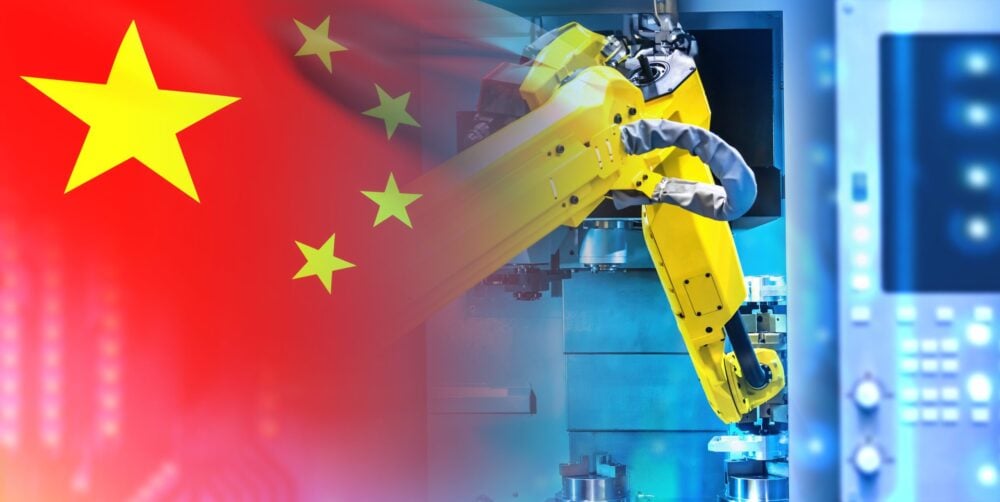
China did not invent the Li-ion battery, nor was it first to commercialise the technology, but it was quick to understand that dominating supply was of strategic importance and took less than 20 years to get there. For the West to compete the focus must be on discovering breakthrough chemistries and accelerating the progression from lab to volume production.
Like any commodity market, the global lithium-ion battery sector is defined by massive numbers and a scale that is truly astonishing: in 2025 the market was worth more than $150 billion and the total output was 1,600GWh of capacity. But sourcing is decidedly one-sided. More than 80% of batteries that year were manufactured in China. Of those made elsewhere, the majority relied on materials supplied by China.
This dependency has long been recognised but most attempts to compete have so far ended in failure. So how can the rest of the world catch-up? Not through scale alone, and certainly not by trying to replicate what China has already achieved.
As an industry we must focus on innovation because where we can lead is by developing next-generation chemistries, not ramping-up production of the last ones. Bloomberg reports that European and North American battery packs cost 56% and 44% more respectively than those from China, and expects the next wave of cost reduction to come from new cathode materials and cell designs.
Accelerated development
Wildcat’s High Throughput Platform (HTP) is a key enabler for this. (Wildcat Discovery Technologies was acquired by Holyvolt earlier this year.) Based on techniques first developed in the pharmaceutical industry to accelerate synthesis, testing, and commercialisation of new drugs, Wildcat was first to apply them to battery chemistry discovery more than 18 years ago and has optimised the method ever since. Where existing R&D processes can evaluate several potential new chemistries in a year, Wildcat’s can screen several thousands in a week.
The value of this unrivalled speed is compounded by the data it creates because the results of every single experiment performed to date have been recorded. These two assets when integrated with AI will deliver a data-led step-change in capability by creating an intelligent discovery engine that can find the next breakthrough first, accurately predict they key performance attributes, then validate them.
The value of this is far greater than just enabling better batteries. With materials accounting for more than 82% of cell production costs, focusing development efforts here will have a strong influence on competitiveness with China — and moving away from critical minerals such as cobalt and nickel.
Built-in advantages
In parallel, Holyvolt’s screen-printing process and high solid content, water-based technology for electrode manufacturing offers a cost-effective, sustainable, and scalable route to production that does not suffer the same investment risks as conventional gigafactories. Designed for lower CAPEX spend than the dominant slot-die process, screen printing at gigawatt scale cuts electrode coating costs by at least half for a given line speed and production capacity.
Further CAPEX savings come from smaller drying ovens — those used for NMP solvent-based slurries are as long as a football pitch — and smaller dry rooms. This in turn enables factory footprint to be smaller, and with every square metre costing several thousand dollarsb, any reduction in size is worthwhile.
Downsizing plants and equipment also reduces OPEX. Drying ovens for existing wet coating processes draw megawatts of power and need complex solvent recovery systems to capture and purify toxic and highly flammable NMP vapours. This stage of manufacturing and the dry room are the most energy-intensive of all, accounting for more than 75% of the total. Screen printing eliminates NMP altogether, making it an inherently cleaner technology, and we believe we can reduce that energy consumption by half.
This combination of next-generation cell chemistries, cutting-edge manufacturing techniques, and streamlined plants provides Western cell companies a viable, cost-efficient, scalable route into high volume production without the inherent risk of the current gigafactory model.
These qualities are also becoming increasingly attractive due to burgeoning regulatory requirements for sustainability, and growing demand from governments and industry for sovereign capability.
The ability to compress timescales from discovery to pilot production and robust, efficient, cost-effective scale-up is fundamental to removing the bottleneck that acts as a brake on the pace of innovation in Europe and the US. The technical solutions exist, and collaborative development will enable successful industrialisation.
To win we must stop looking back at what China has achieved and redouble our efforts to find the chemistries we need for the future. Otherwise, we will still be playing catch-up rather than taking the lead in a race we cannot afford to lose.
Image credit: Shutterstock
Advertisement

Advertisement