Written by: Shona Sibary

Advertisement
Unlock premium reporting and in-depth coverage
Subscribe
Advertisement
Written by: Shona Sibary
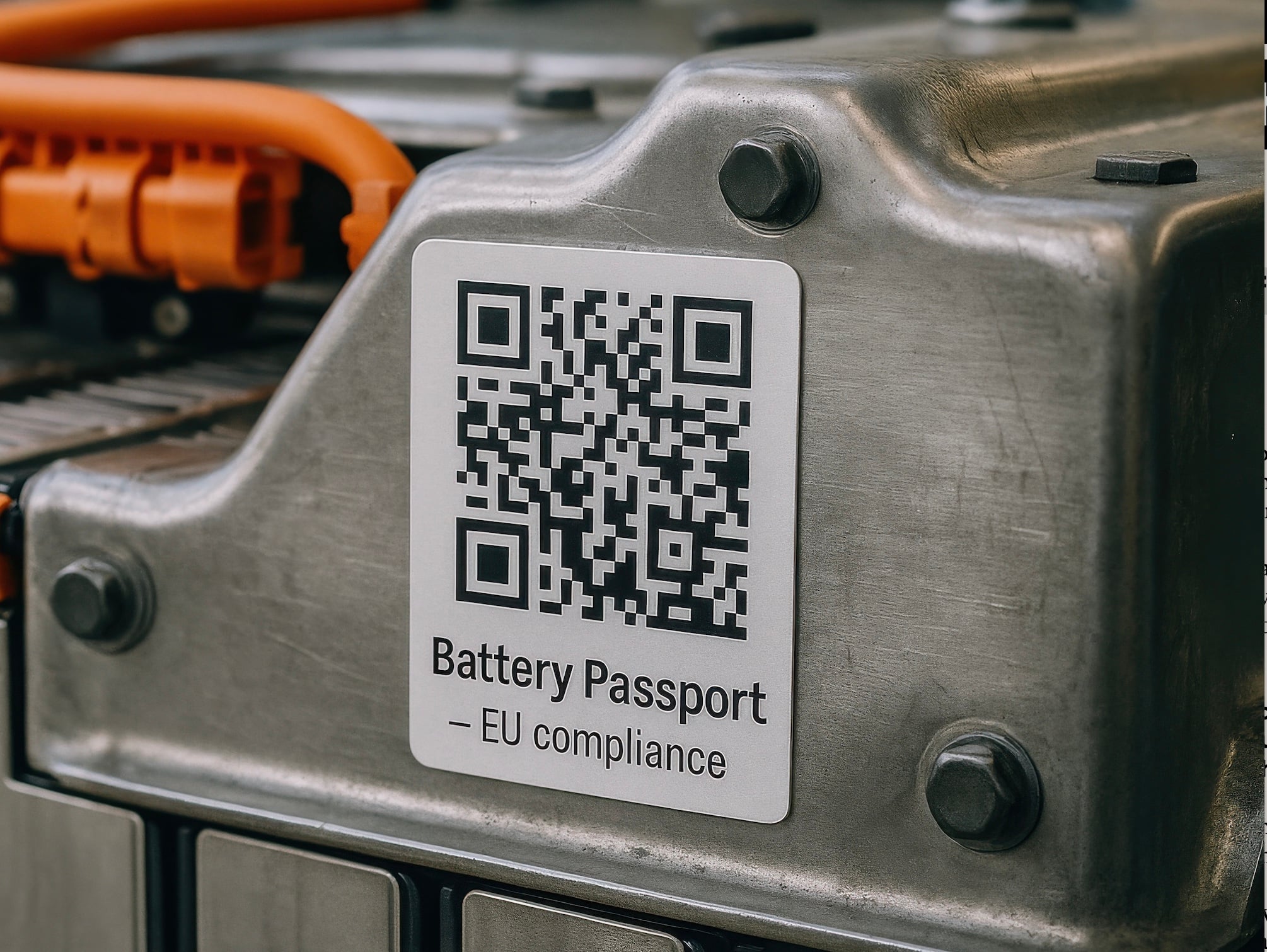
The battery industry has spent months debating compliance deadlines, QR codes and data requirements. But according to Ken Davies, CCO at DigiProd Pass, those conversations are missing the bigger picture. Battery passports are not simply another piece of EU regulation. They are the first visible step in a digital revolution that will eventually reshape every manufactured product on the planet.
If you think battery passports are simply another layer of European bureaucracy, Ken Davies believes you’re looking through the wrong end of the telescope.
Yes, companies selling batteries above 2kWh into the EU will soon have to comply with incoming battery regulation. Yes, every qualifying battery will require a digital passport. And yes, manufacturers across the industry are racing to understand exactly what information those passports will need to contain.
But Davies argues that focusing solely on batteries misses the significance of what is happening.
“You’ve got to see the battery passport as just one element of a much bigger revolution,” he explains. “Consumer electronics, furniture, textiles, construction materials and countless other industries are all heading in the same direction. Batteries simply happen to be first. The plan within the EU is that all of these sectors will eventually have operational digital product passports.”

A revolution driven by data
Much of the conversation surrounding battery passports has centred on regulation. Davies believes the real story is consumer empowerment.
At its heart, the digital product passport (DPP) is designed to provide transparent information throughout a product’s lifetime, enabling consumers to make better-informed purchasing decisions while giving recyclers and second-life operators the information they need to recover valuable materials efficiently.
For years, sustainability has often been discussed in principle rather than practice. According to Davies, legislators are now beginning to create the legal framework that makes genuinely circular supply chains possible.
“It’s really a mechanism to empower consumers with data so they can make better informed decisions about what they buy,” he explains. “It also provides organisations involved in recycling and second life with all the data they need to make those activities commercially viable.”
The regulation may be arriving through Brussels, but Davies sees it as part of a worldwide movement rather than a uniquely European initiative.
China is already developing similar systems, while other markets are expected to introduce their own versions. Although individual regulations may differ, Davies believes the underlying structure will remain remarkably similar.
“If you want to sell something in the EU, you’ll comply with the EU system. If you want to sell in another market, you’ll comply with theirs. Ninety-five per cent of what companies need to do will be exactly the same.”
The critical date remains 18 February 2027, when battery passports become mandatory for batteries over 2kWh placed on the EU market. Yet Davies cautions against assuming that reaching the deadline marks the end of the journey.

One of the biggest misconceptions, he argues, is that companies only need to achieve compliance once.
“It might be that the passport starts off relatively basic,” he says. “Perhaps it’s simply a QR code with core information. But it won’t stay basic.”
Instead, battery passports will evolve continuously as regulators demand increasingly detailed information.
“People mustn’t think they’ll reach 18 February, breathe a sigh of relief and forget about it,” he says. “The expectations of the quality of the data will keep expanding.”
That evolving nature explains why many companies remain uncertain. The deadline itself is fixed, but some details surrounding the precise content of the passport continue to develop.
Who, for instance, will actually be responsible? Many assume it will be the battery manufacturer, but Davies is keen to clarify that this won’t, necessarily, be the case.
“Responsibility will fall upon what the regulation defines as the economic operator, which is the company placing the finished product on the market,” he explains. “If you’re Audi, you’re the economic operator.”
That means vehicle, truck and drone manufacturers, and countless other OEMs become responsible for ensuring compliant battery passports accompany the products they sell. And this is a distinction that matters.
But the regulation is not designed to hold OEMs responsible for every action that occurs throughout global mining supply chains. Rather, it requires transparency.
“It doesn’t make Audi responsible for child labour in the Congo,” Davies explains. “It makes them responsible for making sure everybody can see where everything came from.”
The emphasis shifts from assigning blame to providing visibility.
The real challenge isn’t the QR code
When battery passports first emerged, much of the discussion focused on the visible element: the QR code attached to each battery. Davies believes that focus is misplaced.
“The QR code isn’t the challenge,” he says. “We could design that in five minutes. Instead, the real work happens behind the scenes. Information has to be collected from multiple business systems that often cannot communicate with one another. Manufacturing records, material data, sourcing information, carbon footprints, repair histories and operational updates all need to be integrated into a single digital record. The real challenge is coordinating the data from different systems and making sure they all work together.”
That becomes even more complicated because the passport is not static. Unlike a paper certificate, the battery passport is expected to evolve throughout the battery’s operational life.
“If a vehicle is involved in an accident and the battery is affected, the passport has to know that.”
Rather than creating a single document, companies are effectively building a living digital record that follows each battery from manufacture through use, second life and ultimately recycling.
Batteries may actually have it easier
Ironically, despite being first to adopt DPPs, Davies believes the battery industry may ultimately prove one of the easier sectors to implement them as modern battery manufacturing already generates vast quantities of production data.
“Gigafactories routinely capture detailed manufacturing information throughout production, making much of the required data readily available. The battery industry is actually very sophisticated in its data management already,” Davies says. “Compare that with textiles.
Supply chains often stretch across multiple countries, involving thousands of smaller suppliers with inconsistent digital systems and limited traceability. If you’re making a T-shirt in Bangladesh, that’s a completely different challenge.”
The principles remain identical, but the quality and accessibility of the underlying data are vastly different.

SMEs face the biggest hurdle
But while large automotive manufacturers already possess sophisticated enterprise resource planning (ERP) and manufacturing systems capable of supporting DPPs, smaller companies face a steeper climb.
Many could be forgiven for thinking a simple, low-cost solution exists, but Davies warns against knee-jerking to this assumption.
He compares DPP systems with enterprise software. Small companies rarely build their own ERP or CRM platforms from scratch. Instead, they rely on specialist providers.
“DPPs will most likely follow the same model,” Davies says. “There isn’t really going to be an easy route.”
So as the compliance deadline approaches, many SMEs are going to discover that implementation is neither quick nor inexpensive, yet remains unavoidable if they wish to continue selling qualifying products within Europe.
And despite almost all the uncertainties ahead, one striking theme remains. Battery passports will pave the way for an entirely new professional ecosystem, one in which data specialists, systems integrators, compliance experts, software providers and consultants are all likely to play increasingly important roles.
“It’s all about the data,” Davies says. “AI will undoubtedly become part of the picture, but effective data management will remain the foundation upon which future compliance is built.”
For today’s engineering graduates, entirely new careers may emerge around DPP infrastructure and lifecycle data management and the growing demand for knowledge was something that became evident during the inaugural Battery Passport Conference in Lille earlier this year.
Davies says delegates were eager not only to hear presentations but also to compare experiences with one another.
“It was difficult getting people back into the conference room after coffee,” he jokes.
“Everybody just wanted to keep comparing notes and talking.”
For Davies, that was perhaps the clearest indication that the industry recognises both the scale of the challenge and the value of collaboration. Rather than competing over compliance, companies were openly discussing best practice, concerns and practical solutions.
“It was an amazing networking experience,” he says. “Delegates really appreciated the opportunity to talk about this subject in isolation and in depth.”
Beyond batteries
Davies admits he only fully appreciated the scale of the DPP movement around 18 months ago while interviewing experts for his Battery Technology Podcast.
Today, he spends his time working across batteries, textiles, construction and other manufacturing sectors – a cross-industry perspective that reinforces the central message that this isn’t just about batteries. It’s everything.
For battery manufacturers, this may be the most important takeaway of all. The passport is not simply another compliance box to tick before February 2027. It is the first glimpse of a future in which every significant manufactured product carries a living digital identity, one that documents where it came from, what it contains, how it has been used and ultimately how it should be reused or recycled.
For companies still debating whether battery passports are really happening, Davies has one simple analogy.
“The train has already left the station,” he says. “The sooner you get on it, the better.”
Advertisement

Advertisement