
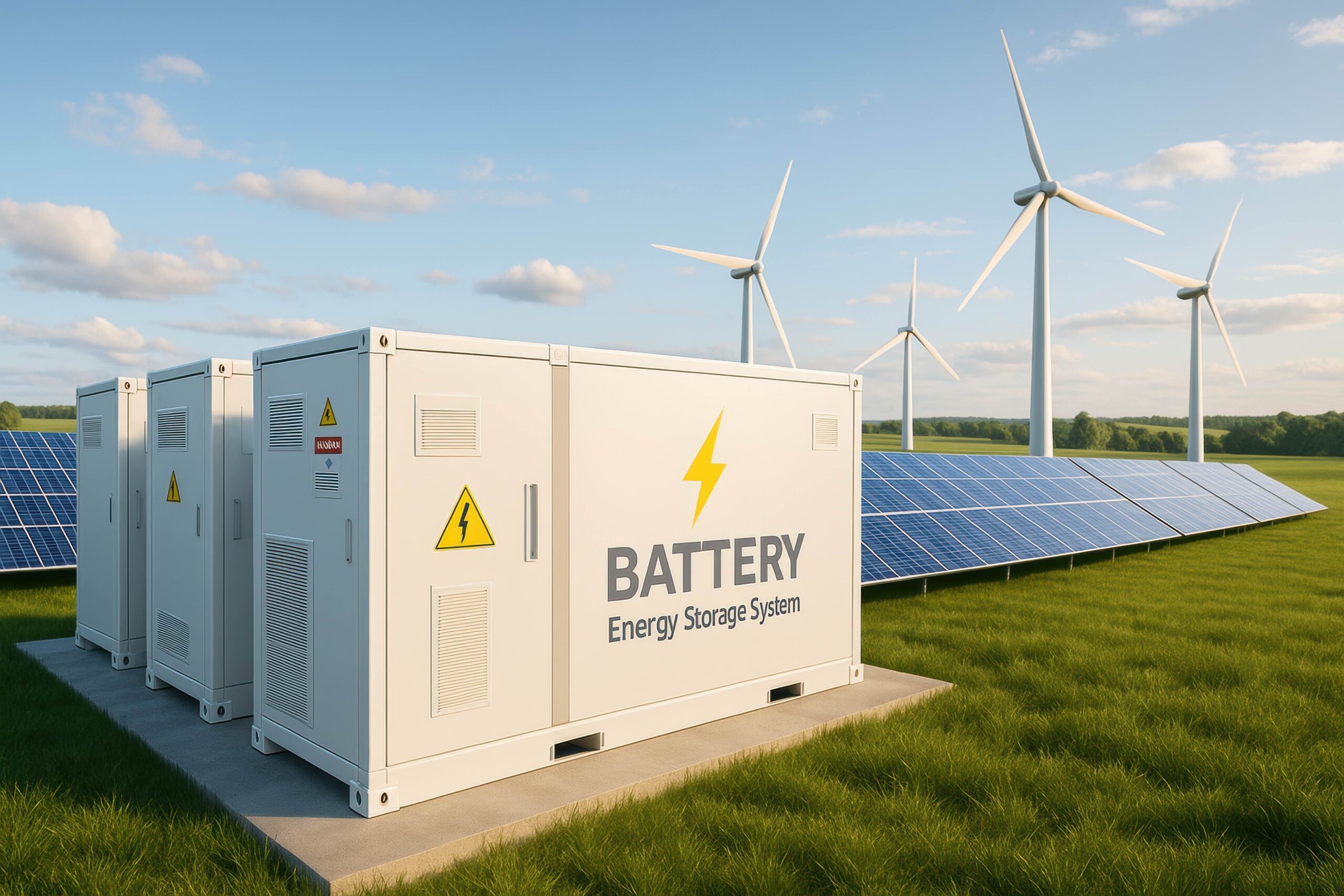
Europe’s battery energy storage market is set for rapid expansion over the remainder of the decade, with Germany reporting a sharp increase in large-scale installations as new figures point to accelerating deployment across the continent.
Data published by the German Solar Industry Association (BSW-Solar) shows around 225,000 battery storage systems with a combined capacity of 3.4GWh were installed in Germany between January and May 2026 — a 70% increase on the same period in 2025.
The growth was driven by utility-scale projects, which accounted for 1.47GWh of new capacity, more than four times the level recorded a year earlier and overtaking residential battery installations.
The findings coincide with the publication of SolarPower Europe’s European Battery Market Outlook 2026–2030 on June 23, which forecasts annual battery storage installations across Europe will accelerate sharply by 2030, with utility-scale systems expected to become the dominant market segment as countries expand renewable energy generation and seek greater grid flexibility.
According to the report, the EU’s total battery storage capacity is projected to increase from 77GWh at the end of 2025 to around 470GWh by 2030. While this would represent significant growth, it remains below the estimated 600GWh needed to meet the bloc’s energy security, competitiveness and climate objectives.
Across Europe, including the EU, UK, Switzerland, Ukraine and Turkey, 36GWh of new battery storage capacity was installed in 2025, a 48% increase on 2024. Utility-scale projects are expected to account for around 75% of annual installations by 2030, compared with 53% in 2025.
BSW-Solar said battery storage is becoming increasingly important for integrating renewable energy into Germany’s electricity network by storing surplus solar and wind generation, easing grid congestion and reducing the need for costly interventions in the power system.
The association also highlighted growing demand for storage as delays to grid expansion make it more difficult for new solar parks to operate profitably without co-located batteries. Around two-thirds of solar parks planned in Germany over the next two years are expected to include battery storage.
BSW-Solar chief executive Carsten Körnig welcomed what he described as a battery storage boom but warned that continued growth will depend on faster grid connection procedures and greater regulatory certainty.
A study by consultancy Enervis suggests Germany could add as little as 15GWh of large-scale battery storage capacity by 2029 under less favourable conditions, despite projects totalling around 58GWh currently being planned. According to Körnig, lengthy grid connection processes and regulatory uncertainty could delay or prevent many of those projects from being built.