

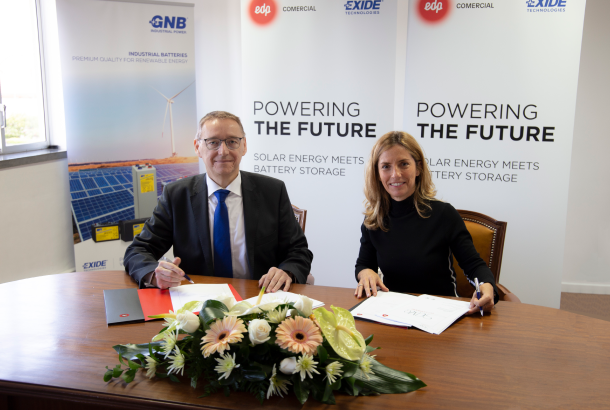
April 25, 2019: Exide Technologies will use its VRLA lead acid batteries alongside solar panels to power its production plant in Portugal, the US battery maker announced on April 10.
The system will cover part of the power demand at the facility in Castanheira do Ribatejo when completed in the first quarter of next year.
Exide will use a 50kWh VRLA battery storage system consisting of 280 cells using Sonnenschein A602 from Exide’s subsidiary GNB Industrial Power.
The system will be coupled with some 10,000 photovoltaic panels, and around 70 inverters.
Exide will power the workers’ dressing room with a Sonnenschein A600 Solar gel battery with 0.5MWh capacity. The room will work as an isolated island powered by PV during the day and battery at night.
The project will be managed and delivered by energy provider EDP, working with Exide which will deliver the energy storage component.
EDP said the batteries would be charged by the solar panels, with surplus energy stored for use at night-time and during periods of reduced sunlight. Surplus power will be fed on to the grid when the plant’s energy consumption was lower.
An Exide spokesperson told BESB: “There have been a lot of projects where Exide has combined VRLA technology with solar for small and medium sized installations, for example, powering mobile networks for operators in parts of Africa.
“Furthermore, we have more projects related to integration of renewable energy into the main grid such as the M5Bat Project, founded by the German Federal Ministry for Economic Affairs.”
The project forms part of a range of investments by Exide at its Castanheira plant, including the start of a AGM Network Power production line.
Stefan Stübing, Exide’s president EMEA, said he believed more and more companies would rely on self-generated power backed by a BESS in years to come, especially in energy-demanding sectors such as manufacturing.
The systems will cover part of the power demand at Exide’s production facility in Castanheira do Ribatejo and its battery recycling plant in Azambuja when completed in the first quarter of next year.
The project will be managed and delivered by energy provider ADP. The project formed part of a range of investments by Exide’s Castanheira plant, including the start of an AGM Network Power production line.
Stübing said he believed more and more companies would rely on self-generated power backed by a BESS in years to come, especially in energy-demanding sectors such as manufacturing.