

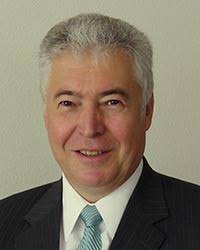
September 27, 2018: Boris Monahov, the ALABC’s technical program manager, is retiring from the organization after nine years, the ALABC announced today (September 27).
Monahov told BESB that it should not come as a big surprise. “Everybody comes to a time in their lives when they need to think about retirement,” he said. “I’ve worked long hours, full-time, with few breaks and huge amounts of travelling for many, many years. It’s time for a little rest and to enjoy other parts of life.
“That said, I will continue helping the industry, the ALABC, but in a more relaxed way. I will combine my work with some pleasure for sure, but it’s too early to announce any definite plans.”
Monahov will formally step down at the end of the year. He turns 65 next March.
Andy Bush, managing director of the ALABC, said a permanent scientific advisory panel would be established and that Monahov would sit on that.
“We’re not replacing Boris’s role but creating a new and different position focusing on projects/planning, marketing and other support for the consortium,” he said.
“Although the plan will see Boris continuing to provide substantial support to ALABC’s future work, I would nonetheless like to take the opportunity to thank him on behalf of the ALABC membership, and the wider lead and lead battery industries.
“He has made a tremendous contribution to advancing the development of lead battery science during his time with ALABC, and indeed his lifetime’s work with the industry over the past 38 years.”
Monahov said he was leaving the industry stronger than ever, while admitting it faced challenges. “The performance of lead acid batteries is clearly better than ever, but there are serious challenges,” he said.
“First, they come from the market, which requires more and more from every battery, including lead. Batteries need to improve — that’s a clear requirement and that applies to all types — nickel metal hydride, zinc, lithium-ion and flow batteries too. The perfect battery doesn’t exist yet.
“The second challenge is that these improvements should not increase the price — they should be incorporated and the price go down.
“The third challenge is the increasing role of other battery chemistries in markets that have traditionally been the preserve of lead. These chemistries are getting an ever-larger share of the market, even though the overall market continues to grow.”
Monahov said lead would become a greater factor in the energy storage sector while shrinking somewhat in the automotive one, where micro-hybrids would become a larger feature.
Monahov has come a long way from his roots in Varna, Bulgaria and the coast of the Black Sea.
He was born to two of the country’s leading scientists: his father, Ivan, was a research geologist and one of the founders of Bulgaria’s oil and gas industry; his mother, Liljana, was an associate professor in geochemistry at the Institute of Minerals and a widely published academic.
Between 1975 and 1980, Monahov read solid state physics at the St Kliment Ohridski University in Sofia, and went on to get a masters. Towards the end of this time he had an internship at the Institute of Metal Science of the Bulgarian Academy of Sciences. It was there he met Detchko Pavlov — arguably the most important lead battery scientist of the last century — and who was to become Monahov’s mentor, boss and friend till Pavlov’s death in 2017.
Monahov worked in lead battery research for Pavlov until 2004, also spending time conducting research in Turin and Moscow.
Monahov married in 1981. The family might have stayed on in Bulgaria but after their son Alex was diagnosed with diabetes, they sought to move to the US for the better health care. A stroke of luck intervened when his wife Natasha won the annual US lottery for a green card to live in the country.
The family emigrated to the US in 2004, settling in Peoria, Illinois. That November Monahov took up a post as senior electrochemist of the start-up Firefly Energy then a cutting edge firm at the forefront of lead battery technology.
Unfortunately the start-up ultimately failed, at which point he was chosen by ALABC to become its technical director. In 2014 he was awarded the prestigious Gaston Planté medal — perhaps the ultimate accolade in the lead acid battery industry — for his achievements and contribution to its scientific advancement.
Since he started with the ALABC in 2009 his team has had several remarkable successes in advancing the technology behind lead batteries.
“I look back at my time with the ALABC with great affection,” he told BESB. “Everybody quickly forgave me my bad English and they’ve been a delight to work with. Together we’ve done some great things and I count myself blessed to have worked with some of the most prominent battery scientists, researchers, managers and CEOs in the world.”