


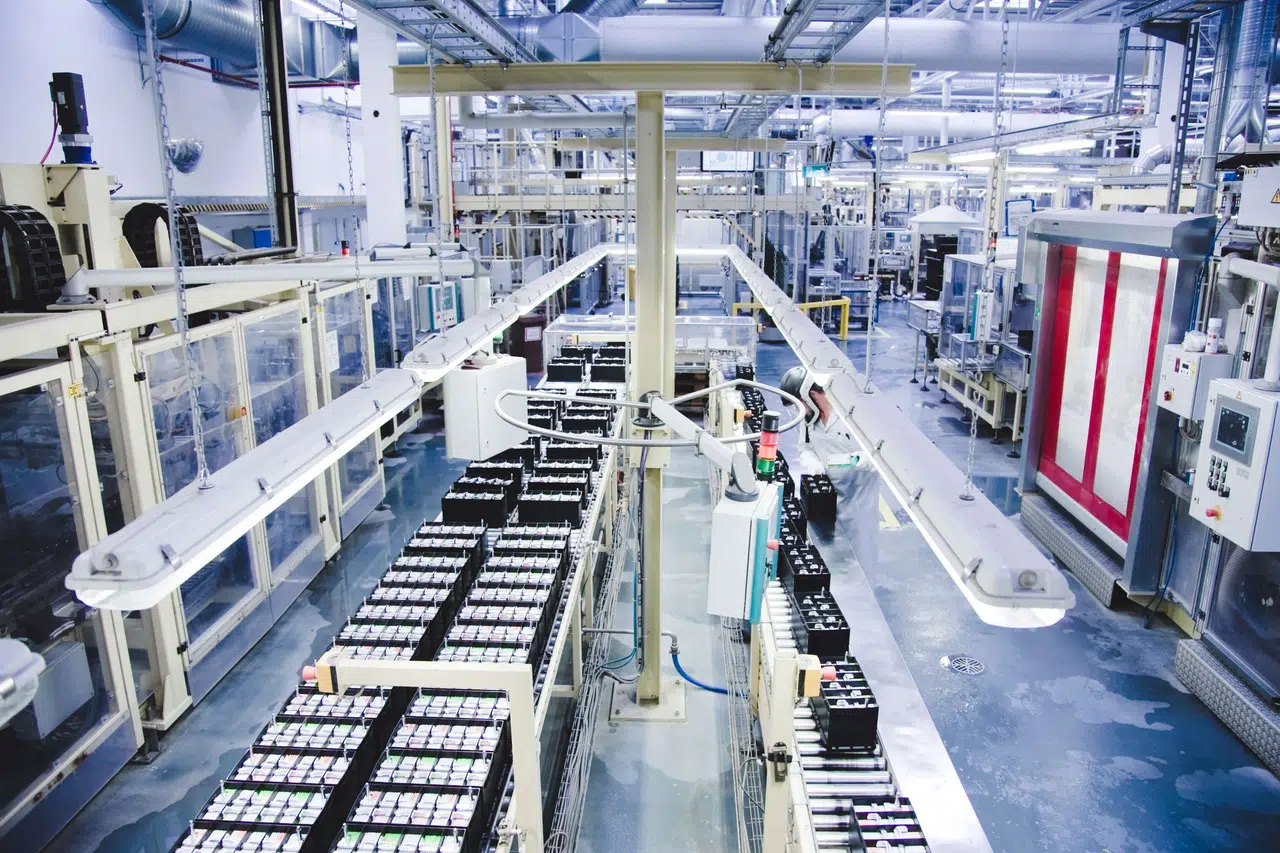
April 30, 2026: Total US battery production increased by nearly 140% over the past five years ― but the country needs to shake-off its reliance on imported components and materials, says a new study by the Center for Strategic & International Studies.
China is the main source of non-lead-acid energy storage battery imports, supplying nearly 70% of finished products and around 30% of parts in 2024, according to the CSIS study ― ‘A New Phase for the US Battery Industry’ ― released on April 27.
By absolute value, Chinese imports to the US have increased more than 10-fold from pre-pandemic levels, the study said.
However, China’s competitive position is not wholly immovable. Factors such as a market correction in domestic overcapacity and the introduction of alternative supplies could erode China’s market pre-eminence.
For example, if all US global projects announced before 2025 come fully online by 2030 China’s share of total cell manufacturing capacity could be reduced by more than 15%.
In a further encouraging move for the US, BESS deployment has increased 25-fold between 2019 and 2025, making the US second only to China in total installed storage capacity.
But limited domestic reserves and processing capacity for key minerals make full self-sufficiency unlikely in the near term, the report said.
“These gaps have reinforced reliance on global supply chains, especially as China remains dominant in most segments.”
Meanwhile, US lithium ion battery imports have grown almost sevenfold between 2018 and 2023. By 2024, Li-ion batteries accounted for nearly 85% of all energy storage battery imports, compared to 17% in 2009.
Since the 2010s, most domestic capacity additions have concentrated in final-stage pack and module assembly, while investment in cell manufacturing only accelerated in the early 2020s.
Capacity for critical battery components — including cathode and anode active materials, foils, and separators — has lagged even further, though electrolytes remain a notable exception.
Meanwhile, the global battery industry is entering a pivotal period, according to the report.
Having already reached a historical high of 1TWh in 2024, total demand for rechargeable chemical batteries could more than quadruple from 2023 levels by 2030.
Much of this growth is driven by the shift away from legacy lead-acid chemistries toward Li-ion and other more energy-dense and durable technologies, whose share of total US battery production rose from around 10% in 2013 to nearly 90% by 2022.
Meeting projected demand at this scale requires a complex value chain that could generate over $400 billion in revenues by 2030.
Battery projects have helped drive a record wave of industrial spending that has seeded new manufacturing clusters across the south and Midwest, the report said.
With more than 180 primary component facilities commissioned since 2019, battery manufacturing sites now span 38 states. As this footprint expanded, battery-sector employment also reached its highest level since 1972 in 2024 — even as overall US manufacturing employment declined — and was projected to create as many as 125,000 domestic jobs by 2032.
Although mobility is expected to remain the primary demand driver, grid-scale storage is emerging as a dynamic growth segment.
The report said lead acid chemistries account for most military batteries in demand today, and specialty designs will continue to be necessary for many bespoke applications.
However, Li-ion batteries — mostly nickel manganese cobalt and increasingly LFP — are projected to meet the bulk of defence battery demand by 2050.
Despite concerns of an overreliance on other countries, the report said international partnerships have played an essential role in enabling the recent wave of battery manufacturing in the US, warning that “sweeping, abrupt decoupling that ignores market realities can backfire by undercutting deployment economics and learning curves.
“Efforts to reduce US supply chain vulnerabilities should instead be guided by clear priorities, consistent policy signals, and disciplined deliberation over the appropriate scope and depth of de-risking.”
Photo credit: Clarios