

By Shona Sibary, Editor
There’s a proverb that all good things come in threes. But if we’re talking about the current economic climate in Europe right now, I would strongly beg to differ.
In Germany, three out of four billionaires inherited their fortunes. In the UK, families with children haven’t seen their incomes rise for 20 years, while pensioners’ incomes have kept on growing. In France, the elderly now enjoy higher incomes than the working-age population, and that’s a first in world history.
That’s three big economies all inadvertently telling us the same concerning story. That 21st century Europe is a continent full of inequalities, unrivalled bureaucracy and with a battery industry starved by funding, regulation and innovation. A region full of promising start-ups all, seem- ingly, on a road to nowhere.
It’s a woeful situation that no one 40 years ago could have envisaged. In the 1980s three battery manufacturers dominated the landscape: Johnson Controls, Exide and Chloride.
Yes, there was Varta, Tudor, Lucas, Century and others that were gradually assimilated or split up. But the top three were huge international players and kings of the lead acid battery.
Nowadays, European firms are bit players in the energy storage show. A few stand out — think Hoppecke or Sunlight — but although they are international, they’re still standing in the wings globally.
Conversely, in the US and China, the commanding heights of the economy are in technology and industry, AI, electric cars, solar panels and batteries. Here is where the future is being shaped.
In fact, all the American giants, Alphabet, Amazon, Apple Microsoft, NVIDIA, are individually worth more than the entire German or French stock market. By contrast, Europe’s top companies are dominated by big fashion. Dior, Louis Vuitton, L’Oreal, we’ve become a continent of handbags instead of hardware.
By the same token, look at the emergence of two battery giants from China — CATL and BYD. Dynamic. Innova- tive. Prepared to invest in new chemistries. New technol- ogies too.
So where are their equivalents in Europe’s battery world?
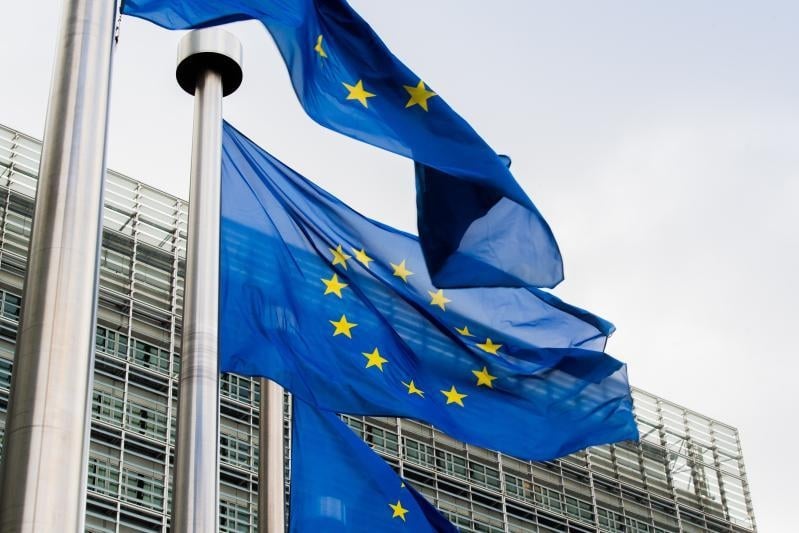
The fact is that Europe has become excellent at regulat- ing itself. China is the world’s industrial powerhouse. The US is the world’s technological powerhouse and Europe now leads the world in rulemaking.
Regulate before you innovate, supervise before you create.
That seems to be the mindset right now. The European Parliament proudly announced this February its AI Act to the world — the first comprehensive legislation on artifi- cial intelligence ever. All well and good. But slightly curi- ous because the region has no frontier AI companies to speak of.
Is this to be Europe’s legacy? The stickler, jobsworth of the modern world, constantly banging on that ‘them’s the rules.’ The boring pedant in the office who writes KPIs for everyone to follow about ‘kitchen etiquette’ and washing up coffee mugs.
Europe has trained a whole new class, not of builders and creators, but of compliance officers, ESG auditors, sustain- ability verifiers and data protection consultants. The UK, which is where this magazine is based, has a tax code that now runs to 22,000 pages, the longest in the world.
We’re dedicating a lot of stories to the Battery Passport, a comprehensive plan devised by some of the cleverest bureaucrats in Europe for parts of the battery industry that are breaking new ground in innovation, products and route to market.
And their thinking? ‘Fantastic! We’re on the brink of something big here. Quick, let’s write a few reports and audit the hell out of this baby. And while we’re on it, any friendly consultants around? (And if there are, let’s make sure we just listen to their recommendations and then promptly ignore them — just as we did for their sugges- tions on permitted recycling levels.)’
As Shmuel de Leon writes in his thought-provoking analysis (see Opinion), European battery manufac- turing projects may require five years for permitting and construction to happen while, in China, a giga factory would be up-and-running before you’d had time to say ‘chopsticks’.
With Europe’s battery industry already lagging under global overcapacity, price pressure from low-cost imports, rising capital costs, and growing uncertainty around supply chains and industrial policy, is the regulation machine Europe has so successfully manufactured, simply going to combust?
Things have got to get moving. The EU has clamped a ball and chain around the ankles of industry and while everyone else is running the race of their lives, Europe is barely off the blocks.
Marilyn Monroe once famously said: “If I’d observed all the rules, I’d never have got anywhere.” Shame she didn’t work in batteries.