

Editorial by Mike Halls, Publisher
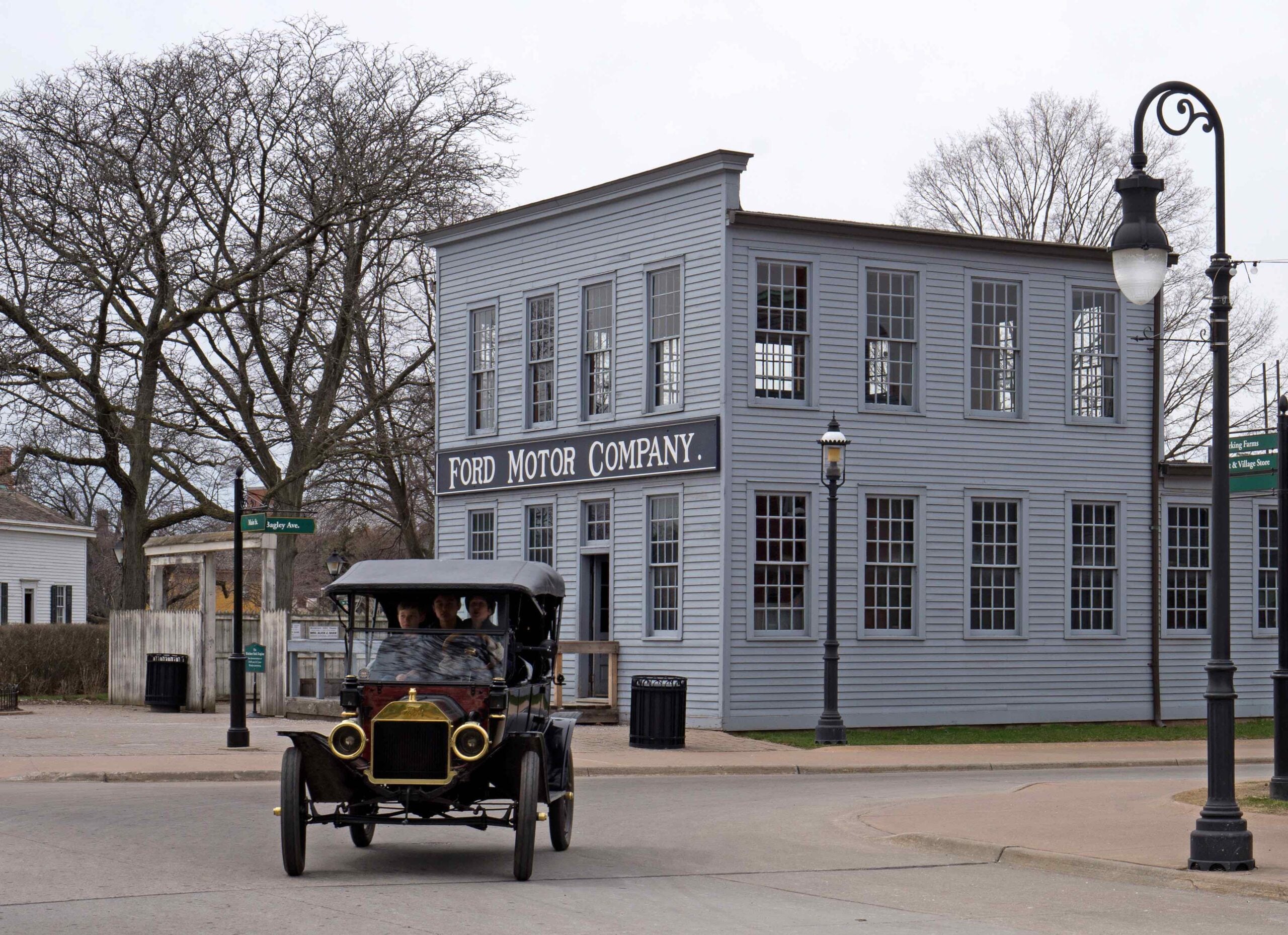
Good idea. Perhaps even a great one. But lousy leadership. The man who revolutionised mass transportation with the movable car assembly line — and even gave rise to the troubled dreams of an entire nation — was basically an ignoramus.
Henry Ford, in the words of one historian, was “barely educated and close to functionally illiterate… he did not like bankers, doctors, tobacco, pasteurised milk, liquor, overweight people, JP Morgan & Co, tall buildings, college graduates, Roman Catholics or Jews … he seldom let facts or logic challenge the certainty of his instincts.”
His leadership skills essentially were an opin- ionated misguided form of bullying. His choice of senior management was flawed at best and mostly catastrophic. Ford wanted to micro-manage everything.
Yet within a decade he had created an empire of more than 50 factories on six continents, employed 200,000 people and produced half of the world’s cars.
The oddest thing about Ford’s success was that his staple product, the Model T, was not even particularly good.
Everything about it was rudimentary and, by today’s standards, appallingly ill-thought out. There were no fuel or oil gauges. Why should anyone need a speedometer too? (Though that was added after a while.) The gravity-fed fuel system meant that the car sometimes had to be driven in reverse to climb hills, the headlights were either too dim or blew at speed. There were even two sizes of tyres for back and front.
With the same convoluted logic the preceding series of Model Ts went A, B, C, E, N, R, S and K.
That said, it was the first of its kind giving Ford market leadership … but it was inevitable that it could only be temporary.
If invention is the creation of something new, innovation typically is finding new ways of commercialising that invention — it could be improving the products, the manufacturing processes, even changing markets.
Henry Ford’s huge revolution in car making — by the late 1920s there would on average be almost one car per family across the US — was quickly copied by other firms.
And then improved upon it. Innovation.
Two firms in particular — General Motors and Chrysler — looked at all the things the Model T lacked and rethought both the final product and the way it was produced.
In the case of GM the process of innovation came with the clear focus on leadership at the very top.
So enter Alfred Sloan, who became CEO in 1923 — and coincidentally had worked as a supplier to Ford — whose management style looked at both markets and technology. In terms of production he surrounded himself with more-or-less autonomous competent managers and gave them leeway to run operations as they saw fit.
A different buyer proposition
Sloan also instituted a sophisticated advertising campaign to make the public aware of what GM had to offer, and instead of stressing cheap prices, Sloan built demand for GM products by stressing style, comfort, and status, capturing his sales philosophy in the slogan “A car for every purse and purpose.”
He also introduced the idea of planned obsolescence — the release of the annual model change. Fashionable cars!
Another genius idea was a pricing structure which he referred to as “the ladder of success”, whereby models would reflect owners’ buying power and preferences changed as they aged. The Chevrolet was the cheapest, the Cadillac the most expensive.
In 1919, he and his corporate deputies created the General Motors Acceptance Corporation, a financing arm that practically invented the auto loan credit system. This allowed car buyers to short-cut the time required to buy a Ford car.
Sloan created a fortune for his shareholders and himself — he went on to become a philanthropic giant — and built an empire that until recently could claim to be the largest industrial enterprise the world had ever known.
Chrysler, founded in 1925 but operating in various guises before this, took a slightly different approach. It looked at Ford’s vehicles and sought ways of improving them. New functionality included a carburettor air filter, high compression engine, full pressure lubrication, and an oil filter, features absent from most autos at the time. It also included the first practical mass-produced four-wheel hydraulic brakes.
The firm’s profits were such that it went on to build the Chrysler building in New York, which for 11 months in 1930 made it the tallest skyscraper in the world.

So how do the history of these firms relate to the present battery and EV industry?
If you look aside from the world of the lead acid battery, the present challenge for the North American and European battery industry is a geographic one and largely a problem of its own making.
Put at its most simple. Chinese firms have taken the high ground and are producing, arguably the best EVs in the world in terms of quality and value for money. They are powered by the most competitively priced and competently produced lithium battery packs. Firms such as BYD and CATL in as little as 15 years have become world class heavyweights.
A lack of foresight
Those accolades could have gone to Western firms if they had had the foresight and support that the Chinese government gave the industry.
In 1992, China’s eighth five-year plan talked about the proposed creation of a so-called New Energy Vehicle. While most of the rest of the world was pussy-footing about, China was able to showcase a fleet of 50 lithium battery powered electric buses, with a range of 130km, at the 2008 Olympics.
So where’s the relevance of Henry Ford and Alfred Sloan to the present Western battery impasse?
It’s simply this. All empires come to an end. All technologies succumb to newer and better innovations. Moreover, the pace of progress is faster than ever.
The history of technology, as well as the history of business, shows that business empires rise and fall. IBM, which had become the huge giant for main frame computing in the 1960s lost the plot when it assumed it would be a natural fit to move into the personal computing space.
It partnered with Bill Gates — who realised that software would become more important than hardware — and the rest of course is history and the massive success story that is Microsoft.
Today’s battery industry needs to foster innovation not hide behind protectionist walls. In the end these barriers will eventually stifle competition and shield businesses from the economic realities that drive change. Where this will come from is uncertain — the most likely route is from a new battery chemistry or technology.
Some of the leadership is here already. Our recent interviews with Stryten CEO Mike Judd and that of Varta’s Michael Ostermann (issue 135) show that some of the top battery-people have vision in buckets and see a sense of direction — something Henry Ford stumbled with for many a year.
Last, innovation can be a two-edged sword. Perhaps the most deadly innovation for motorists came in 1928. The first proper cigarette lighter for cars was patented that year by the Connecticut Automotive Specialty Company. Casco went on to invent the modern lighter that bounces out when ready.
Odd that such a small invention would promote the death of millions.
Photo credits: AdobeStock