
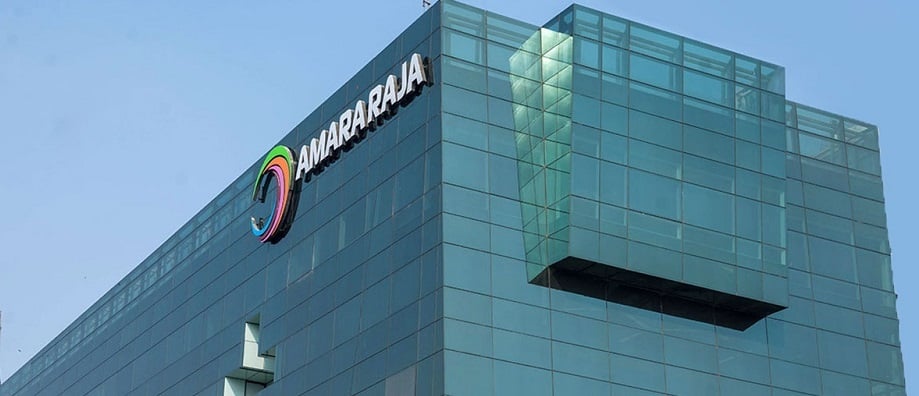
Indian battery producer Amara Raja Energy & Mobility has revealed it is now largely ‘going it alone’ on cells development after a flagship licensing tech partnership with a Chinese supplier came under pressure from Beijing.
Lead acid major Amara Raja agreed a deal with China-based Gotion High-Tech in 2024 for support in developing LFP cells, as part of the Indian group’s ‘giga-corridor’ battery and R&D projects in Telangana state. The technical licensing agreement was with Gotion subsidiary GIB EnergyX Slovakia.
However, Amara Raja said in a June 2 earnings call with market and financial analysts there are now “difficulties” over the deal in terms of technology transfers, as the Chinese government tightens its global grip on battery tech and material supplies.
Vikramadithya Gourineni, executive director of the group’s lithium-based New Energy Business, said Amara Raja and Gotion had never sought any approvals from their respective governments for what was a purely private deal.
Nevertheless, a number of such deals are now coming under scrutiny in Beijing and Amara Raja’s product development and R&D is now being “largely driven internally”.
Since 2024, you will have seen in the news that sharing and licensing of technology is something largely discouraged by the Chinese government, Gourineni said.
Asked by one analyst if Amara Raja’s LFP plants will now be based on home-grown Indian technology, Gourineni said: “We have a couple of products in the pipeline that we’re developing. As we get a little bit more confidence about the customer programme on the EV side, we’ll be able to announce that in due course, but probably sometime 2028 and later.”
He said pressure from China’s leaders was hitting all players and their technical tie-ups equally and the company had “taken what it could” to date in terms of cooperation and expertise.
“But largely, going forward, whether it’s NMC, LFP, or future chemistries, the efforts of product development is largely driven by teams in India.”
To that end, Gourineni said Amara Raja expected initial production capacity scheduled by its New Energy Business for 2027 would focus on NMC batteries.
In a related move, he also gave some additional details about the company’s recently announced BESS manufacturing plans ― as reported by Batteries International last month.
Amara Raja intends to pursue cell manufacturing specifically for battery storage systems in addition to container integration and pack assembly in Telangana, he said.
This is a technology that is well established and the company’s teams are confident that they will not need an external partner to develop BESS cells, as long as they can still access related equipment supplies from China.
Analysis published by energy data analytics firm Wood Mackenzie last month indicated that Chinese firms are set to control 39% of all lithium extracted worldwide by 2030.
That study echoed analysis released by the International Energy Agency earlier this year, that warned EV plants worldwide faced $17 billion in losses for every month of any potential halt in cell exports by China.