
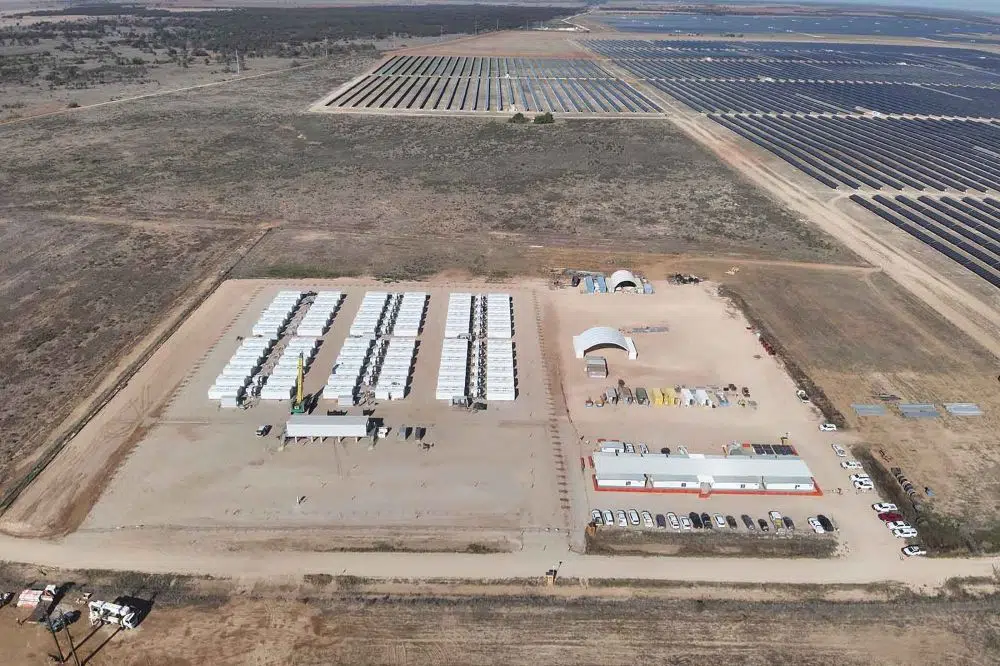
A record 9GW of new Australian generation and battery storage capacity reached full output in the last financial year, according to latest data.
Battery projects continued to dominate the connections pipeline, accounting for 52% of total capacity, and were also the fastest mover through the applications process, the Australian Energy Market Operator (AEMO) said in its latest quarterly ‘scorecard’ released on July 20.
The 9.1GW total was more than double the result achieved in 2025 for power generation and storage projects connecting to the National Electricity Market.
While AEMO’s scorecard reported new generation and storage projects from initial application through to full output for the quarter ending in June, it also marked the end of fiscal 2026, providing a snapshot of annual outcomes across the connections pipeline.
Solar and battery hybrid projects are an increasingly significant component of the development pipeline with 4.3GW of applications received during fiscal 2026.
In addition, 2.4GW of solar projects started or completed the process of adding a BESS, reflecting the industry’s growing interest in combining low-cost renewable generation with flexible storage, said AEMO group manager for onboarding and connections Margarida Pimentel.
The overall picture demonstrated strong end-to-end performance across the pipeline, including a new record of 5.2GW for wind project applications.
However, Pimentel said the scorecard highlighted growing challenges in the delivery pipeline, with only 6.4GW making it through to delivery.
“Design changes and equipment substitutions can require additional assessment and re-work, while the sale of projects, extended financing and commercial readiness activities are also contributing factors.”
Nevertheless, Pimentel said battery and solar technologies will play an important role in delivering the diverse mix of resources needed to support Australia’s energy transition.
Batteries International reported in March 2026 that Australia’s battery materials recovery sector had the potential to be worth around A$7 billion ($5 billion) to the national economy by 2050.
The sector, which currently contributes more than A$2 billion, could also support more than 32,000 jobs from the then 19,450, based on modelling in a national industry profile report commissioned by the Association for the Battery Recycling Industry.
In May, RWE Renewables Australia received official sign-off from AEMO and Transmission Network Service Provider Transgrid to operate Australia’s first eight-hour BESS at full capacity in New South Wales.