
Jennifer Granholm, BYOC and the AI-energy nexus. Mike Halls, publisher of Batteries International lends his view:
Amid the usual Washington debate over AI supremacy, semiconductor shortages and grid reliability, former Energy Secretary Jennifer Granholm recently offered a deceptively simple proposition.
If technology companies want to build data centres that consume gigawatts of electricity, they should help build the power plants to run them. And the energy storage needed to incorporate renewables into the power mix.
The idea has acquired a shorthand label in policy circles: BYOC — Bring Your Own Clean Power. It may also prove to be one of the most consequential energy-policy concepts to emerge from the AI boom.
The concept is straightforward. Companies building large energy-hungry facilities would be expected to secure or finance the clean electricity needed to run them, rather than relying on an already stretched grid to absorb the additional demand.
The issue is becoming increasingly urgent. AI is emerging as one of the largest new sources of electricity consumption in the United States. The rapid expansion of hyperscale data centres by Microsoft, Google, Amazon and other technology giants is placing unprecedented pressure on regional power systems.
Granholm believes the coming wave of AI-related demand raises difficult questions. Who pays for the new generation and transmission infrastructure required to support it? And how can governments meet climate targets while remaining competitive in the global race for AI leadership?
Her answer challenges two widely held assumptions: that the grid, in the end, can simply absorb AI’s growing appetite for power, and that environmental goals must inevitably take a back seat to technological progress.
Instead, she argues that major AI developers should bring new generating capacity with them.
In conversations with hyperscalers, Granholm has suggested that companies planning facilities consuming gigawatts of electricity should also invest in the power needed to support those operations. Otherwise, communities may come to see data centres not as economic assets but as a burden on local infrastructure.
The logic reflects a theme that has run through Granholm’s energy policy for years. Clean energy and energy security, she argues, are not competing priorities. Nations that depend heavily on globally traded fossil fuels remain vulnerable to price shocks and geopolitical disruption.
Those that develop domestic sources of clean energy gain greater resilience and control.
BYOC applies that same thinking to AI.
Rather than becoming another vast source of demand competing for limited resources, technology companies would become active participants in building the energy system of the future. They would not simply consume power. They would help create it.
That would mark a significant shift. Historically, large industrial users have been viewed primarily as customers of the electricity system. Under Granholm’s vision, hyperscalers become infrastructure partners.
Their balance sheets could help accelerate investment in advanced nuclear reactors, geothermal energy, long-duration storage and renewable generation at a pace utilities alone may struggle to achieve.
The implications extend well beyond energy policy.
Artificial intelligence is increasingly being viewed as a strategic technology on a par with railways, electrification and the internet. Countries able to provide abundant, reliable and affordable electricity are likely to enjoy a significant advantage in developing and deploying AI.
Granholm has repeatedly argued that the United States must keep AI innovation at home. If so, access to power may become as important as access to computing talent or capital.
Seen this way, energy becomes the key constraint on digital growth. The debate shifts from computing power to electrical power. The question is no longer simply who builds the best models, but who can power them at scale.
Granholm does not see AI as the problem. If anything, she sees it as part of the solution. AI can improve grid operations, optimise energy systems, accelerate scientific discovery and help manage increasingly complex electricity networks.
But realising those benefits requires confronting a basic reality: AI’s own energy consumption is rising rapidly.
That tension may define the next phase of the energy transition. Policymakers have spent years focusing on decarbonising transport, buildings and heavy industry. AI introduces a new category of demand. Data centres are becoming strategic infrastructure, with energy requirements increasingly comparable to those of major industrial facilities.
BYOC offers a pragmatic response. It does not seek to slow AI development, nor does it abandon climate goals. Instead, it attempts to align incentives, ensuring that the companies benefiting most from AI’s growth also contribute to the infrastructure needed to sustain it.
Critics will argue that such a model could raise costs, slow deployment or favour larger firms with deeper pockets. Those concerns are real. But the alternative—allowing vast new electricity loads to strain power systems while households and businesses absorb the consequences—may prove politically untenable.
What Granholm is really describing is a broader shift in policy thinking. Energy is no longer just another sector of the economy. It is becoming the foundation of economic competitiveness, industrial strategy, climate policy and technological leadership.
In that sense, AI and clean energy are no longer separate stories. They are increasingly the same story.
The companies building the digital economy may also be expected to help build the physical infrastructure that powers it.
BYOC, then, is more than an energy proposal. It is the outline of a new social contract: if companies want access to unprecedented amounts of electricity, they should help create the clean energy system that makes that consumption possible.
Whether that bargain takes hold may shape not only the future of artificial intelligence, but also the pace and direction of the global energy transition.
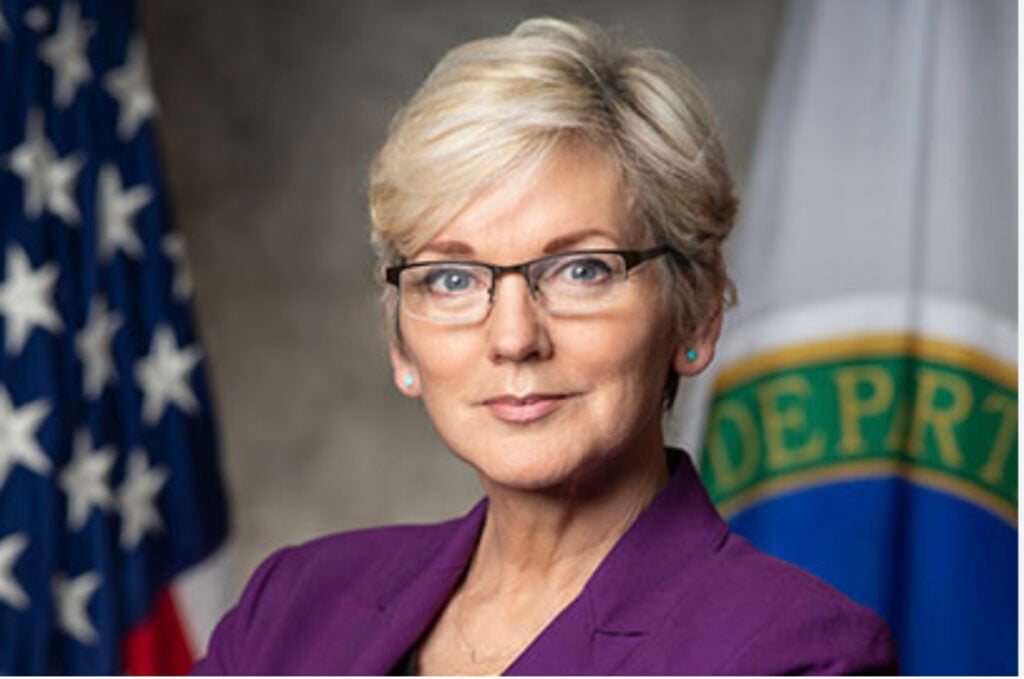
Image credits: US Dept. of Energy and Shutterstock