
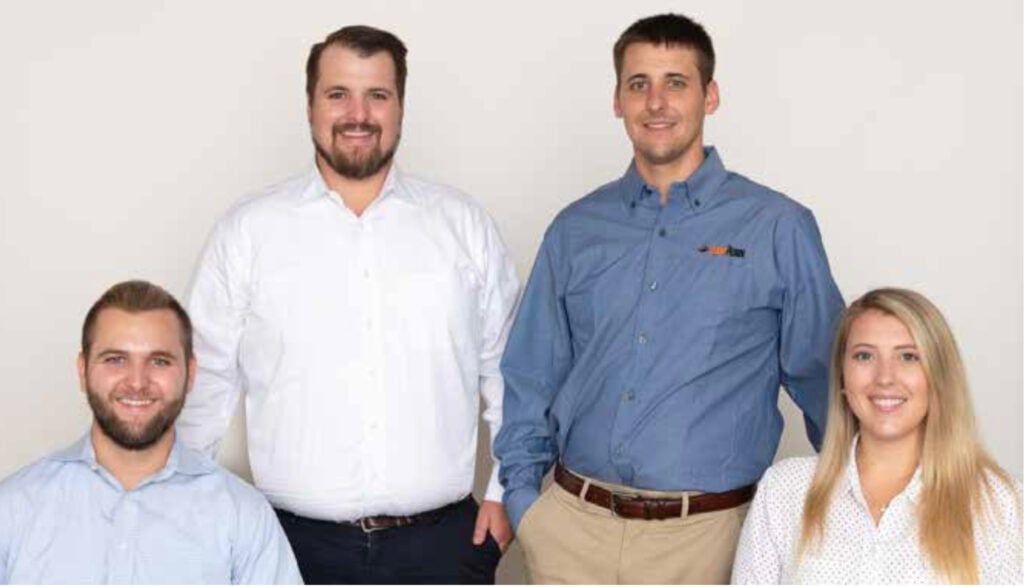
The world’s largest, single-site, family-owned lead battery manufacturer has a proud history and a solid reputation for retaining its employees — often for decades. As the company approaches a milestone 80 years in the industry and makes a return to a traditional, dual-person leadership approach, Shona Sibary speaks to the incoming CEO, Pete Stanislawczyk, and president, Christy Weeber.
(First published in October 2025)
It’s been a few days now since East Penn’s new leaders stepped up to the helm, and you might wonder what they’ve got on their minds. A radical restructure? Meetings with the board? In fact, both Christy and Pete have been down on the factory floor serving meatballs and pasta to the workers as part of the firm’s ‘Appreciation Week.’
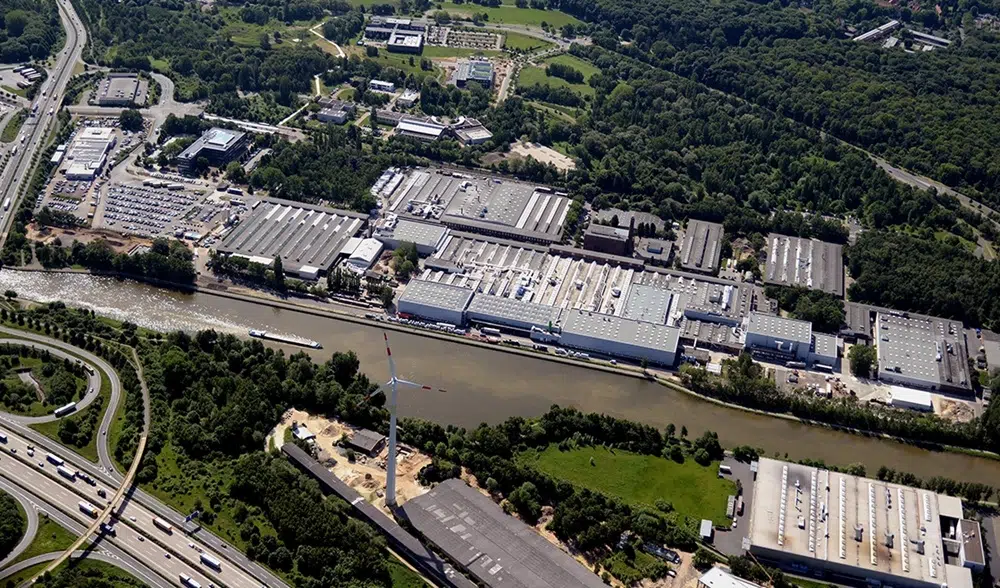
You get the impression that’s just the way things rock here on the company’s 520-acre Pennsylvania site, a place where employees are treated as family and nobody is considered more important than anyone else.
For a company that describes itself as, ‘Living the American dream while making lives better, one battery at a time,’ you would expect nothing less than an annual picnic and free pass for 8,000 local employees and their families to the nearby amusement park as a thank you treat.
It’s this kind of inclusive, people- focused ethos that has been the firm’s lifeblood since it was founded back in 1946 by DeLight Jr, a young Air Force veteran, and his father, DeLight Sr.
Under the new leadership restructure, Pete will oversee the operations and commercial areas, including manufacturing, distribution, engineering, marketing and sales while Christy will be in charge of finance, legal, IT and personnel.
Yet it’s a culture that Christy, a self confessed newbie, who has ‘only’ been at the firm for 13 years, found initially hard to adjust to.
“Previously, I’d worked in the public company environment,” she says. “I was used to a very investor, analyst-driven mentality. When I started at East Penn, I remember coming home at the end of my first week and my husband saying: ‘So what do you think?’ And I said: ‘It’s really weird.’ He was like, ‘What do you mean?’ I replied: ‘People keep saying “hi” to me in the hallway and asking me about my day.’
“It was a culture shock, and it took me a little while to adapt until I got to a point where I thought: ‘Wow, this is amazing.’ You know, it’s a medium sized business with a small business heart.”
As a female executive entering an unfamiliar industry, not to mention a company with a tradition of long- tenure employees, she was mindful of how to make changes.
“Obviously, every business is unique as far as how they operate, and how people learn and work together. I think it’s a strength that I’ve worked elsewhere and seen how other companies do things, and I knew that, maybe, I could put some improvements in place.
“But I had to be careful of how I went about doing that. Some people have been here, doing the same thing and doing it brilliantly well, for 20, 30 years.”
One of those people is the man she is steering the tiller with. Step in Pete Stanislawczyk — previously East Penn’s executive vice president and chief commercial officer — who has been at the company ever since leaving college three decades ago. He is now sharing leadership with Christy following previous president and CEO, Chris Pruitt’s retirement after 11 years from those positions.
So is it unusual that they have split the running of the company between two people?
“Traditionally, it’s always been that way,” says Pete. “If we think about the early years, there was DeLight Breidegam and his partner, Dick Bowers — they were the original Ying and yang. They may not have had the CEO and president titles, but it was a partnership.”
Until Chris Pruitt took over as CEO/President in 2018, East Penn had always had an organizational team of two, if not three, business leaders managing the firm.
“It’s just very natural here. There’s not a lot of elbowing to the top. We’re doing what’s necessary to drive the business forward. And what you’re going to find with Christy is a different skill set and background to mine. But we complement each other very well and the approach that we’re collectively taking is fantastic.”
“We’re continuing to reinvest in lead growth. We’re smart enough to know there will come a time when there’s an inflection point, but that’s going to be a slow, a slow decline, and not a rapid one”
Under the new leadership restructure, Pete will oversee the operations and commercial areas, including manufacturing, distribution, engineering, marketing and sales while Christy will be in charge of finance, legal, IT and personnel. They are both acutely aware that they have big shoes to fill. As a privately-held, family owned company, East Penn has grown to become the second-largest producer of lead batteries in North America. There are fourth generation members of the family working at the firm, determined to uphold the tradition and values they believe have made their company the success it is today.
“As my grandfather would always tell us: ‘The No. 1 rule to remember is that it’s all about the people,” says Tim Miksiewicz, 31, who has been working full time at the firm since 2015 in several jobs and is now a board member.
“We see ourselves as stewards of East Penn — we’re here to keep the company healthy so it can continue to provide thousands of well-paying jobs, support our community, and do right by our employees and customers.”
It’s a strong ethos that clearly works.
Forbes called East Penn one of America’s best employers and of the company’s more than 10,000 employees, nearly 40% have worked there for more than 10 years.
“It’s a very unique place,” Christy says. “There’s a tangible, close-knit loyalty that runs across the levels of the organization, which is wonderful. But then sometimes people are hesitant when someone new — like me — enters that. It took a while for everyone to feel comfortable around me.”
One wonders whether this pulling together of staff is an understandably collective reaction to the tragic death of the company’s CEO in 2014. Sally Miksiewicz, DeLight Jr’s daughter, whom he had groomed as his successor, was killed by a car while out jogging. She had been at the head of East Penn since 2009 and was adored by employees, many of whom she knew by name. They described her as bold, compassionate, outspoken, and feisty, navigating the factory in her high heels and then kicking them off in most meetings. “Her death had a profound effect on everyone at the company and she left an incredible legacy,” says Pete. “She was an inspirational leader and taught me so much about how I approach things today. People talk about servant leadership and I think it’s a term that’s overplayed, but it’s all about putting others in front of yourself, empowering and uplifting them.
“Sally did that all the time. She put the customer and the employee in the middle of every business decision. I don’t know if I’m worthy to compare myself to her yet, but I’m intent on striving to live up to her standards.”
He has certainly had a track record of success. Of his 33 years at East Penn, 30 have been spent in ‘hardcore’ sales, with the business growing 10-fold since he joined.
“I’m not saying I’m wholly responsible for that, but I’ve been blessed to be a part of it,” he says. “I view the sales organization as a group rather than competitive individuals and I liken it to a sports analogy of being a coach and trying to put the best players on the field, in the best positions to win the game.
“We want to continue to exceed our goals for growth and take market share. Don’t get me wrong, it hasn’t always been a success. There’s been business deals that haven’t worked out. But those have been learning opportunities for myself and for the entire organization. We can’t allow the success of the past to make us complacent.”
Pete describes East Penn’s core business in lead battery manufacturing, with the transportation sector being the largest piece of their pie, and is adamant that the world of lead still has further opportunities to enhance and improve.
“We’ve seen some changes in technology, in particular, an explosive growth in AGM in the automotive space, so that’s something we’re really focussed on as far as future projections go and how we retool our manufacturing process to make sure that we can stay in step with market needs.”
“On the motive power side, we’re also seeing a shift to more maintenance free opportunities. So, when our competitors are moving to AGM technology in that area of the business, we’re looking at gel technology there. But it’s all staying core into lead.”
In line with several other lead battery manufacturers, East Penn have partnered with Gridtential’s Silicon Joule technology, a bipolar lead-acid battery that uses silicon wafers as current collectors to create lighter, safer, and longer-lasting batteries.
“It’s designed for high cycle use different applications,” says Pete. “We have an investment in that business, as do others, so it’s not exclusive. It’s just an area we’re exploring. But also, we’re not putting our heads in the sand.
Christy acknowledges that she leaves much of the R&D side of things to Pete, but she has clearly managed, nevertheless, to get to grips with an industry she had never worked in before, by walking the factory floor and talking to staff on the ground.
“It was crucial to understanding our core business,” she says. “We have an onsite innovation centre and an R&D facility centre and I go through presentations with our engineers which has really helped me with some of the new chemistries and technologies.”
One of these, she says, is a technology to help identify different chemistries coming in to be recycled.
“We’re focused on recycling enhancements,” she says. “We can fully recycle lead batteries and it is very safe but if we bring in a lithium battery, that’s not identified as a lithium battery and we run it through the same process, that can actually be quite dangerous.”
“They’re almost identical,” she says. “There has been R&D into an X-ray type of system to be able to identify the difference in battery types. Then there’s also research being done on how to recycle lithium batteries. That’s still, unfortunately, not fully developed yet, but it’s something we’re looking into — along with everyone else!”
East Penn is well known in the industry for a robust R&D function, and Pete is keen to point out that they continue to stay committed to innovation.
“We look at R&D a couple of different ways,” he says. “A big piece is trying to find efficiencies in lead manufacturing, design and recycling. But then we have our lithium R&D which is hyper focused right now — especially in government and defense areas. As part of regulatory changes and supply chain protection, or just military risk, there’s a lot of focus from the US government on becoming energy independent.”
“It’s not extremely advantageous to ship in lead batteries and not just because they’re heavy but also because they’re a perishable product”
Do either of them perceive any risk to the business from outside of the US?
“We always have the concern of foreign entrants into the country,” Christy says. “And, realistically, there’s been imports of products, for sure. But lead is not a product that can easily be imported because of its weight. So when people are doing that, they’re doing it to either get extremely reduced cost, which has now come into question through the tariff impact, then the other reason is that they don’t have enough supply here in the US which is a realistic concern. There’s only so many of us who are manufacturing in the US today. There is a capacity shortage.”
Pete concurs. “It’s not extremely advantageous to ship in lead batteries and not just because they’re heavy, but also because they’re a perishable product. Depending on the length of the journey the product would require a recharge. So these factors have created a rather deep moat around the US, a natural barrier to coming in.”
It’s early days for the incoming CEO and president of this very unique organization, but what’s clear is that they both have huge mutual respect for the pillars on which East Penn stand and are determinedly proud to keep building on the family’s legacy.
Pete says: “As I’ve been working through this transition with Chris retiring from the role, he said to me: ‘What’s keeping you awake at night, Pete?’ And I said: ‘You know something? I think what I’m most worried about is the fact that I’m not worried.’
There you go — you’ve heard it from the top. The East Penn forecast is that the horizon is unlikely to be cloudy. But there will most definitely be a chance of meatballs.