

March 18, 2026: EU environmental policy supremo Eric Mamer has praised the lead battery industry’s near 99% recycling record as a good example of a functioning circular economy business model.
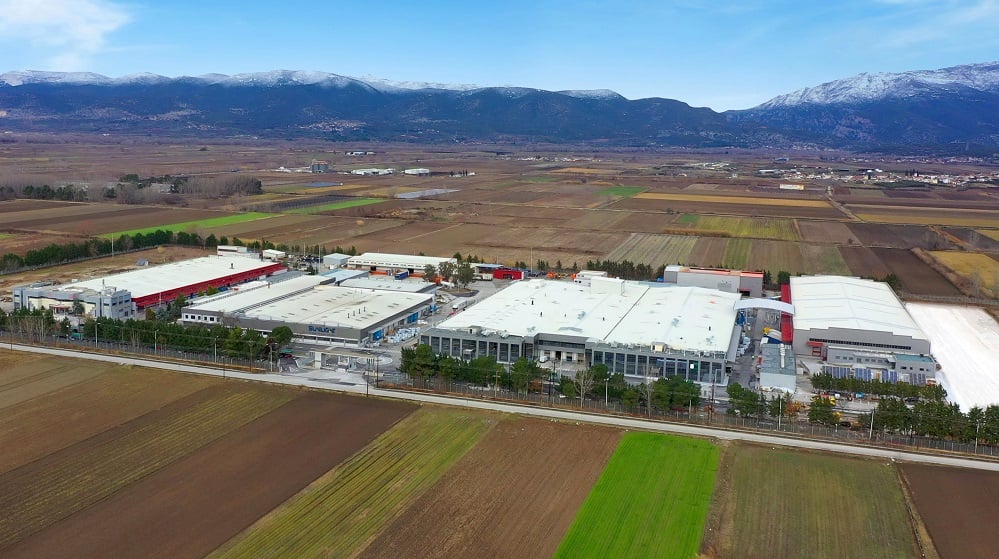
Eric Mamer, director general of the European Commission’s environment directorate, was speaking during a visit to Belgium-based metals recycling and speciality chemicals group Campine — a member of the International Lead Association.
The ILA said on March 16 that representatives from the trade association joined Campine CEO Wim De Vos and his team to welcome Mamer at the plant in Beerse.
Mamer said: “During the visit, we learned how the recycling of batteries produces three key material streams, metals, plastics and acid — all of which can be recovered and reintroduced into industrial production cycles from the car industry to the chemical industry and for important applications such as fire retardants and marine cable isolation or even roofing products so many of us use.
“In today’s geopolitical context, it is particularly pertinent to hear from and to support actors who are contributing to Europe’s strategic autonomy, especially as part of the recovered materials are reused in European industry, including in sectors such as defence.”
Mamer said talks at the plant included work the EU still has to do in supporting the circular economy, including on the difference in treatment between new and used batteries.
“It was particularly interesting to hear that around 80% of global lead demand is used for lead acid batteries.”
De Vos stressed the essential role of lead metal and lead battery recycling as Europe’s circular economy success story and reinforced the significance of lead as an essential metal for batteries and its use in a variety of applications.
Last October, Campine pledged to expand use of battery recycling and speciality lead manufacturing operations that the firm had acquired from Ecobat in France.
Campine said on October 1 that the acquisition deal, including two battery recycling plants and one semi-finished lead-products facility, had been finalized on September 30. Together, the sites added 70,000 tonnes of annual battery recycling capacity and expanded Campine’s downstream offering with lead anodes for the zinc and copper industries.
Mamer’s visit to Campine came as ILA regulatory affairs director Lisa Allen called for Europe to protect the foundations of its existing industries while nurturing innovation.
Allen said in an article posted on the ILA’s website on March 5 that as Europe moves to boost its industrial capabilities with the draft Industrial Accelerator Act — comprising so-called ‘made in Europe’ proposals — one aspect of the EU’s approach to industry needs more attention.
“While it’s great to see base metals being proposed for recognition as a strategic sector, policymakers still risk neglecting value chains and foundation industries that underpin the EU’s economic strength and security today.
“Europe’s lead battery value chain is just one home-grown success story, as it plays an essential part in a wide range of economically vital industries.”
Allen said it is critical to build on the EU’s existing strengths — from producing lead metal to recycling and battery manufacturing — while boosting new innovation and manufacturing capabilities.
Advanced lead batteries are not only manufactured across multiple member states, but the raw materials are supplied by European producers and recyclers. They are made in Europe and recycled in Europe.
“These are batteries used in conventional and electric vehicles, batteries that back-up datacenters and other essential services, as well as batteries in defence applications, ranging from armoured vehicles to submarines.”
Europe is a centre of excellence for this strategically significant battery technology, with ongoing research and innovation taking the batteries to new levels of performance and durability, Allen said.
While it is important to strengthen the EU’s battery capabilities in other technologies, legislators must continue to nurture and support Europe’s existing highly successful lead battery value chain.
“Above all Europe must create a battery eco-system that fosters all relevant technologies.”
Batteries International reported on March 6 that battery industry leaders are calling for an urgent overhaul of the draft Industrial Accelerator Act, saying the move could discriminate against lead-based and nickel-based battery systems.
Trade body EUROBAT has said the proposed rules appear to tie BESS eligibility to the presence of a battery management system (BMS) alongside EU assembly and component requirements.
EUROBAT is calling for the “specific inclusion” of BMS-free industrial battery systems to ensure critical energy infrastructure and backup power is not excluded.