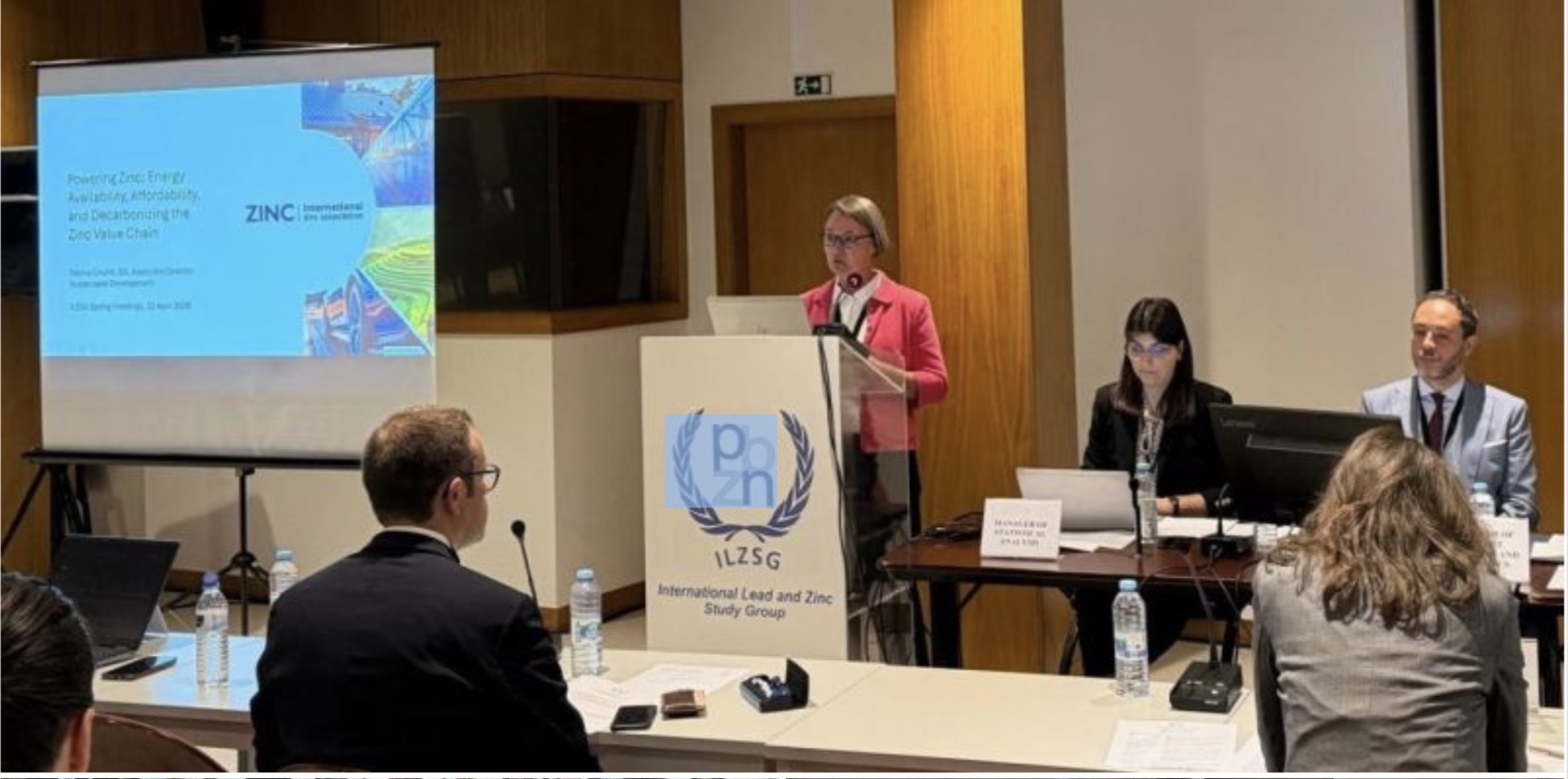


February 27, 2026: The global supply of refined lead metal exceeded demand by 70kt in 2025 — outstripping earlier estimates, according to latest data from the Lisbon-based International Lead and Zinc Study Group (ILZSG).
ILZSG issued the update on February 24, with its preliminary data showing a sharp rise compared to the 20kt of supply announced last December, albeit it is for the first 10 months of last year.
Inventories reported by the London Metal Exchange, Shanghai Futures Exchange, producers, merchants and consumers rose by 6kt and totalled 555kt at the year end, the group said.
Output of refined lead metal from recycled raw materials accounted for 67.4% of global production in 2025, compared to 67.8% in 2024.
The supply boost was fuelled by increased lead mine production in China, India, Peru, Turkey and Europe — but largely offset by reductions in Australia, Kazakhstan and the US, resulting in an overall increase of 0.8%, ILZSG said.
Meanwhile, a near 2% rise in global lead metal production was mainly a result of higher output in Canada, China, India, Mexico and Brazil, where new secondary capacity was commissioned in 2025.
However, these increases were partially offset by reductions in Japan and Kazakhstan. In Europe, output remained broadly stable, with increases in Bulgaria and Sweden balancing a decline in the UK, where shipments of lead bullion from Australia processed at the Northfleet smelter were lower than in 2024.
Demand grew by 1.5%, primarily due to rises in Brazil, Taiwan, Turkey, the US and Vietnam. Demand in Europe also increased, influenced by increases in France, Germany, Poland and the UK. Usage in Argentina and Mexico was lower than in 2024.
Chinese net imports of lead contained in lead concentrates increased by just over 14% to 1,243kt. Net imports of refined lead metal amounted 52kt compared to 126kt in 2024.
Batteries International reported last January that the battery sector would again underpin usage of lead through 2026, as indicated by a recent flurry of business activity in the industry.