
The EU has rolled out 46 new projects in its latest scramble to secure raw materials critical to battery manufacturing and other industries to counter China’s “weaponisation” of the sector.
The European Commission announced extraction processing and recycling projects on October 9 for lithium, nickel, cobalt, manganese and graphite and other materials — with others outside the EU to be unveiled soon.
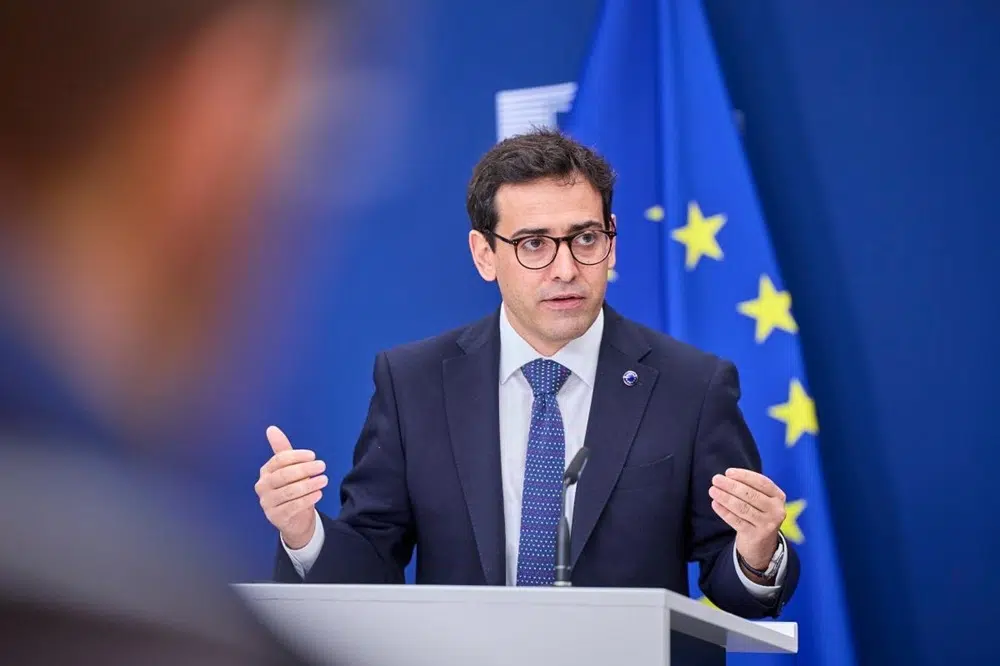
Industry commissioner Stéphane Séjourné said European companies need to produce regardless of external pressures, adding: “In an increasingly dangerous world, we want and need to be more independent.”
His announcement came just days after fellow commissioner for climate, net zero and clean growth, Wopke Hoekstra, slammed China for using massive state subsidies and economic espionage to undermine Europe’s single market.
Séjourné said China’s announcement in October 2025 of export restrictions on rare earths had the potential to shut down entire production chains in Europe, in the automotive industry or impact wind turbines.
The implementation of some of those measures has been suspended and the EU continues to discuss the issue with China, but “this respite must now become a lasting security”, Séjourné said.
The new projects are in addition to 47 others, adopted by the Commission last year. They will be spread across Belgium, Bulgaria, Estonia, Finland, France, Germany, Greece, Italy, Lithuania, the Netherlands, Poland, Portugal, Romania, Slovakia, Spain, and Sweden.
Included are two projects on magnesium and three on tungsten to support defence and aerospace, with others on rare earth elements to support the permanent magnet value chain.
Séjourné said all projects will bolster requirements set out in the EU’s Critical Raw Materials Act — ensuring that by 2030 capacity meets at least 10% of the bloc’s annual consumption for extraction, 40% for processing and 25% for recycling of strategic raw materials to enhance competitiveness, develop greater resilience and be less dependent on any single supplier.
Last month, European clean transport campaign group, Transport & Environment, warned the bloc must establish a viable business case for domestic battery manufacturing immediately — or risk an exodus of capital and expertise to other countries in as little as three years.
Photo: EC Audiovisual Service / Claudio Centonze, EU 2026