

June 23, 2023: Amid a plethora of competing forecasts for the lead battery market in North America and Europe, Asia looks set to be the place to be for at least the coming decade.
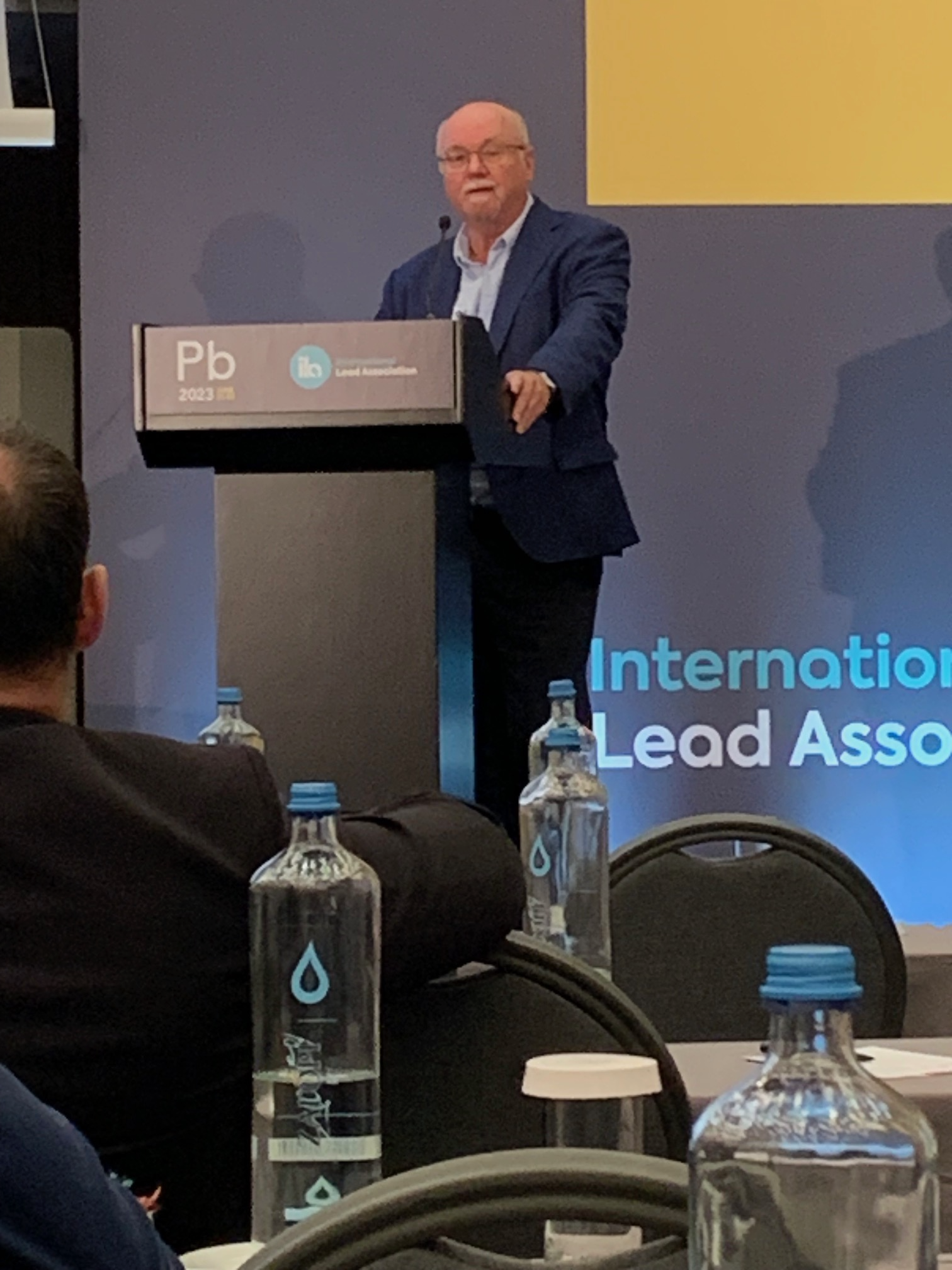
Huw Roberts, director at CHR Metals, speaking to delegates at the Pb2023 conference in Athens yesterday said: “I expect that lead demand in the region will grow annually over the next five years by 750,000 tonnes — that’s a not-inconsiderable number!”
He said that Asia’s importance to the global lead market is not only in terms of its overall volume of consumption — around 9.5Mt in 2022 — but the fact that the region is still forecast to see growth in demand over the balance of this decade.
“This is in contrast to Europe, where consumption is likely to fall, and North America where, at best, there will be little change.”
In 2022 Asia represented two-thirds of the global market for lead. (This share is up from one third in 2000 and only 25% in 1990.)
The statistics behind Roberts’ conclusions are impressive. China alone accounted for 46% of global refined lead demand in 2022 and over two-thirds of Asian consumption. “In China the manufacture of SLI batteries, including for use in the domestic market and exports, accounts for a little over a third of total lead consumption.
“In Europe the share is more than 50% and closer to 70% in North America.
“This difference, and the key reason for Chinese lead consumption growing so quickly over the past 20 years and now being so large, is the huge demand for lead batteries which power two and three-wheel e-bikes.”
Looking elsewhere across the region Roberts believes that the Indian market, while ‘significantly smaller overall than China but had doubled in size since 2010’ will continue to grow.
“Demand has grown rapidly, fuelled both by an expanding vehicle fleet as well as a significant market for standby power. In the most recent years growth in the market for batteries to power electric rickshaws is also emerging.”
One fillip to the lead battery industry in India is a change in the FAME II subsidy that came into force on June 1. FAME II (Faster Adoption of Manufacturing of Electric Vehicles in India) was aimed to boost the adoption of lithium batteries in electric two-wheelers registered after that date. The cut from a cap of 40% to 15% will, said Roberts, “could prove a huge boost to the Indian lead battery market for electric 2-wheelers”.
Roberts warned that the “silent whispers of the lithium industry still posed a threat to the future of the lead battery business but he believes that innovation and cost advantage will continue to offer new opportunities for growth, especially in Asia.”