

August 2, 2024: ESS Tech, the iron-flow battery manufacturer, is seemingly taking California by energy storage storm at the moment as is working on two exciting projects with the California Energy Commission.
Announced in July was a $10 million grant awarded by the CEC to the Sacramento Municipal Utility District (SMUD) in partnership with ESS to demonstrate a potentially groundbreaking 3.6MW, eight-hour iron flow battery project in Sacramento. The project will help to set the foundation for future large-scale battery deployments and manufacturing at energy centres in the county.
Also last week, the LDES manufacturer confirmed that it will participate in a utility-scale microgrid project at a US Department of Defense base.
The Rapid Integration and Commercialization Unit at Marine Corps Air Station, Miramar is a living laboratory for testing how leading LDES technologies can be integrated into utility-scale microgrid applications. The RICU is a venture between Indian Energy, the California Energy Commission and the DOD to validate LDES technologies.
Phase 2 of research at the RICU was funded by the CEC in May 2024 through a $4.85m agreement between the CEC and Indian Energy to demonstrate the capabilities of LDES technologies. The partnership with Indian Energy lays the foundation for deployment on CEC grants and DOD installations.
Indian Energy is a US-owned microgrid developer and integrator with a history of helping native communities and the military establish energy independence. High energy costs and unreliable power are common challenges faced by tribe territories and microgrids can help provide resilience and predictable energy pricing in these areas.
According to a recent California energy commission report, LDES resources could grow up to 37GW by 2045, supporting the integration of intermittent renewable energy and enabling a decarbonized, affordable and reliable grid.
Batteries International spoke to Alan Greenshields, director of EMEA at ESS Inc last week and he agreed: “If we fast forward to 2040 and what a decarbonized grid might look like, you need storage systems that allow you to move energy around within a 24-hour cycle,” he said. “That’s a very big part of, probably THE biggest single part of decarbonization.”
As well as the SMUD and Miramar projects, ESS iron flow technology is also deployed in California at Burbank Water and Power, with additional deployments announced and underway in California and worldwide.
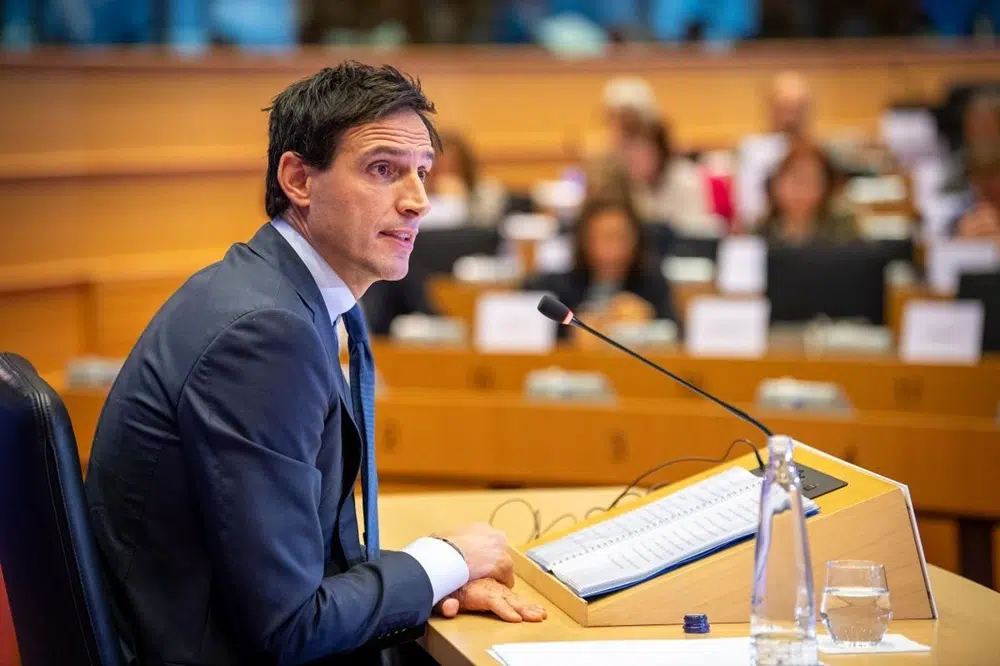
“The California Energy Commission is proud to support these exciting long-duration energy storage projects which will help drive this new clean energy industry into the mainstream,” said CEC’s chair, David Hochschild. “It’s a technology that’s needed to harness excess renewables for use during peak demand and overnight, especially as we work toward a goal of 100% clean electricity.”
The partnership and technology offer several anticipated benefits, including accelerating the commercialization of iron flow batteries, improving the cost-competitiveness of non-lithium long-duration energy storage, bolstering grid reliability and supporting workforce development and the local economy through clean energy jobs.
“Two features I like about what ESS are doing with iron flow batteries are cost and non-flammability, says Alan. “Iron is a very good idea, because the first thing to look at in any storage system is what medium you’re using to store energy, and then to do a quick back of the envelope calculation.
“How many kilograms of the main material do I need to store a certain amount of energy? And does that look like an attractive number?
“For iron it is an attractive number, complemented by the fact that the iron compounds involved are not toxic. They’re not materials that people worry about and they’re not ethically compromised. The other feature I like is non flammability. In terms of the role of storage I’ve always viewed this as the missing piece of the jigsaw.”