

February 20, 2025: Europe risks becoming an assembly plant for Asian battery giants — some of which are receiving millions of euros in subsidies for projects that may breach the bloc’s own environmental rules, a shock new study has claimed.
The study, released by European clean transport campaign group Transport & Environment (T&E) on February 18, casts doubt on the benefits of European partnerships with Chinese and Korean battery majors.
And with just months to go before tough laws come into force under the EU Battery Regulation, the study warned “homegrown European companies” are already struggling in the absence of clear rules on foreign direct investment from Asian ‘partners’.
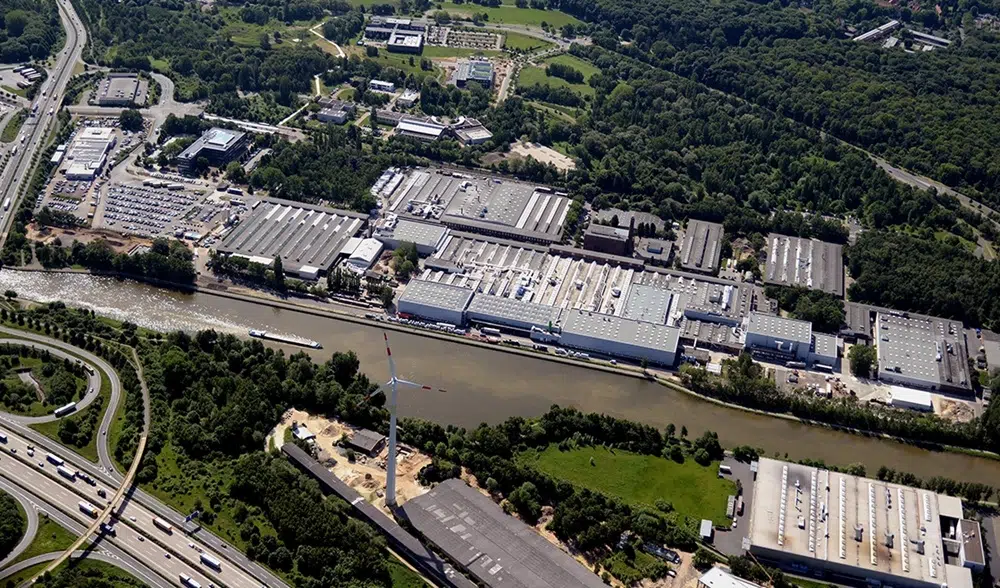
T&E said its study, conducted by external and independent experts, analysed the environmental and social conditions in China-based CATL’s battery plant in Hungary and South Korea’s LG Energy Solution plant in Poland.
In addition, the study analysed battery technology transfer deals related to joint ventures between VW-Gotion in Germany and CATL-Stellantis in Spain.
According to T&E, not only did the study find no EU-wide or national requirements relating to beneficial technology transfer between the EU nations and foreign partners, it found alleged breaches of air pollution rules from battery factories in Poland and Hungary.
The Hungary and Poland plants received at least €900 million ($940 million) in EU-backed state aid subsidies from the governments of those countries, T&E said.
However, the European Commission attached no environmental or social conditions or performed any auditing.
Both facilities allegedly breached the EU’s Industrial Emissions Directive on air pollution, as they exceeded the levels for NMP (N-Methyl-2-Pyrrolidone), which TE described as a toxic substance used in cathode manufacturing.
In Hungary, further concerns around insufficient water management plants and energy supply were also cited.
TE said: “Europe lacks the technology or the manufacturing expertise for a top cleantech technology [with] batteries. While this won’t delay EV targets as plentiful global battery cell supply exists, this entails serious geopolitical, economic and security risks.
“Coupled with restrictions on technology transfer in China, and despite the many Chinese and South Korean plans to build battery factories to date, Europe risks becoming an assembly plant.”
Julia Poliscanova, T&E’s senior director for vehicles and e-mobility, said Asian-EU partnerships have been trumpeted as knowledge-sharing vehicles, but they are not turning into local gains.
“Sometimes they do not even meet environmental rules or EU labour standards. Member states must ensure environmental and work conditions are respected while the European Commission uses all its legal tools in the areas of state aid, trade, procurement and foreign investment to require intellectual property transfer.”
Poliscanova said with over 650GWh of battery capacity coming from South Korean and Chinese players, no race to the bottom across the bloc should be allowed.
T&E warned in 2023 that auto firms in the European market had secured less than a fifth (16%) of the key battery metals they would need until 2030.