

Italian lead recycler and engineering firm STC has told Batteries International it has completed the shipment of two state-of-the-art refining systems to major secondary lead producers in the US.
STC’s innovative Oxy-Air Lance systems have been shipped to two firms, although confidentiality agreements mean the two clients cannot be named.
However, STC commercial and marketing director Alberto Bergamaschini said on July 28 the recent shipments and commissioning of the systems is a major coup for the company on the international market.
Oxy-Air Lance offers intelligent oxygen injection technology for safer, more efficient lead refining.
Bergamaschini said the system gives secondary lead producers higher refining consistency, lower maintenance costs and greater process reliability — marking what he claimed is a significant step forward compared with traditional, manually-operated systems.
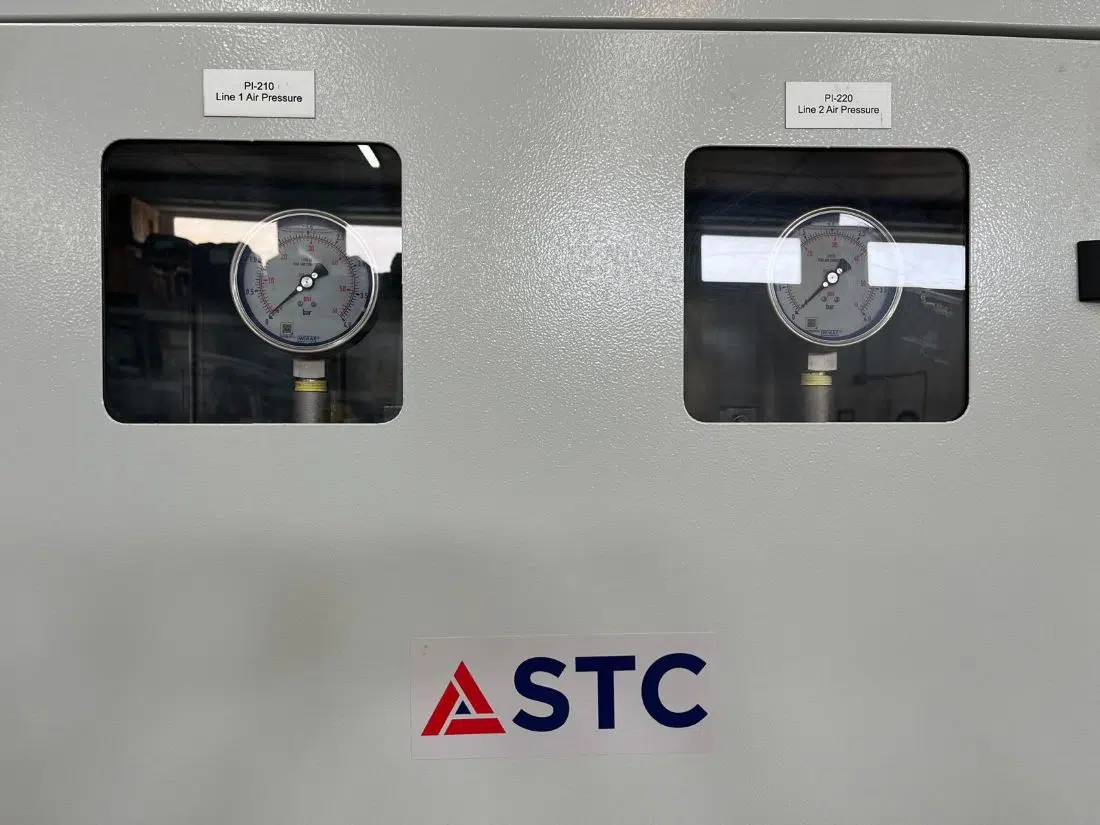
Each of the systems delivered to the US comprise a dual-line configuration, capable of independently supplying two submerged lances simultaneously, with completely independent control circuits, regulation systems and operating parameters for each lance.
In secondary lead refining, the selective oxidation of antimony, arsenic and tin is one of the most critical metallurgical operations.
“Process efficiency depends not only on the correct oxygen injection rate, but also on maintaining the refining kettle within a controlled temperature range throughout the operation,” Bergamaschini said.
Unlike conventional oxy-lance systems available on the market, he said STC’s system can operate in two different modes:
• Traditional manual operation, where the operator independently adjusts compressed air and oxygen flow rates through manual control valves;
• Fully automated PLC-controlled operation, where a dedicated control system continuously regulates both oxygen and compressed air through precision control valves according to the process requirements.
The automatic operating mode represents one of the most innovative features of the STC system, Bergamaschini said.
Intelligent temperature control is another important benefit. During lead refining, oxygen reacts selectively with antimony, arsenic and part of the lead, producing lead-rich oxides that float to the bath surface and can subsequently be removed.
As these oxidation reactions are strongly exothermic, excessive oxygen input can rapidly increase the bath temperature.
In conventional, manually-operated systems, maintaining the correct balance between oxygen and compressed air depends entirely on the operator’s experience. Small errors in flow adjustment can generate significant temperature fluctuations, causing thermal stress to the refining kettle.
However, Bergamaschini said STC’s system continuously monitors process parameters and automatically adjusts the oxygen/air mixture using dedicated proportional control valves, maintaining the molten lead temperature within the desired operating range, which is typically 580–620°C.
This has a number of advantages, including stable refining conditions, improved metallurgical efficiency and more consistent refining quality from batch to batch.
The system incorporates multiple advanced safety features and can be supplied in different configurations depending on refinery capacity and kettle dimensions.
Photo: STC