
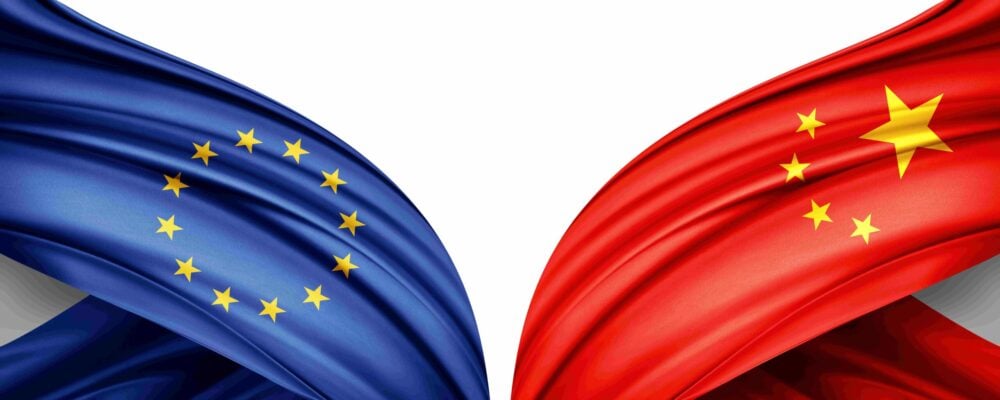
Europe faces trading-off EV manufacturing sovereignty in return for protecting auto sector jobs with Chinese investment, according to a white paper by energy data analytics firm Wood Mackenzie.
Europe’s auto giants have already announced some 60,000 layoffs this year, with more potentially on the horizon — but the EU could offer tariff relief in return for more Chinese cash for local manufacturing, under Wood Mackenzie’s ‘electric shock’ scenario.
The white paper, entitled Electric shock: how electric vehicles could hit the accelerator, released on August 17, sets the EU’s dilemma against the backdrop of EVs commanding a growing share of the global vehicle market.
There are implications for US policymakers and investors too.
The electric shock scenario explores how oil supply concerns, policy decisions and technological innovation, could converge to accelerate that growth and send EV adoption into overdrive — with implications for fossil fuels and battery materials.
Under the scenario, global oil demand could fall to 99 million barrels per day in 2040, bringing forward the closure of about 40 oil refineries worldwide.
Reductions
In Europe, one option could be to give tariff relief for Chinese investment in local manufacturing, protecting jobs while accelerating the EV transition. The result could be a European EV fleet 53% larger than the base case by 2040.
New Chinese-backed factories, tariff reductions and fuel tax-funded purchase credits could lower the total cost of ownership for EVs in Europe by 23% in 2040.
Meanwhile, in the US, abundant oil supplies mean the country has less of an incentive to shift to EVs than many other nations, Wood Mackenzie said. “Our base-case forecast sees EVs rising from 3% of the vehicle fleet today to 20% in 2040.”
However, without advanced battery technologies, the US auto sector is at risk of ceding its home market to non-Chinese EVs and falling behind competitors internationally.
Under the electric shock scenario, US policy support could encourage foreign direct investment and direct state capital to EV supply chains. Automakers could launch greenfield EV plants that deploy modular technologies, reducing EV production costs by up to 50% from current standards.
Wood Mackenzie estimates that an additional $45 billion in greenfield metals supply over the next decade would be sufficient to support the overall accelerated EV growth projected.
‘Critical bottleneck’
But with copper a “most critical bottleneck”, annual mine capacity additions would need to rise from around 850,000 tonnes per annum (the long-term average) to around 960,000tpa through 2040, requiring roughly $25 billion of that additional investment.
Much of that capital would need to flow into higher-risk jurisdictions including Argentina, the Democratic Republic of Congo and Pakistan. If established mining regions such as Chile, Peru and the US fail to streamline permitting and maintain competitive fiscal terms, a larger share of future growth will shift toward state-backed Chinese entities, deepening Western supply chain exposure.
Meanwhile, lithium and nickel present a more acute version of the same challenge. China has established dominant positions in processing, refining, battery manufacturing and vehicle production, while increasingly expanding in upstream mining assets. Replicating that ecosystem elsewhere would take decades, while cobalt and manganese are less exposed to bottleneck risks.
The onus is on the West for technology and supply-chain innovation, Wood Mackenzie said. In the near term, the West can license Chinese technology. Given Chinese leadership in advanced battery chemistries today, innovating new battery chemistries within the OECD will be a major challenge.
Lithium-manganese-rich batteries hold the strongest potential for Western-led battery technology through 2040 while advanced LFP and sodium ion are also possibilities. However, China is ramping up investment in these chemistries aggressively.
“Scaling up new technologies and supply chains in the West requires blending direct funding from Western automakers, governments and public sectors. Crucially, Europe and North America should work with Japanese and South Korean battery manufacturers.
“Companies from these nations, looking to deploy capital into frontier chemistries rather than chase returns on legacy technologies, anchor our electric shock scenario.”