
April 29, 2026: US manufacturers of BESS systems would struggle to compete with low-cost Chinese imports without crucial manufacturing and clean electricity tax credits, according to analysis published by ING on April 29.
Even under the current tariff regime, US four-hour turnkey battery systems using batteries that benefit from federal 45X tax credits are still 31% more expensive than systems using imported Chinese batteries, said report author Coco Zhang, of ING’s environmental, social and governance research unit.
Structural cost reductions will be critical as tax credits are phased out and this will be best achieved through technological innovation, the report said.
Meanwhile, only when the 45X tax credits are combined with new clean electricity tax credits — regulations 48E/48Y, which replaced (i) the production tax credit to focus on technology-neutral facilities and (ii) the investment tax credit for certain technologies — can US projects using US-made batteries in four-hour energy storage developments enjoy a cost advantage.
US battery storage growth in 2026 looks strong, but supply chain risks could limit expansion, the report warns.
Rising demand for non-Chinese components would push prices higher and greater investment in technology and cost reduction is needed for the eventual subsidy phase-out.
However, the report says it will be difficult to quickly dismantle China’s dominance, which accounts for nearly 90% of global lithium ion battery manufacturing capacity.
“It will take time for the US to ramp up domestic manufacturing, and in turn, it will still need to rely on imports in the near term.”
China accounted for the lion’s share of US Li-ion battery imports for EVs and non-EVs in 2025, at around 60%. It is worth watching whether tariffs on Chinese Li-ion batteries — currently standing at 25% under US trade regulations to prevent unfair practices — will be raised further, the report said.
But before manufacturing capacity increases meaningfully across all supply chain components, the US BESS industry will remain exposed to tariffs and foreign entity of concern (FEOC) restrictions that target China.
US battery cell capacity remains limited, while China controls more than 80% of global production.
“On top of that, BloombergNEF estimates that roughly half of the current US operating BESS cell capacity may have high FEOC exposure risk due to corporate structure and IP partnership. That could further constrain near-term compliant supply.”
In the near term, rising demand for FEOC‑compliant components is likely to push prices higher. Longer term, progress will hinge on the pace of vertically integrated battery manufacturing growth in the US and among non‑Chinese partners.
Car manufacturers repurposing EV batteries could also help to boost domestic BESS capacity.
ING’s report said as EV tax credits are phased out under the One Big Beautiful Bill Act and demand for battery storage from data centres accelerates, manufacturers are shifting their focus from EV batteries to battery energy storage systems.
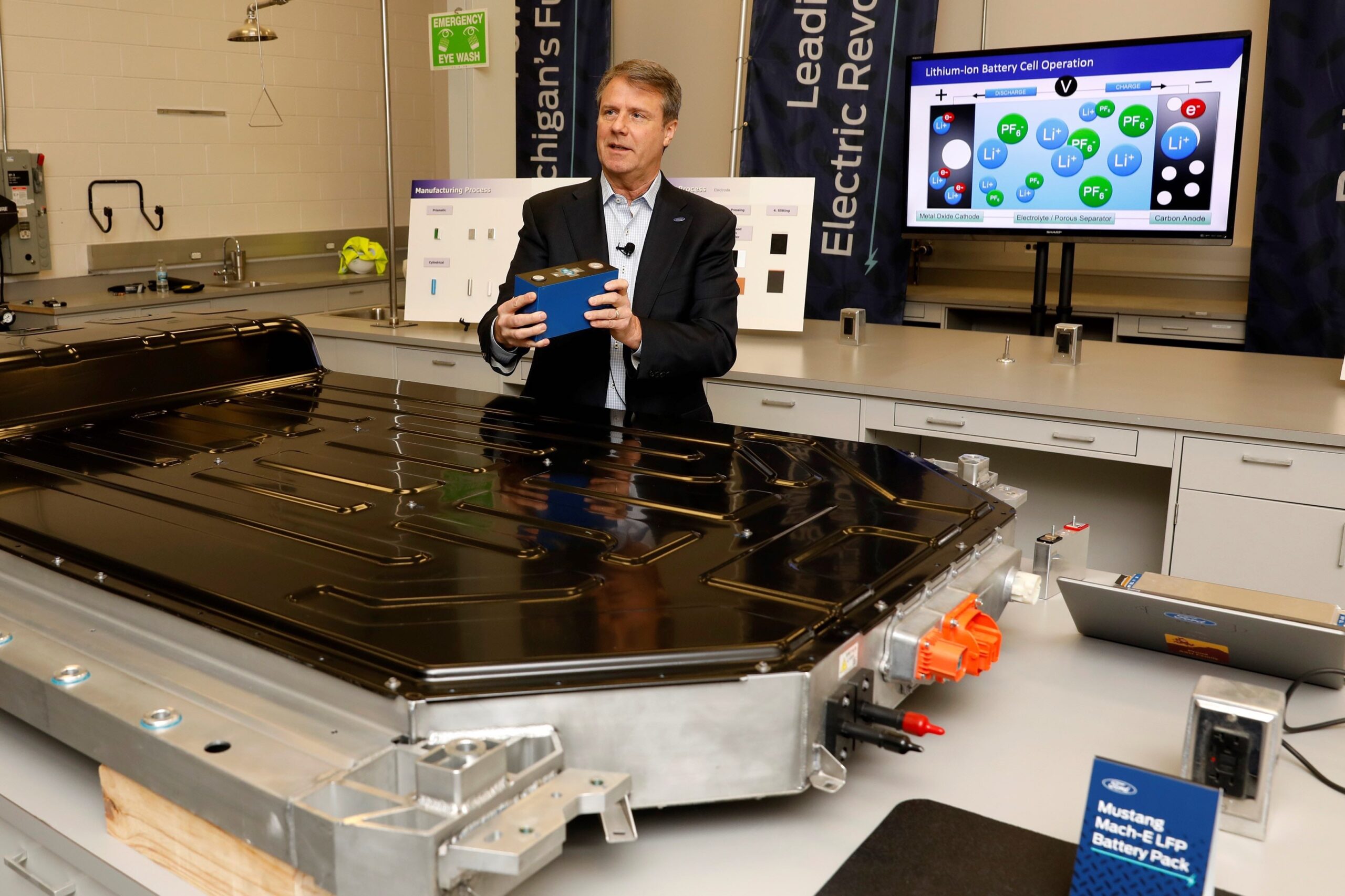
Ford, for example, has ended its EV battery joint venture with SK On and is repurposing its Kentucky plant to produce stationary LFP batteries, positioning the site as a BESS hub and exploring licensed CATL technology.
GM is redirecting excess and used EV batteries to partners such as Redwood Materials and SunPower, supplying BESS for customers, including AI data centres. Stellantis’s joint venture with Samsung SDI has made a similar shift in production priorities.