

Partner content: Erhardt+Leimer
The quality of a lithium-ion battery is determined long before the cell is assembled. Key parameters for energy capacity are already established during electrode manufacturing. In wet coating, which remains the established industrial process, uniform coating of the substrates copper and aluminum plays a crucial role. This places high demands on continuous, reproducible and process-oriented basis weight measurement. Besides providing a quality parameter, the measurement can be integrated directly into process control to correct deviations where necessary.
Basis weight as a key process parameter
Electrode manufacturing comprises several closely interconnected steps: mixing the slurries, coating both sides of aluminum or copper foils, drying, compacting the material in a press and subsequent slitting. The slurry consists of active material, conductive additives, solvents or water, and binders. Correct mixing directly affects its rheology and therefore its coating behavior.
In the coating line, the slurry is applied to the metal foil. To ensure consistent product quality, the basis weight must be continuously monitored throughout the coating process. Measurements can be performed after unwinding, after the first wet and dry coating stages, and after the second coating stage. If a measured value exceeds the defined tolerance, the result can be fed back directly to the coating unit, helping to keep the process within tightly defined process limits.
Additional information can be obtained by synchronizing measurement positions across the individual process steps. This same-spot principle makes it possible to track changes in basis weight at identical measurement points over several processing stages. For process analysis, not only the absolute measured value is relevant, but also how it develops throughout the production line.
Ultrasound as an alternative to radiation-based methods
Different technologies are available for basis weight measurement. In addition to beta and X-ray systems, ultrasound measurement systems are also used. All are based on the principle that a signal passes through the material, is partially attenuated and the remaining portion is detected and evaluated on the receiver side.
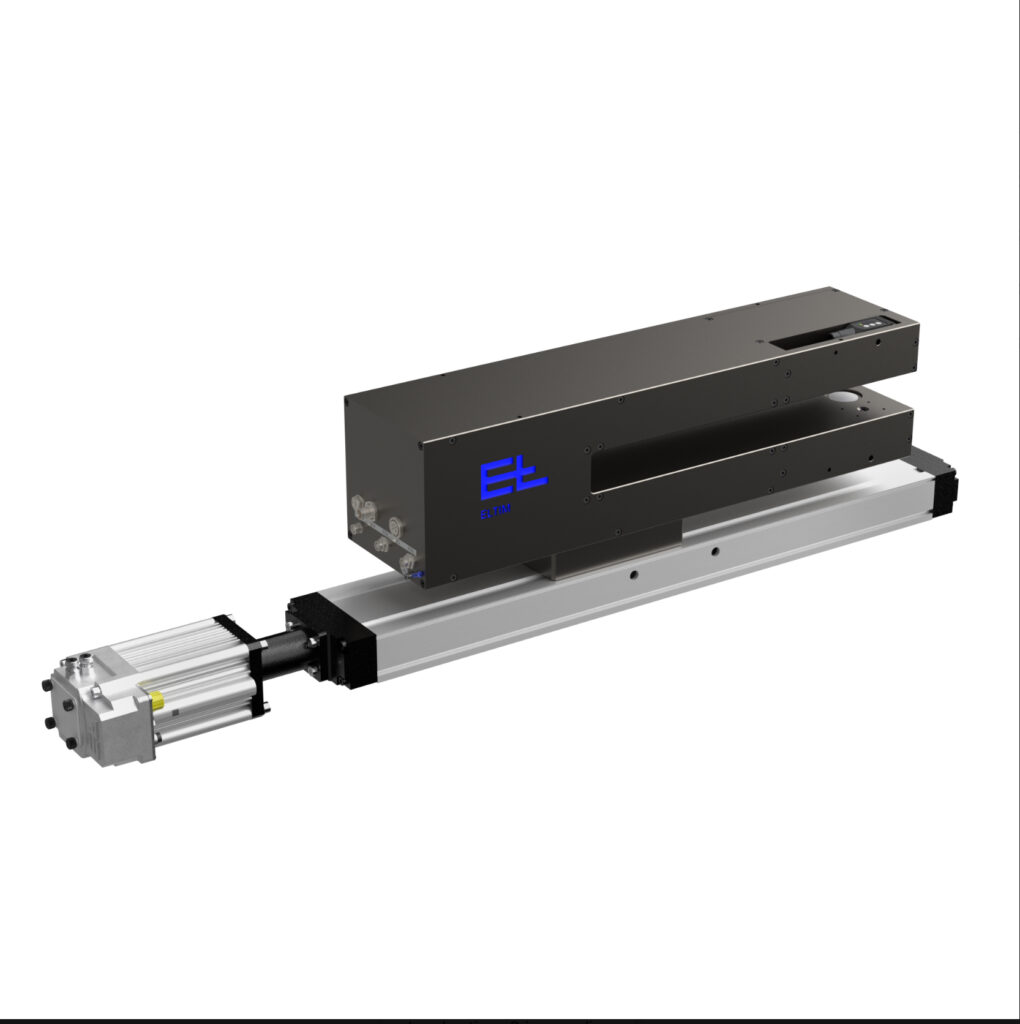
With ELTIM, Erhardt+Leimer uses an ultrasound measurement principle for contactless determination of the basis weight. The measuring system is calibrated against a current, verified sample to enable reproducible basis weight measurements. Temperature and humidity are recorded by integrated environmental sensors and considered during measurement. The specified measurement tolerance is +/- 0.5 percent or 0.001 grams relative to the total basis weight.
A key difference compared with radiation-based methods concerns the operating environment: ultrasound measurement does not require radiation protection measures. This reduces organizational and operational requirements in laboratory, pilot and production environments. According to Erhardt+Leimer, the system is available in CE- and UL-compliant versions, with an ATEX version available on request.
Traversing measurement for different process conditions
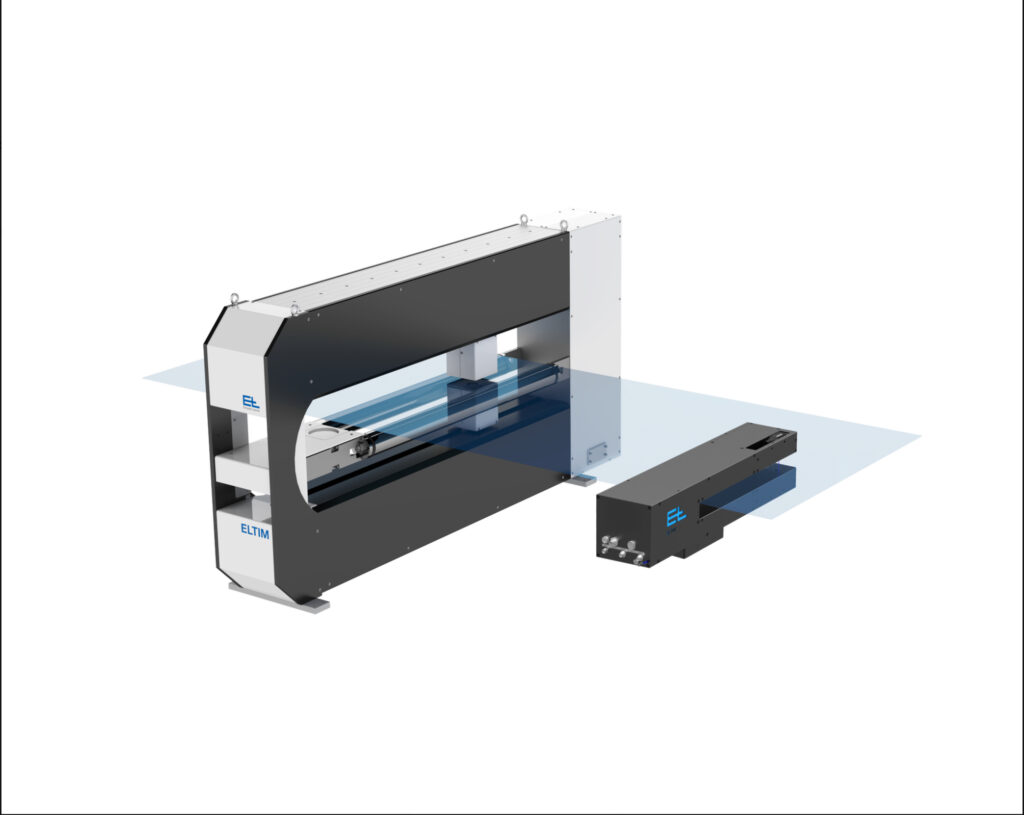
The ultrasound measuring system traverses across the material web. The objective is to achieve a balance between a high number of measurement points in the cross-machine direction and a sufficiently short measurement cycle in the machine direction. ELTIM enables traversing speeds of up to 300 millimeters per second. The repeat frequency depends on both the traversing speed and the speed of the production line and can be adapted to the process.
Alternatively, the measuring head can be positioned at a defined cross-web location if continuous measurement in the machine direction is required. This allows the system to be used both for full-width profile evaluation and for continuous local monitoring.
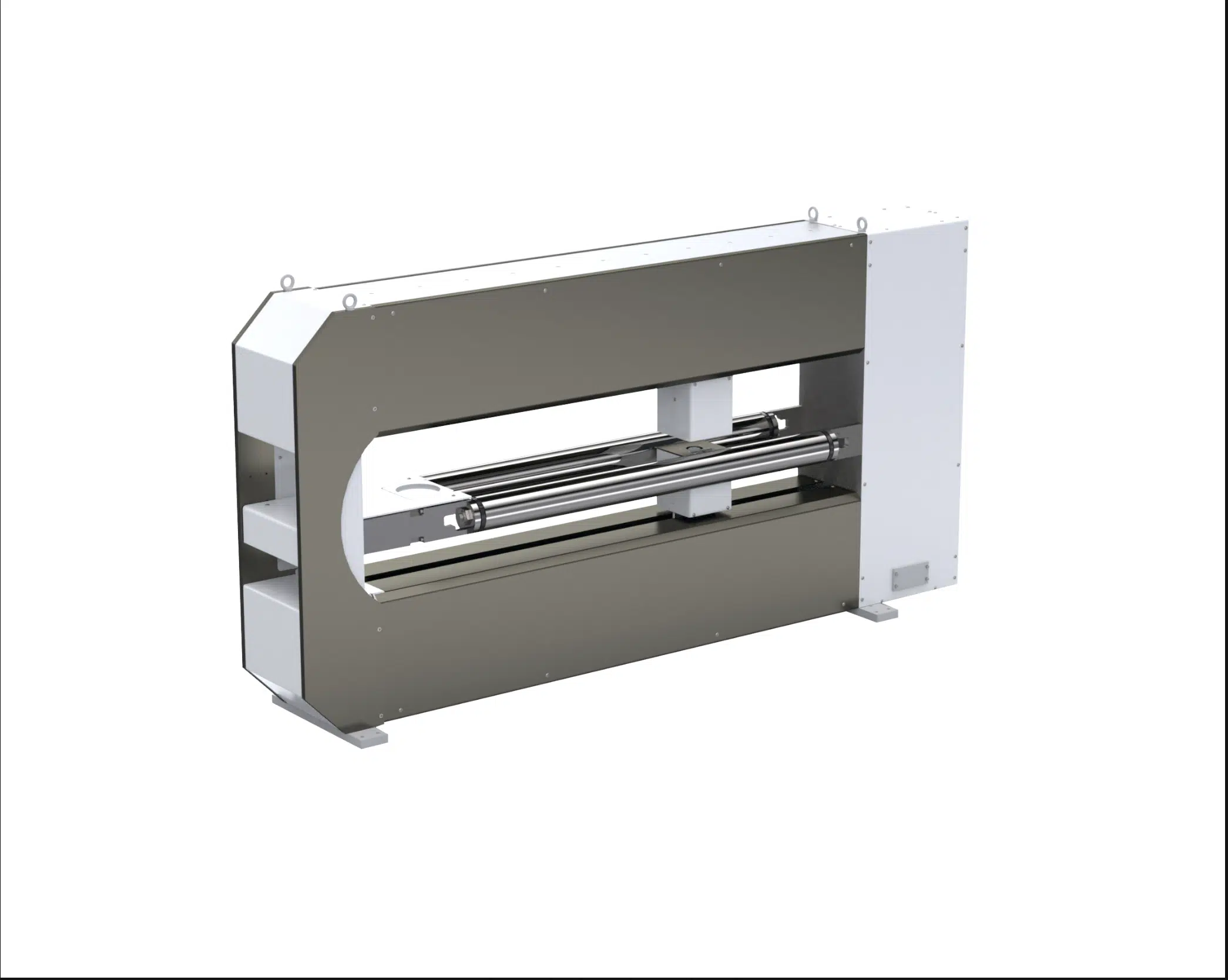
Depending on web width and installation space, C-frames or O-frames are available. C-frames are mainly intended for narrower webs in laboratory and pilot lines. The transmitter and receiver are mounted in a fixed position relative to each other, while traversing is carried out using motorized positioning support. For larger working widths, for example in tandem coating lines, O-frames are used. Their design is intended to reduce the influence of vibrations at greater widths. The transmitter and receiver move synchronously within the frame structure.
Data integration as part of quality control
The integration of measurement data into machine and quality-control architectures is becoming increasingly important. Erhardt+Leimer’s central ELQ data management system is used for commissioning, operation and monitoring of the installed measurement and control systems. An integrated MSA test verifies the measurement capability of the basis weight measurement system. Communication with the machine control system and transmission of measured values take place via standard Ethernet protocols.
For battery manufacturers, the value of such a solution extends beyond measurement accuracy alone. The combination of continuous measurement, feedback into the coating process, flexible positioning and digital integration supports process stability, scrap reduction and reproducible electrode quality. Basis weight measurement is therefore evolving from a purely inspection-based function into an active element of process control, with direct relevance to the consistency, scalability and efficiency of modern electrode coating lines.

https://www.erhardt-leimer.com/global/en/industries/batteries.html?utm_medium=print&utm_source=flyer&utm_campaign=2026.batteryindustry&utm_content=sd6.article