

The Consortium for Battery Innovation, the advocate for lead battery research and development, will broaden its horizons to embrace other battery chemistries from 2027.
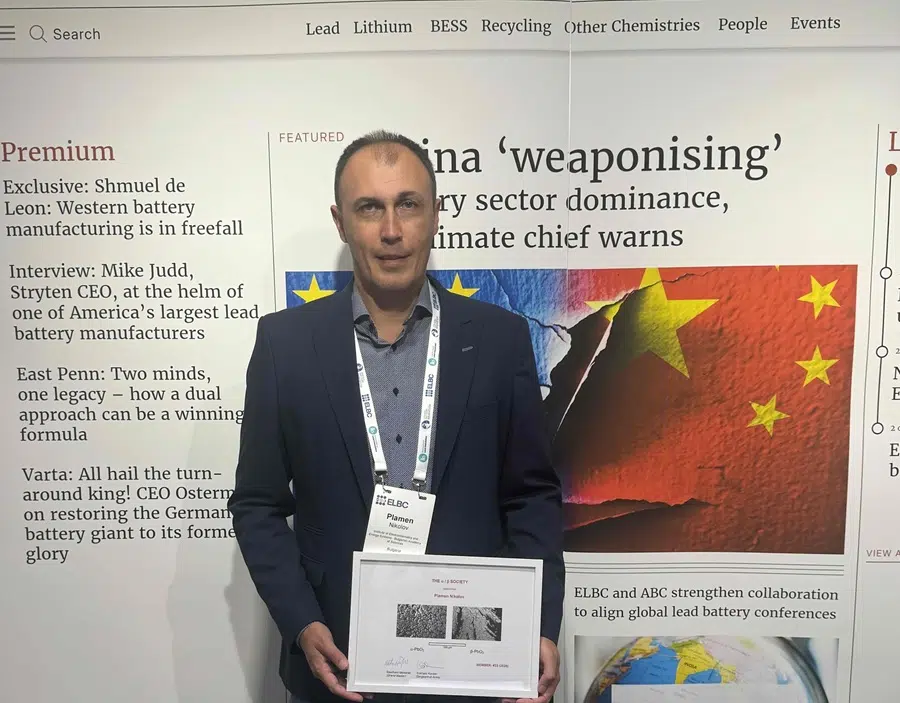
Alistair Davidson, executive director of CBI, announced this on September 16 in an opening address to delegates at the ELBC meetings in Vienna.
“We are all at a crossroads,” he said. “Today we will be hearing about changing markets, new technologies, threats and opportunities. The time has come for us to evolve. From next year, CBI will become a multi-technology battery research organisation.
“This is a hugely important step, not just for CBI, but for our whole industry.”
The reasoning behind the decision roots from the fact that the energy storage market has transformed itself dramatically over the past two decades and the pace of change has accelerated in the last five years alone. It’s hard, for example, to think of a lead battery major that is not heavily involved in other chemistries.
Stryten, for example, says it is pursuing a multi-chemistry strategy, rather than trying to replace lead with one successor technology. Its current work centres on three main families: advanced lead, lithium ion and vanadium redox-flow batteries. The company now describes itself as “technology agnostic” — unthinkable a decade ago.
Clarios is similarly involved in other chemistries, most notably that of sodium ion working with Altris. Its lithium strategy is concentrated on the low-voltage electrical architecture surrounding the propulsion battery — supplying power for electronics, safety systems and increasingly software-defined vehicles.
“Currently more than 80% of lead battery manufacturers, and many suppliers, already work across multiple battery technologies,” Davidson confirmed. “
The industry has already started to evolve — and CBI must evolve with it. This is a pivotal moment, one that will secure the future of lead battery research and innovation.”
Davidson said the purpose and mission wouldn’t change — it would remain a pre-competitive research organisation and the new structure would,, he believed, be beneficial to both lead battery R&D as well as other technologies.
“One of the key reasons this decision has been made by the CBI membership is that it will ensure we protect and grow our commitment to lead battery research. It will ensure that the lead battery isn’t left behind, that it continues to adapt, and improve and that it retains its market relevance.”
He also reckoned that it would be able to tap a larger audience of decision-makers: “We simply couldn’t do this as a lead-only organisation, and now we can make sure our lead battery message gets across, credibly, to the right people.”
The CBI decision — something that originated from its membership — had in fact been anticipated by Batteries International since 2024 when we understand that the first informal discussions took place.
It also follows the direction that Roger Miksad, president of Battery Council International had taken the North American trade organisation. In 2022 BCI began representing itself in policy debates involving all chemistries. The following year it set up the Flow Battery Industry Group (which went on to run its own conference). A year or so later it set up a sodium ion study group.
Perhaps the key indication of change was when it crossed an important membership threshold as ENEROC USA became BCI’s first lithium-only battery manufacturer member.
Miksad saw the latest move as positive: “The question shouldn’t be, ‘what does CBI’s decision say about the lead battery industry?’ They’ve done what BCI did and looked at their traditional membership base, which is an incumbent energy storage manufacturing industry, and, as a trade association, they’re simply meeting those members’ business interests.
“Of course, there are always going to be people taking something negative from the news, but it actually says good things about the lead industry. Traditional lead battery manufacturers are growing and expanding and looking at market opportunities that just happen not to be lead based. This simply reflects that.”
A similar puzzle over lead research happened just a decade ago. The ILA took over running the ALABC around 2016 when people questioned the independence of its R&D programme. Then in 2018, ILA announced that ALABC would be rebranded as the Consortium for Battery Innovation (CBI), reflecting its broader role in research, demonstration and advocacy.
Moving ALABC under ILA therefore raised an obvious question: would research priorities now be influenced by the wider political, communications and regulatory objectives of the lead-producing industry rather than principally by battery technologists? There was opposition as it involved a culture change too, but in the end the take-over was for the best.
“We’ve been here before,” says Davidson. “Some of us remember the reaction when we changed our name from ALABC to CBI. But look at what that did for this industry: it opened doors, enabled our success with government funding and end users, and laid the foundations for this transition.”
Delegate reaction was largely positive as the news was digested. Julie McClure, chair of MAC Engineering said: “This is a good thing. There are multiple technologies that just aren’t there yet, and the world is going to become a multi-technology world. I don’t think we’re ever going to get rid of one technology. This will inevitably open up the way to making lead better in the long run.”
So, will this change alter the function of the ILA? It seems unlikely.
Hywel Jarman, senior director of communications for the association said: “The future for lead battery research is more secure working as part of a multi-technology research group, as demand for complementary solutions continue to grow and, of course, most CBI members are already multi technology battery companies.
“ILA will continue to support and champion lead battery research through CBI.”
Photo: CBI