

Iranian battery manufacturer, Platin Iran, has begun commercial production of a graphene-enhanced lead battery, claiming the technology can increase capacity by more than 60% and significantly extend service life.
The development follows four years of research involving Platin Iran, the Graphene and Advanced Materials Laboratory at Amirkabir University of Technology in Tehran and the Institute for Color Science and Technology.
The company says its technology uses three-dimensional graphene incorporated into both the positive and negative active materials of conventional lead batteries, improving performance without changing the underlying chemistry.
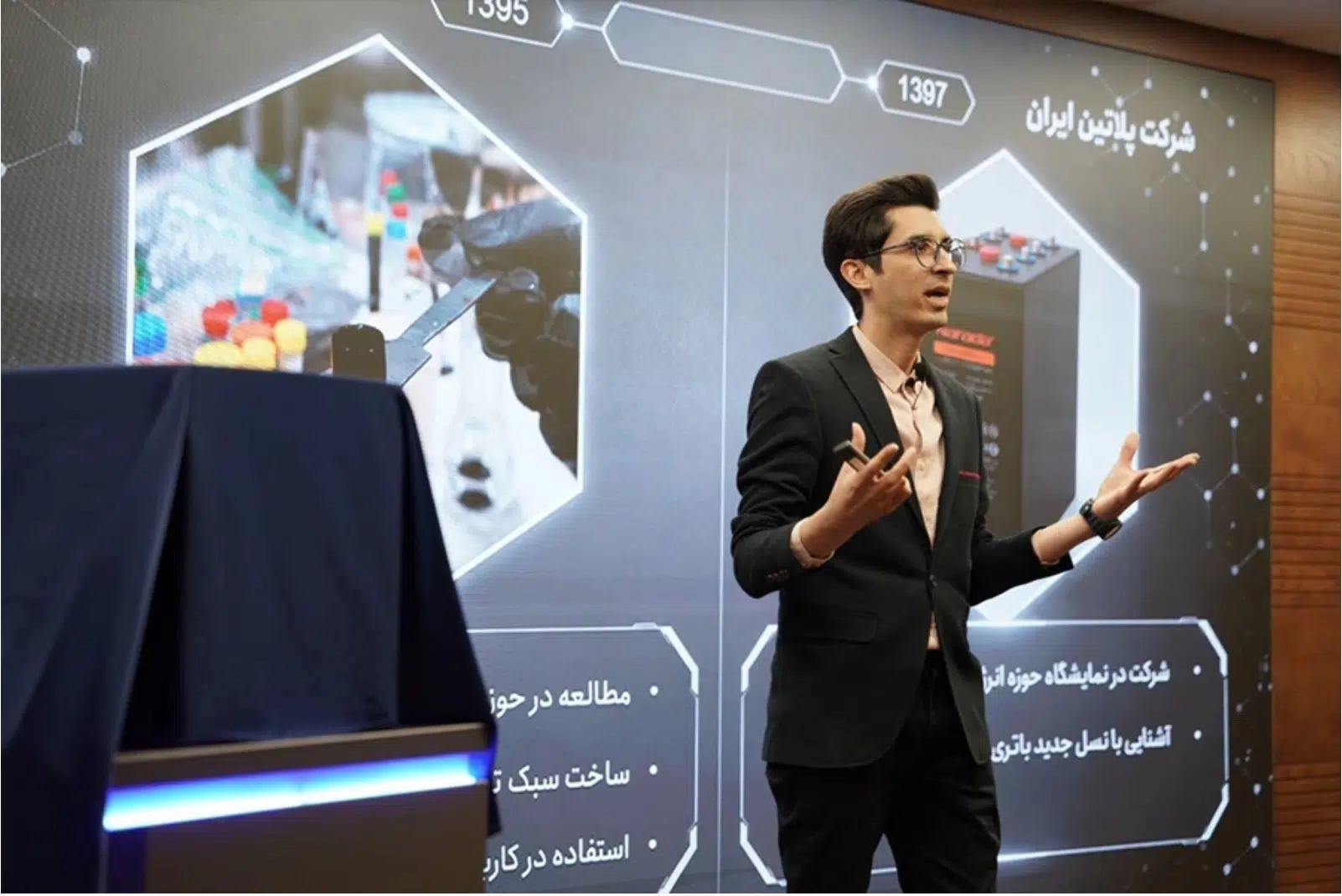
Mehdi Orouji, research and development manager at Platin Iran, said the project began in 2021 and had progressed through laboratory testing and pilot production to industrial manufacturing and commercialisation.
“After four years of research and development, the project reached the stages of industrial production and commercialization,” he told Iranian news agency Tasnim.
According to Orouji, testing has demonstrated capacity improvements exceeding 60% and service-life gains of at least 10% compared with conventional batteries. The company also claims its batteries could last twice as long as some commercial alternatives, potentially reducing operating costs by as much as 50% over their lifetime.
However, the performance figures have been reported under different testing conditions and have not been independently verified at commercial scale.
The technology is intended to address some of the longstanding weaknesses of lead batteries, including positive grid corrosion, hydrogen evolution and sulphation, which can accelerate degradation and shorten operational life.
Orouji said hydrogen gas release had been reduced by at least 10%, while graphene’s conductive and capacitive properties contributed to improved battery performance.
The company is targeting industrial and stationary applications, including telecommunications, power generation, electricity networks, data centres and solar energy storage.
Although Platin Iran describes the technology as having reached commercial production, sales remain at an early stage. Two batteries were sold during the previous Iranian year, with one supplied to Iran’s Nanotechnology Development Headquarters and the other to the Tabriz Gas Transmission Company.
The company has also pursued international patent protection for its graphene-based technology. A US patent application covering porous carbon-based materials for lead batteries was published on October 29.
Earlier this year, Platin Iran said its graphene-enhanced batteries could offer approximately twice the cycle life of conventional products at a purchase price around 30% higher.
The development comes as manufacturers continue to investigate advanced carbon additives as a means of improving the performance and competitiveness of established lead battery technology.
For Platin Iran, the next challenge will be demonstrating whether the reported laboratory improvements can be reproduced consistently in commercial production and sustained under real operating conditions.