

Competition for used batteries is intensifying across Japan, pushing up scrap prices and putting pressure on recyclers. Meanwhile, the country’s lead battery manufacturers are facing higher costs and an uncertain long-term market.
Japan’s secondary lead industry is facing growing competition for used automotive batteries, with shortages of recyclable material pushing scrap prices higher despite uncertainty over the longer-term outlook for lead battery demand.
According to the Japanese metals newspaper Japan Metal Daily, prices for spent automotive lead batteries reached ¥115–¥120 ($0.75–0.80) per kilogram in early September, compared with ¥100–110 during the first half of 2026.
On October 2, Nikkan Sangyo Shimbun, a daily Japanese newspaper, reported that spent automotive lead-acid battery prices had reached approximately ¥115/kg, close to their highest level of the year. The paper attributed this to reduced battery replacement and vehicle-scrapping volumes, together with stronger competition among collectors.
On October 10 a Kyoto scrap buyer was reported by ScraPrice, an international online platform that tracks and compares scrap metal prices, as paying ¥123/kg for automotive lead-acid batteries.
Japan Metal Daily attributed the overall increase to competition among collectors and recyclers for limited supplies of scrap. Even the winter replacement season, traditionally an important source of spent automotive batteries, failed to generate the volumes dealers had expected.
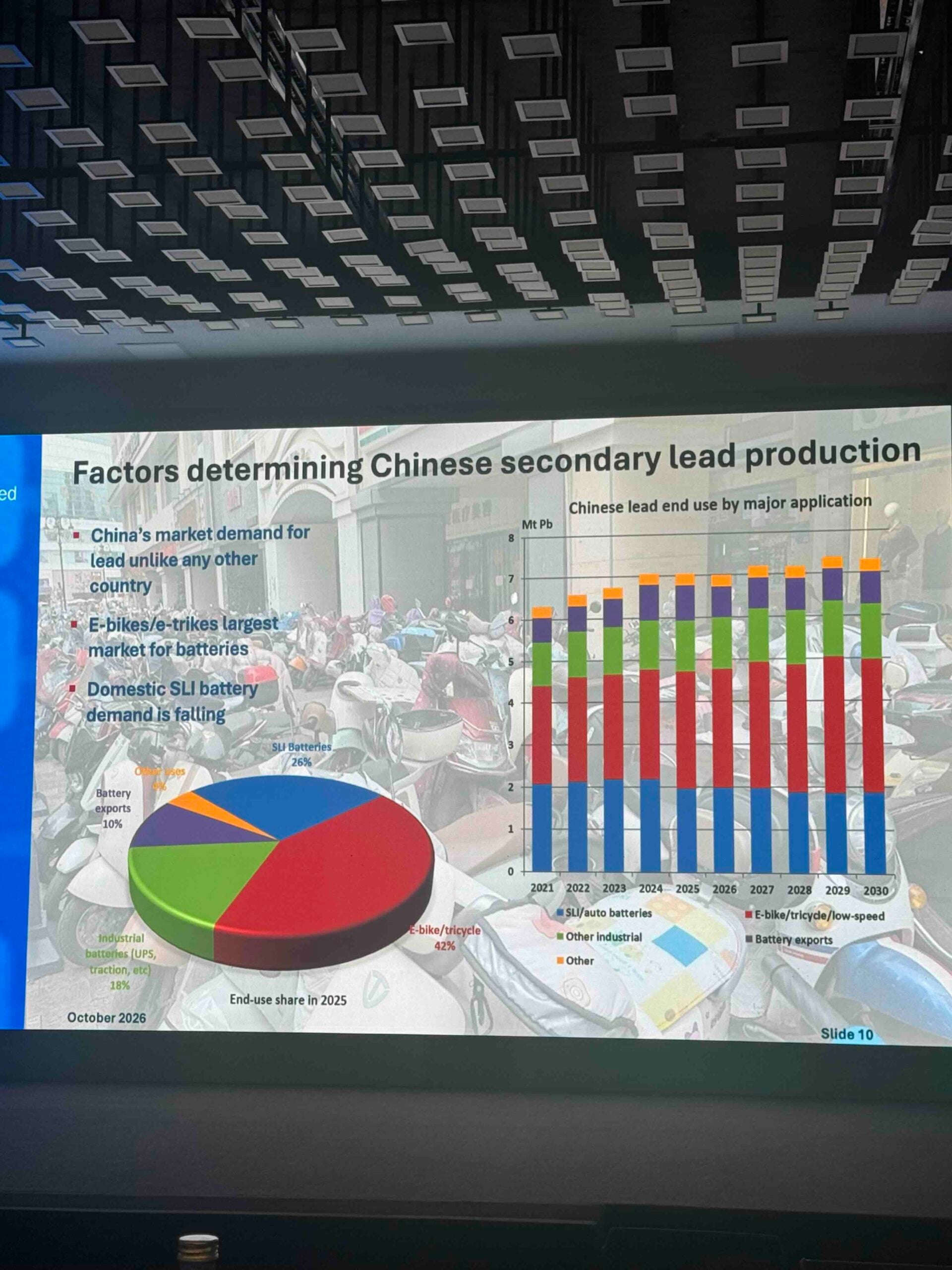
The shortage reflects changes taking place across Japan’s lead industry. Domestic recyclers are competing with new entrants, including Chinese secondary lead companies, while primary smelters are increasingly turning to recycled material as supplies of lead concentrates become more difficult to secure.
Industry presentations suggest that two or three Chinese-backed secondary lead operations are already active in Japan. Although the number of established Japanese recyclers has remained relatively stable, the additional competition is increasing pressure on scrap collection networks.
Japan’s dependence on imported raw materials complicates this further. In 2024, the country imported almost 120,000 tonnes of lead ores and concentrates, worth approximately $314 million, principally from Australia, Mexico, Bolivia, the US and Peru.
Meanwhile, battery manufacturers are confronting their own cost pressures.
In June, GS Yuasa announced price increases of at least 20% across its replacement automotive, motorcycle and cycle-service lead battery ranges, effective from August. The company cited higher raw material, energy, logistics and labour costs, together with continuing uncertainty over international procurement
The broader market remains substantial. GS Yuasa, Energywith and Furukawa Battery are Japan’s three principal domestic lead battery manufacturers, although industry observers expect production to consolidate over time.
Electrification and Japan’s ageing population present longer-term challenges, but the replacement battery market remains resilient. GS Yuasa forecasts Japanese lead battery sales of ¥117 billion for fiscal 2026, up from ¥108 billion the previous year, although the increase reflects revenue rather than necessarily higher battery volumes.
The company is also developing auxiliary lead batteries for hybrid and electric vehicles, where dependable low-voltage power remains essential.
For recyclers, the immediate concern is less about disappearing demand than obtaining sufficient scrap to meet it. Japan’s experience illustrates how a mature battery market can face tightening raw material supplies even as its long-term growth prospects diminish.
Japanese automotive trade reporting identifies increases of at least 10% from Furukawa Battery and Energywith (which took over the battery operations of Showa Denko Materials in December 2021), and approximately 10% from Panasonic Automotive Systems in 2026.