

The latest forecasts from the International Lead and Zinc Study Group show a growing oversupply of lead, rising inventories and continued pressure on the metal’s prices.
Meanwhile, India is emerging as a major driver of growth in both production and consumption.
The global refined lead surplus is forecast to rise from 90,000 tonnes in 2026 to 163,000 tonnes in 2027, as production continues to outpace demand, according to figures presented by the ILZSG at the International Secondary Lead Conference in Colombo on Monday.
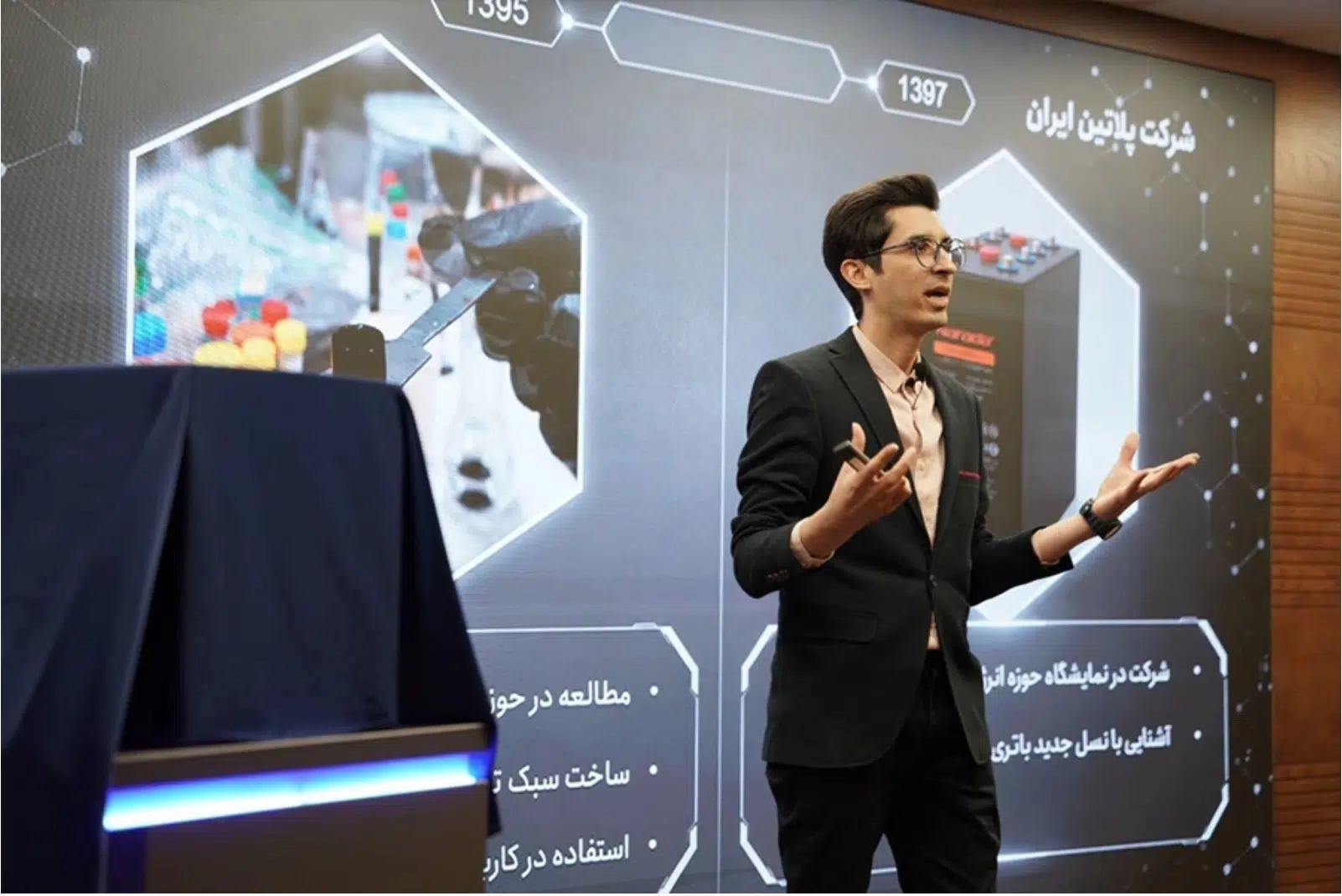
Speaking at the 10th International Secondary Lead Conference in Colombo on October 26, João Jorge, director of statistics and marketing at the ILZSG, said the market had been well supplied for the past three years, with inventories continuing to accumulate and prices weakening.
Global refined lead production is forecast to increase by 1% this year and 1.5% in 2027, compared with expected demand growth of just 0.9% and 1% respectively.
The growing imbalance is already reflected in London Metal Exchange inventories, which have reached approximately 340,000 tonnes following a substantial delivery into an LME warehouse in Singapore in July.
Lead prices have fallen by 6.8% over the past 12 months, underperforming most other base metals. The average LME price in October has remained below $1,850 a tonne.
China and India
One of the most significant findings in the ILZSG presentation was the changing geography of lead demand.
China, which dominated global growth between 1995 and 2015, is no longer the principal source of rising consumption. Its lead usage is forecast to increase by just 0.2% in 2026 before declining by 0.6% in 2027.
The slowdown reflects weaker automotive production, falling net exports of lead batteries and the continuing shift from conventional combustion engine vehicles towards new energy vehicles.
However, several sectors are helping to maintain Chinese lead consumption.
Investment in artificial intelligence data centres is supporting demand for uninterruptible power supply batteries, while motorcycles and replacement batteries remain important markets.
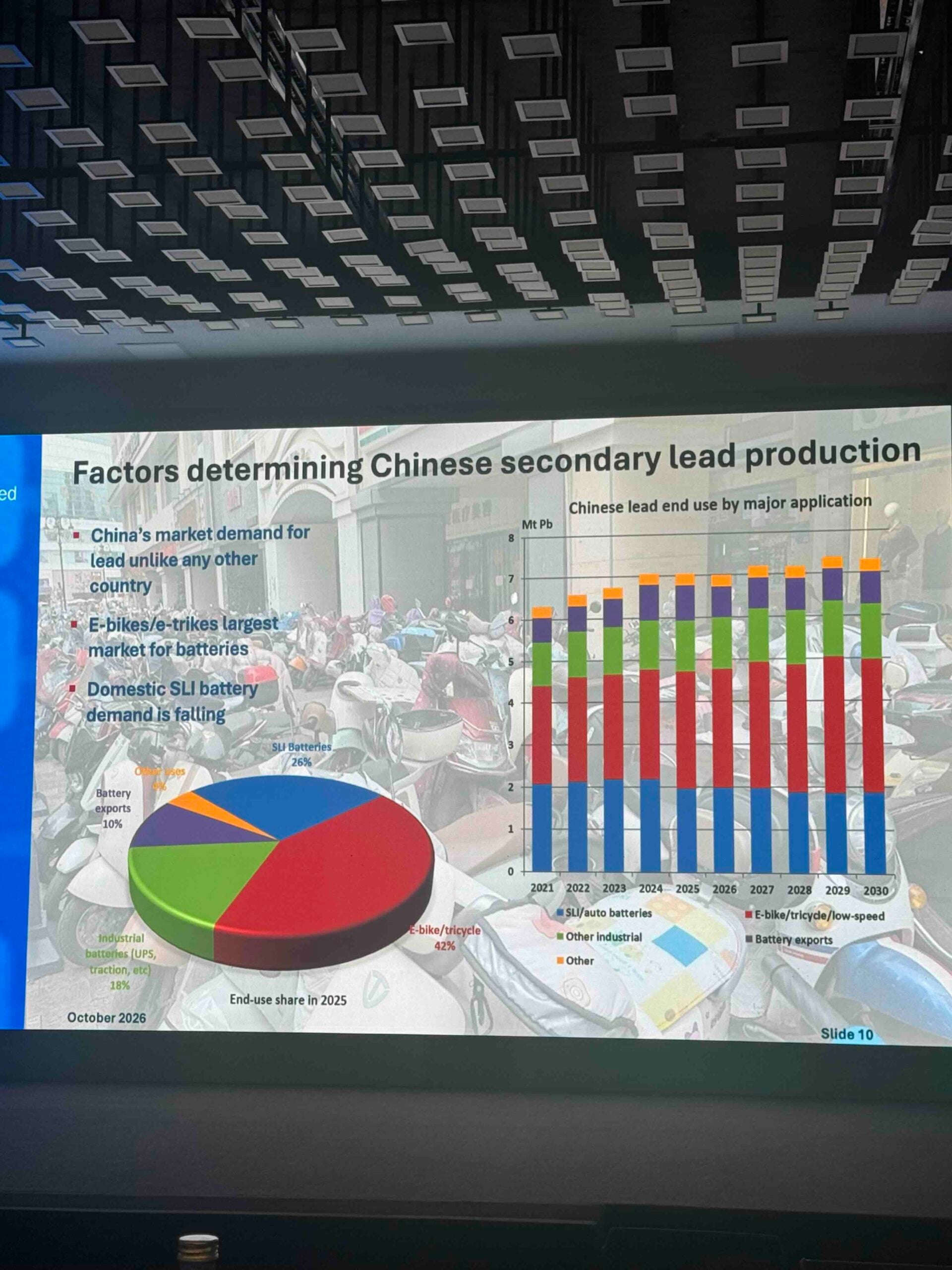
Electric bicycles represent another substantial source of demand. China has an estimated fleet of more than 300 million e-bikes, approximately 80% of which use lead batteries.
According to Shanghai Metals Market forecasts cited by Jorge, lead demand from this sector could increase by an average of 5% annually between 2026 and 2030, potentially adding almost 700,000 tonnes of annual demand by the end of the decade compared with 2025.
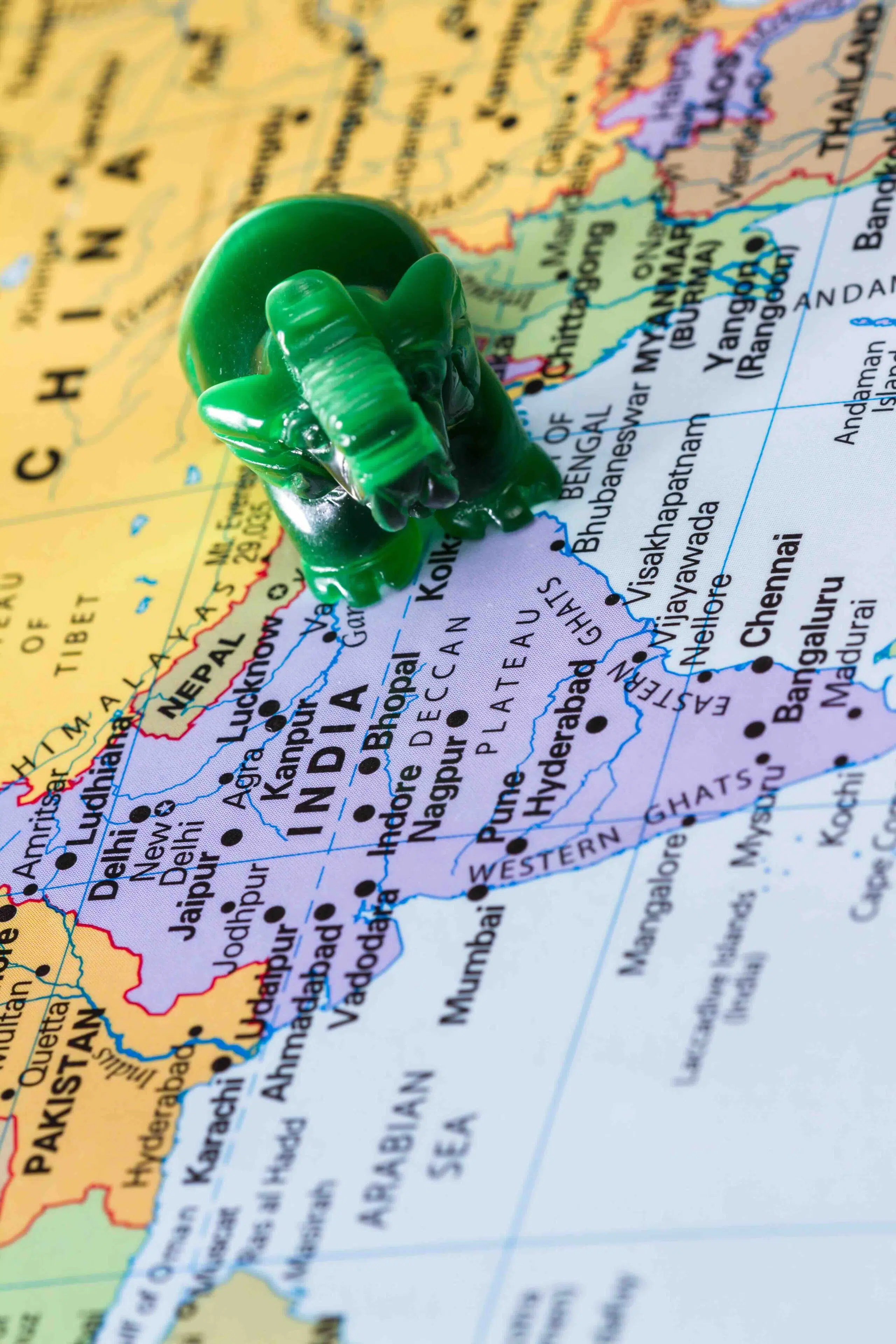
India is emerging as one of the most important markets for the global lead industry, both as a producer and consumer.
Indian lead usage in 2025 was nearly 50% higher than a decade earlier, supported by economic growth, vehicle ownership and a substantial replacement battery market.
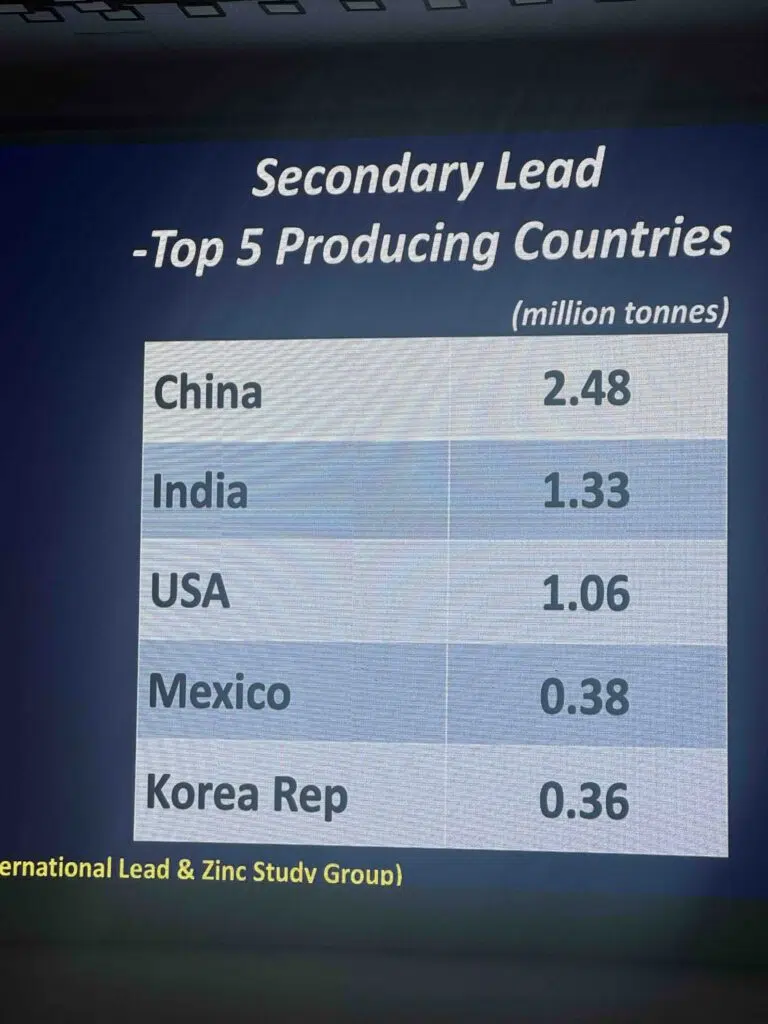
The country overtook the US in refined lead production in 2021 and is now the world’s largest producer outside China. Much of this expansion has come from secondary smelting, with hundreds of licensed (and presumably informal) recyclers operating across the country.
Further growth is expected in 2026, supported by additional capacity at Gravita’s facilities in Gujarat and Rajasthan.
On the demand side, India’s expanding fleet of two- and three-wheelers, commercial vehicles and passenger cars is providing a continuing market for lead batteries.
Passenger car sales increased by almost 20% in the first half of 2026, while the country’s renewable energy ambitions offer further opportunities for lead batteries in stationary storage.
Jorge also highlighted forecasts suggesting that lead demand from India’s electric vehicle sector could grow by an average of as much as 32% annually to 2030, although competition from lithium-ion batteries is increasing.
Scrap shortages
Recycling now accounts for 68% of global refined lead production, underlining the secondary industry’s importance to the market.
There are considerable regional differences. Secondary lead represents 93% of refined production in the Americas and 81% in Europe, compared with just 59% in Asia.
Despite substantial investment in secondary smelting capacity, the proportion of refined lead produced from recycled materials has declined from approximately 50% in 2021 to an estimated 44% in 2026.
Jorge identified the availability of used lead-acid batteries as the principal constraint. Secondary smelting capacity has expanded faster than scrap supply, intensifying competition for raw materials, increasing costs and squeezing margins. Some Chinese smelters are consequently operating well below their installed capacity.
The figures suggest that additional recycling investment alone will not necessarily translate into higher secondary lead output without corresponding improvements in battery collection and scrap availability.
Mine production to recover
Global lead mine production, which peaked above five million tonnes in 2013, has been on a declining trend for more than a decade. The ILZSG expects another contraction in 2026, followed by a recovery of 2.9% in 2027, driven largely by new Chinese mining capacity.
Production increases are also anticipated in Europe, India and Peru, with Australia expected to benefit from the planned commissioning of a new lead-silver operation in the second half of 2027.
In questions following his presentation that additional mine capacity would not immediately create an oversupply of lead concentrates. New mines take time to reach full production, while China remains a net importer of concentrates.
Non-Asia
Outside Asia, the ILZSG expects lead consumption to increase in both Europe and the US during 2026 and 2027.
European usage is forecast to rise by 1.3% this year and 0.7% next year, supported by automotive production and replacement battery demand.
Although battery electric vehicle sales in Europe increased by 35% in the first half of 2026, vehicles with combustion engines, including hybrids, still represented nearly 80% of Western European passenger car sales.
In the US, lead demand is forecast to increase by 2.5% in 2026 and 2.3% in 2027.
Declining net imports of SLI batteries suggest that domestic manufacturers are meeting a greater proportion of US demand. Tariffs could also encourage higher utilisation of domestic smelting capacity.
The ILZSG’s overall outlook is therefore one of modest global demand growth, increasingly concentrated outside China, against a background of expanding refined metal production.
For the secondary lead industry, the findings point to two distinct challenges: a global market facing persistent oversupply and a recycling sector in which access to spent batteries, rather than processing capacity, is becoming an increasingly important determinant of competitiveness.
Principal figures from the presentation
| Indicator | 2026 forecast | 2027 forecast |
| Global refined lead surplus | 90,000 tonnes | 163,000 tonnes |
| Refined lead production growth | +1.0% | +1.5% |
| Global lead demand growth | +0.9% | +1.0% |
| Chinese lead demand | +0.2% | −0.6% |
| US lead demand | +2.5% | +2.3% |
| European lead demand | +1.3% | +0.7% |
| Global mine production | Decline | +2.9% |
There is growing disconnect between investment in recycling capacity and the availability of spent lead batteries, set against the wider forecast of a near-doubling in the global lead surplus.