
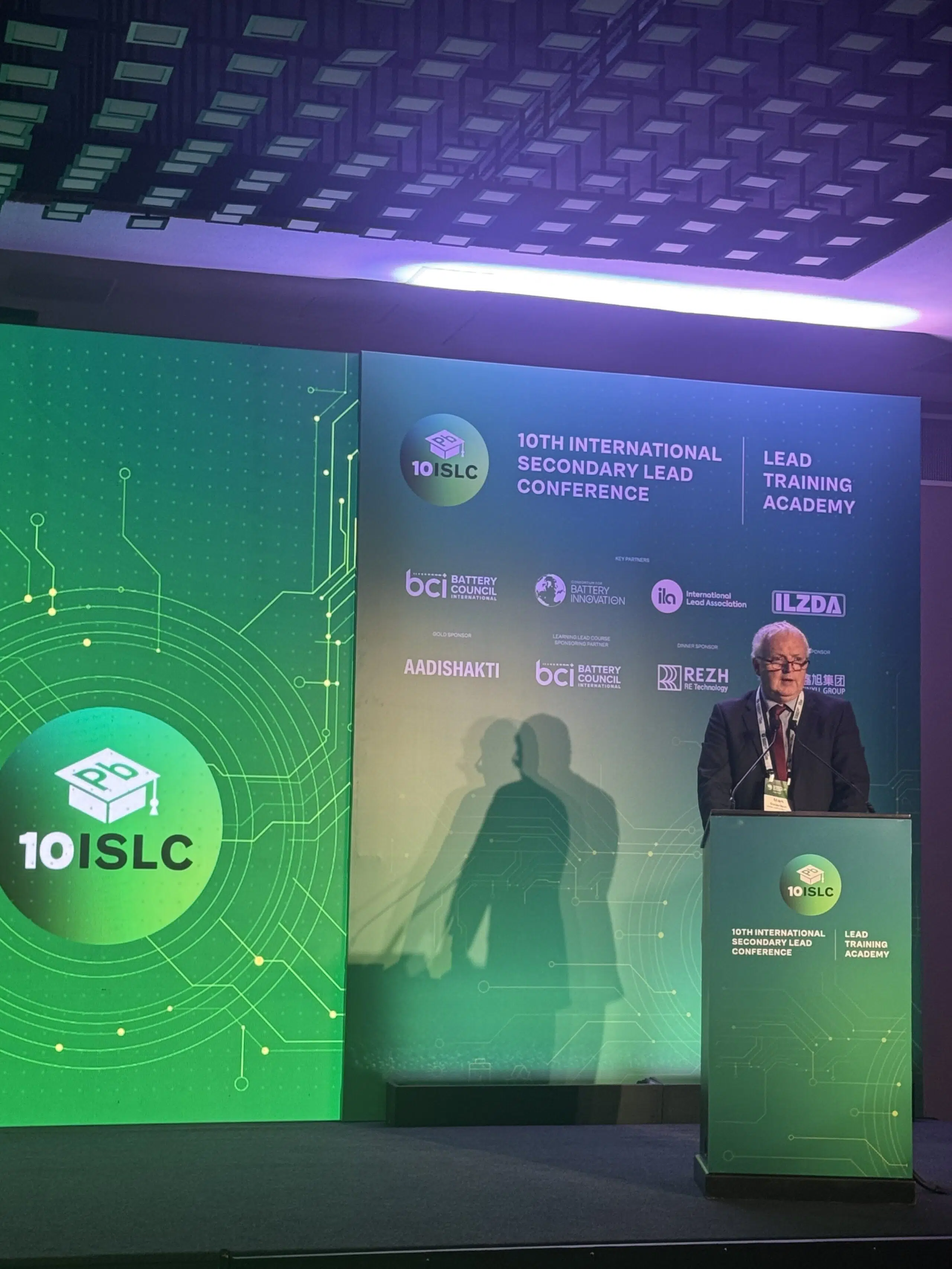
An initiative to preserve technical knowledge, develop new talent and improve understanding of lead recycling across the industry was launched in Colombo, Sri Lanka last week alongside the 10th International Secondary Lead Conference.
Opening the 10th International Secondary Lead Conference, organiser Mark Stevenson said the new training academy had evolved from discussions dating back four or five years about how the industry could address gaps in technical knowledge and professional development.
The academy, Stevenson said, was intended to provide a broader foundation of knowledge for everyone involved in lead production, recycling and associated activities, including regulators, non-governmental organisations and newcomers to the sector.
Four factors had driven its creation: the need to preserve expertise accumulated by experienced industry professionals, growing demand for information from governments and NGOs, support from industry associations and the need to attract younger people.
Stevenson recalled discussions with Dr Mike McDonagh about the failure of experienced professionals to pass on their knowledge to succeeding generations. “We both said, ‘Let’s do something different,'” he told delegates.
He also highlighted the importance of providing a common foundation of understanding for people approaching the industry from different backgrounds.
“Let’s bring people together and start teaching them, so their foundation is just as strong as ours, and it includes everybody.”
The initiative has received support from Battery Council International, the International Lead Association and the Indian Lead Zinc Development Association.
The Colombo meeting also marks a departure from the conference’s traditional format. The International Secondary Lead Conference has normally been held alongside the Asian Battery Conference, but was separated this year to accommodate the academy and mark its tenth edition.
The first conference was held in Macau 17 years ago. Stevenson said the event would return to its association with the Asian Battery Conference next year.
ILA managing director Andy Bush, speaking at the opening, said understanding developments in secondary lead markets, regulation, worker health and production technologies was essential to the industry’s future.
Stevenson also envisaged the conference becoming a training ground for younger professionals, giving them opportunities to chair sessions and present papers before moving on to larger international battery conferences.
He stressed that the academy’s remit extended beyond established manufacturers and recyclers to include those working to improve lead recycling practices in countries such as Nigeria, Ghana and India.
The objective, he said, was to encourage knowledge sharing across the entire lead industry rather than treating its different sectors as separate communities.