

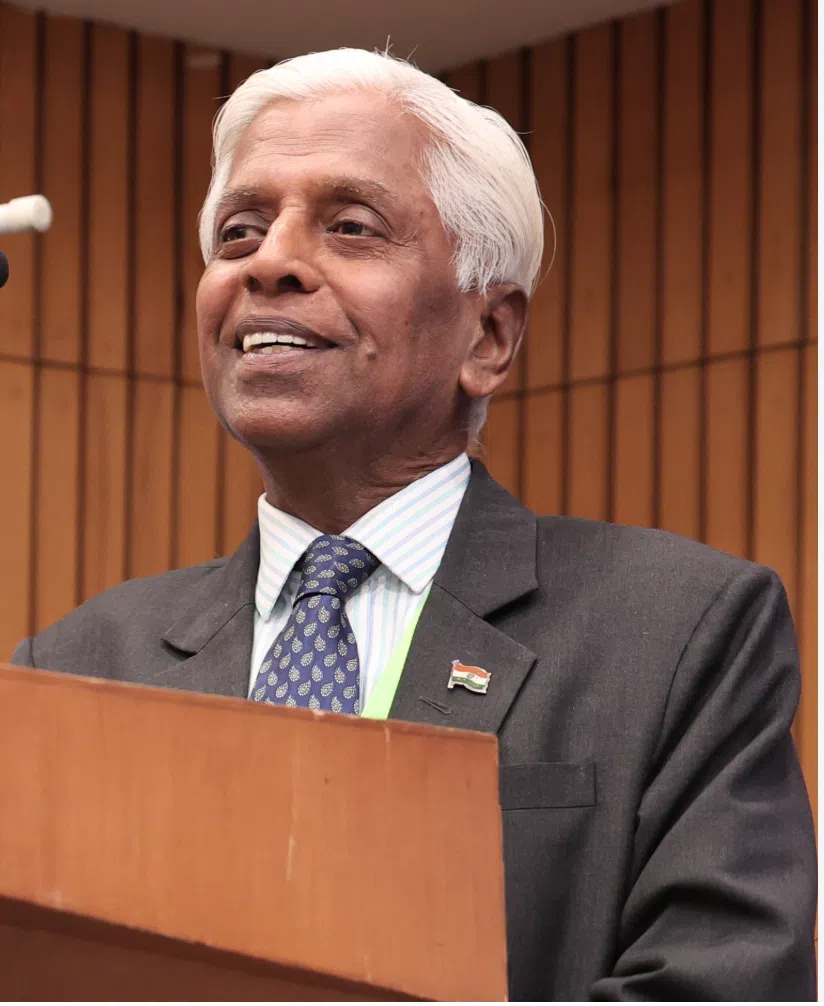
India’s battery dealers must be made accountable for the collection and disposal of spent batteries if the country is to tackle its persistent informal lead recycling problem, according to L Pugazhenthy, executive director of the India Lead Zinc Development Association (ILZDA).
Speaking at the 10th International Secondary Lead Conference in Colombo on October 26, Pugazhenthy (known informally as “Mr Pug”) called for tighter regulation of battery dealers, mandatory reporting of spent battery collections and regular audits of authorised recycling facilities.
He warned that India’s Battery Waste Management Rules 2022, which introduced extended producer responsibility (EPR) requirements across battery chemistries, do not adequately address the role of dealers in directing spent batteries into legitimate recycling channels.
Pugazhenthy identified battery dealers as a major route through which spent batteries are diverted into the informal recycling sector, arguing that their responsibilities are not sufficiently defined under the current regulations.
He estimates that approximately 65% of India’s recycled lead production comes from authorised recyclers, while around 30% is attributable to the informal sector.
India is one of the world’s largest secondary lead producers, with Pugazhenthy estimating annual secondary output at around 1.6 million tonnes. He also cited authorised recycling capacity of approximately 3.5 million tonnes, based on figures from the Central Pollution Control Board.
Despite the country’s substantial investment in formal recycling infrastructure, he said the continued presence of informal operators remained one of the industry’s most pressing concerns.
“The most important concern as far as lead battery, as far as lead is concerned, [is] to eliminate or to minimise the role of informal sector,” he said.
“We cannot go on talking about that disorganised sector for a long time because of safety concerns and human exposure.”
His proposed solution places battery dealers at the centre of a more accountable collection system.
“All the battery dealers have to be made accountable. Let them get registered. Let them submit periodical returns,” he said.
Under such a system, dealers would be required to disclose the quantities of spent batteries collected, the volumes transferred for recycling and the identities of the recyclers receiving them.
Pugazhenthy argued that this information should be submitted regularly to regulators, allowing authorities to track the movement of used batteries and identify where material is being diverted away from authorised facilities.
He also called for stronger oversight of licensed recycling operations, warning that obtaining regulatory approval should not be treated as a one-off exercise.
Registered recyclers, he said, must be subject to periodic audits to establish whether environmental and occupational safety standards are being maintained.
“They all need to be audited periodically as they are really following all the best practices, or only one-time exercise, and after that they get the approval. Everything goes away. That cannot go on.”
Pugazhenthy also questioned whether India’s recycling industry should continue to accommodate facilities operating at widely differing scales.
He suggested that an individual firm’s minimum annual recycling capacity of 10,000 to 12,000 tonnes could provide a more appropriate operating benchmark, although he presented this as a proposal rather than an existing regulatory requirement.
The recommendations come as India’s lead consumption continues to expand, supported by automotive batteries, backup power systems, telecommunications and renewable energy installations.
Pugazhenthy forecasts that total Indian lead consumption could reach approximately two million tonnes annually by 2030.
But he insisted that growth must be accompanied by stronger environmental safeguards and greater accountability throughout the battery supply chain.
For India’s formal recycling industry, the challenge is not simply to increase processing capacity, but to ensure that spent batteries reach the facilities equipped and authorised to handle them safely.
Image credit: Recycle 100