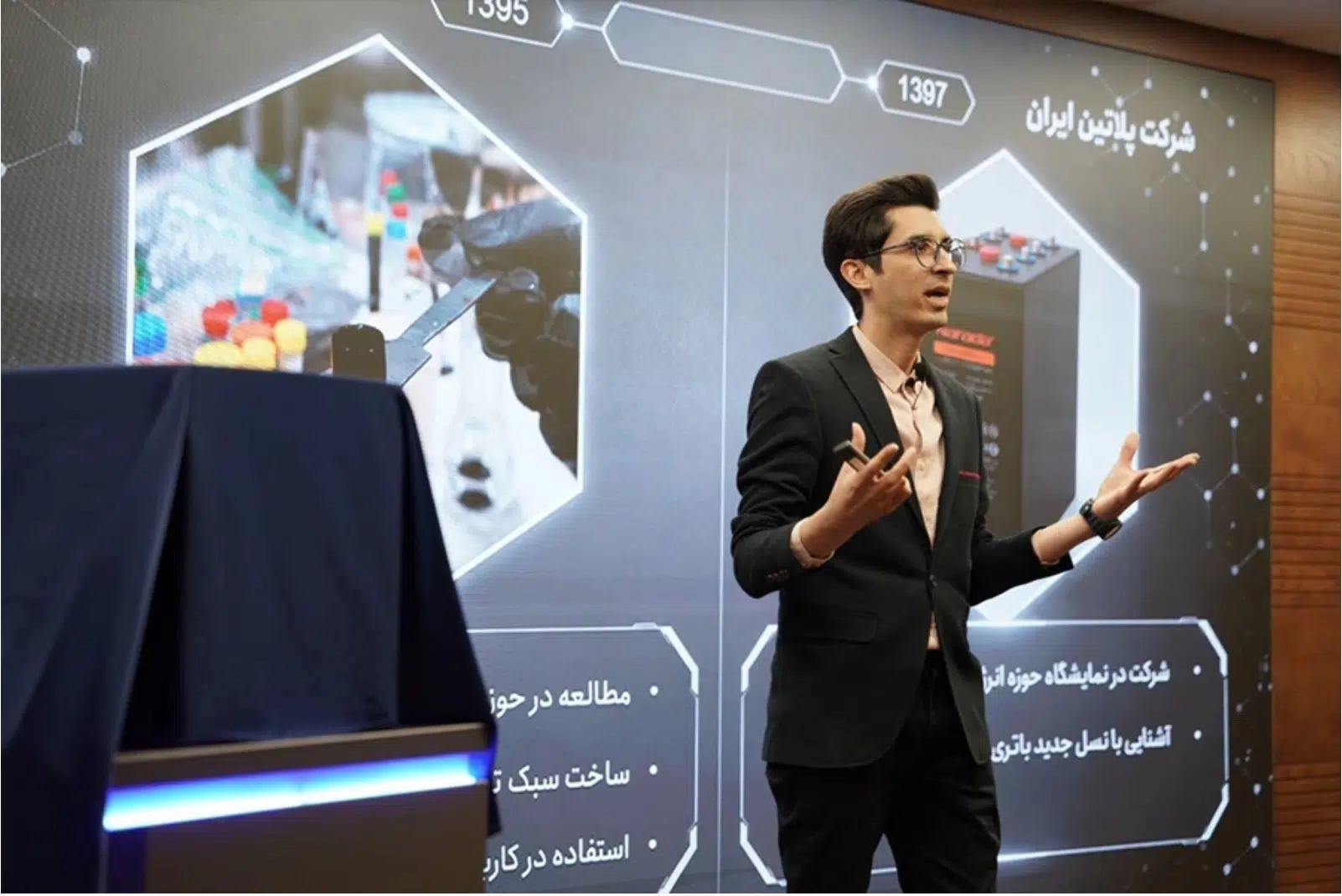


Electric bikes and three-wheelers could offer a lifeline to the lead battery industry as vehicle electrification threatens demand for traditional starter batteries, according to Huw Roberts, director of CHR Metals.
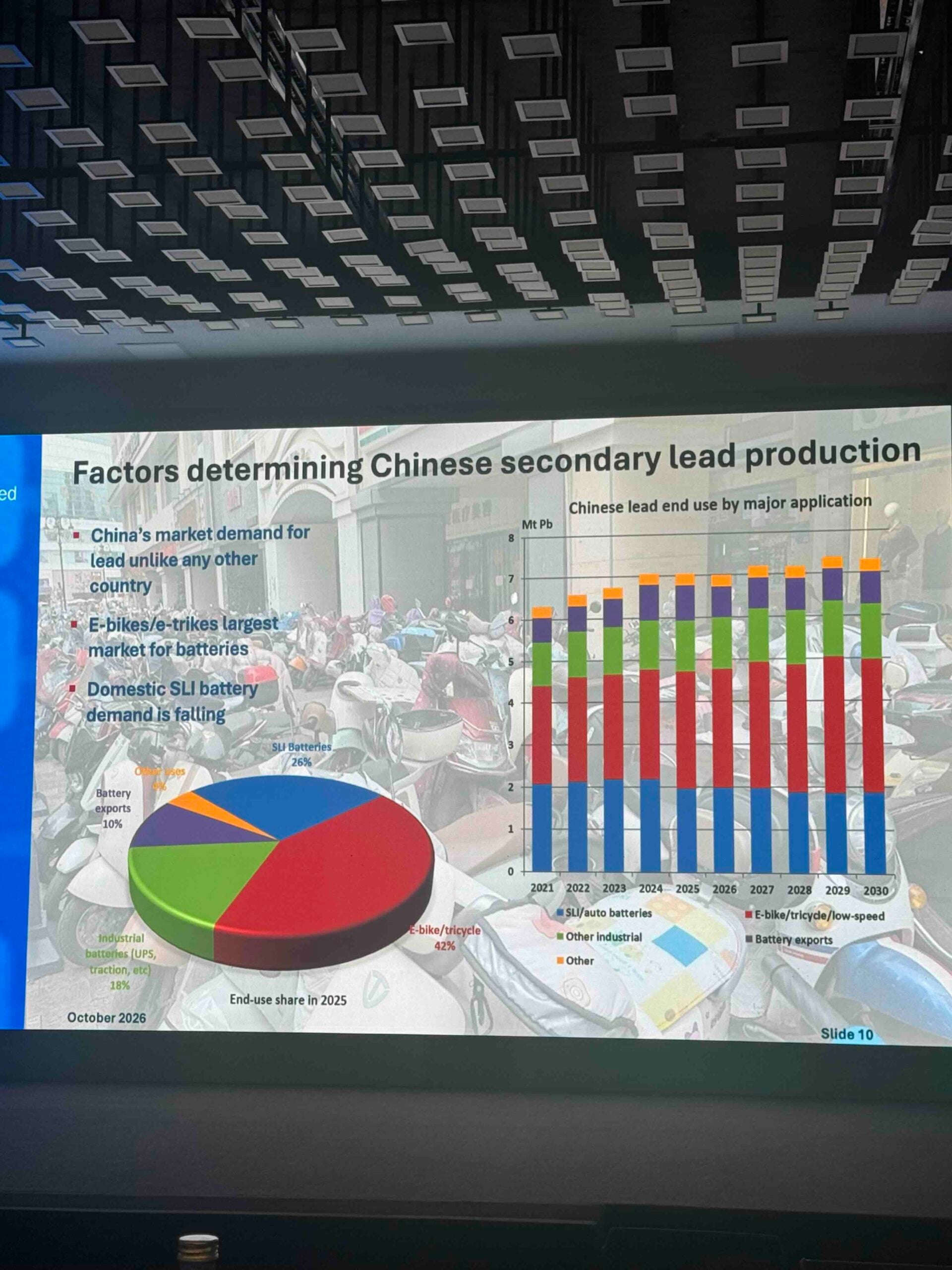
Speaking at the 10th International Secondary Lead Conference in Colombo on October 26, in a presentation on key developments in production and prospects for the next 10 years, Roberts revealed that electric two- and three-wheelers in China alone account for approximately 18% of global lead demand. This is a market he believes has been largely overlooked in discussions about vehicle electrification.
“The market for batteries in China is unlike anywhere else in the world, and that’s because of this thing called an e-bike,” he said.
“Quite remarkably, the lead use in e-bikes and e-trikes in China represents around 18% of global demand for lead, and this is a number which has, in some way, been airbrushed from history.”
Roberts estimates there are around 300 million electric two-wheelers and another 80 million to 90 million electric three-wheelers operating in China, with approximately 85% to 90% still powered by lead batteries rather than lithium.
He questioned why such an enormous market receives comparatively little attention in international reporting on electrification.
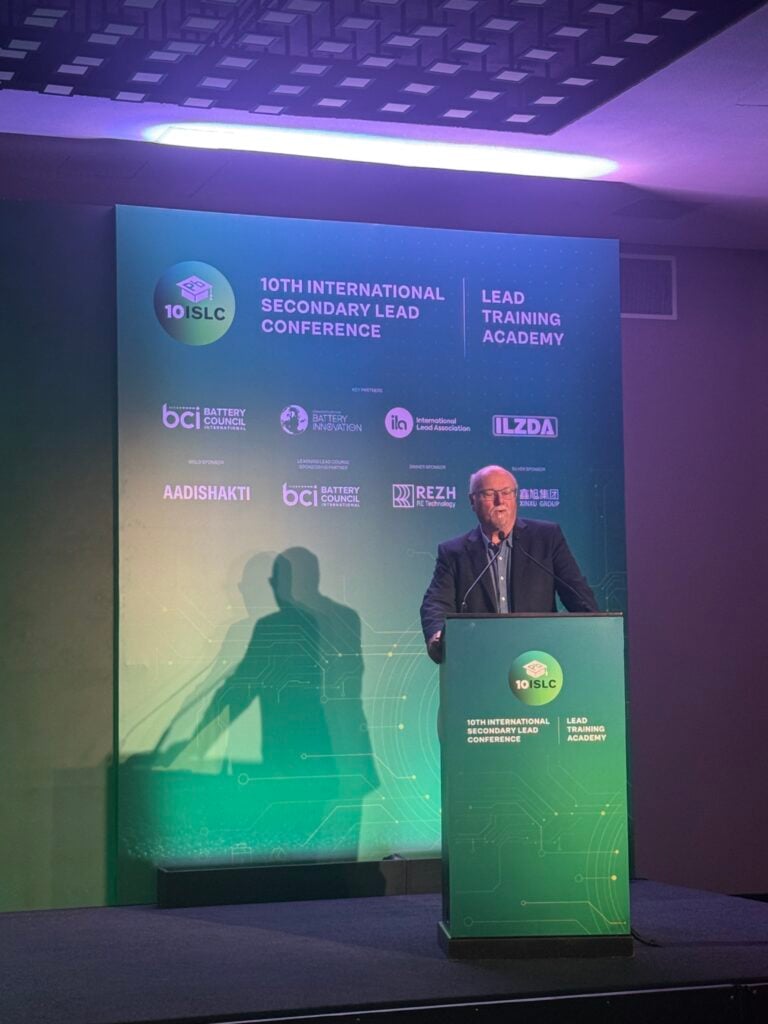
“A year or two ago, I was looking at a report, and I was staggered to see that they really were barely mentioning e-bikes. So I got hold of them, and I said, ‘Look, there’s this huge market that you seem to be ignoring.’“
He said the International Energy Agency’s 2026 report excludes e-bikes with a maximum permitted speed of 25km/h, despite their widespread use in China.
“It’s a strange thing how this huge use of lead is missing from a lot of the official data,” he said.
The implications for the lead battery industry are significant. Most Chinese e-bike batteries last approximately two years, creating an enormous replacement market and a continuous supply of spent batteries for recycling.
And Roberts believes the opportunity could extend far beyond China.”I have argued for a number of years that this has been the potential saviour, really, of the lead battery industry as conventional cars are replaced,” he said.
However, he warned that other markets have been slower to embrace lead batteries for electric mobility.
“We’ve seen a little bit in Indonesia, but the big market is India, and at the moment, the bulk of the two-wheel e-bikes in India are lithium-powered.”
He attributed this largely to government policy, which he said had “dramatically favoured lithium batteries over lead batteries”.
Similar developments are taking place in Africa, where electric motorcycles are increasingly being introduced for deliveries and local taxi services.
“Unfortunately, there again, it seems like lithium is the dominant battery. I don’t think lead’s really even getting a look in at the moment.”
But Roberts believes lead has an important advantage that competing chemistries have yet to match: an established recycling infrastructure.
“When you take your battery back to the battery shop to get a new one, you’re getting a very significant discount now,” he said, contrasting this with lithium batteries, which retailers are often reluctant to accept because they have little residual value.
Nevertheless, he warned that lead’s position in China is not guaranteed.
“The risk is probably not immediately from lithium-ion, but possibly from sodium-ion batteries, which are coming.”
With the traditional automotive SLI market facing long-term decline, China’s vast electric two- and three-wheeler fleet demonstrates that lead batteries could still play a significant role in the transition to electric mobility.
But whether the industry can capitalise on that opportunity beyond China, before competing chemistries establish themselves, remains an open question.