

There are certain, rudimental, questions people already working in the lead industry might sometimes hesitate to ask. What is the difference between melting and smelting? What happens inside a battery breaker? Why does desulphurisation matter? How does the London Metal Exchange connect with the physical metal changing hands? And what, in practice, separates responsible recycling from the informal operations that continue to cause damage?
The 10th International Secondary Lead & Battery Recycling Conference (10ILSC) in Colombo, Sri Lanka, will feature something new: a training academy intended to educate participants on the industry’s many foundations, open its knowledge to a younger generation and give delegates time to ask the questions that conference programmes rarely accommodate. Michael Halls discovers what the inaugural Emerging Leaders Programme has to offer..
For Mark Stevenson, organiser of 10ILSC, the number and range of those questions point to a problem that has been building across the industry. Companies may have people with expertise in one part of the business, but too few are being given a grounding in the whole lead value chain.
Knowledge is picked up piecemeal, over years, from colleagues, plant visits and conversations between conference sessions. Colombo will attempt something more deliberate.
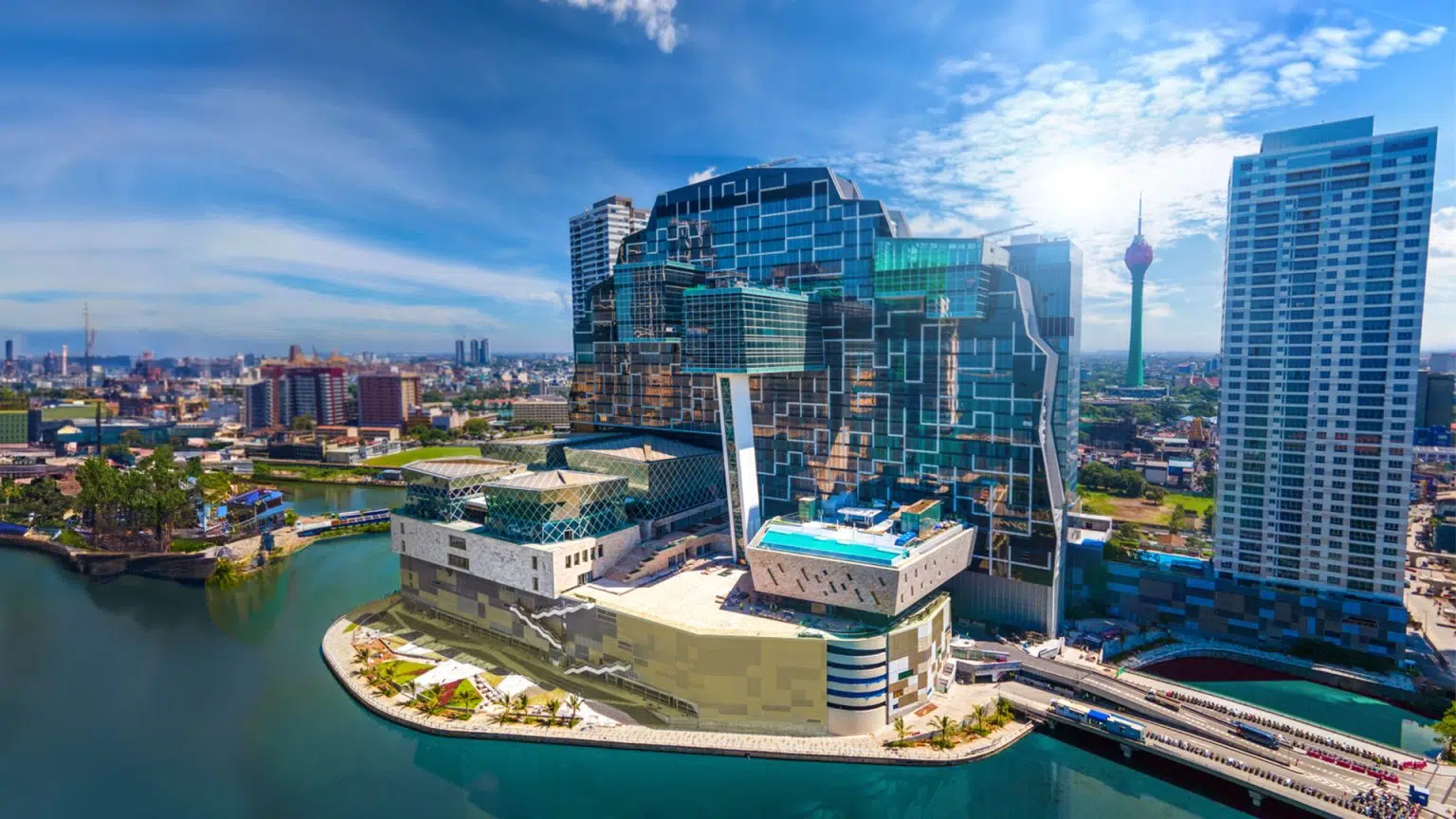
The 10th International Secondary Lead & Battery Recycling Conference takes place at Cinnamon Life at City of Dreams from October 26-27, with an informal reception on the evening of October 25.
At lunchtime on the second day, the conference format will give way to the Lead Training Academy’s Learning Lead Course, which runs through the afternoon of October 27 and all day on October 28.
The combination is central to the concept Stevenson has developed. The conference will examine where secondary lead is heading; the academy will step back and explain how the industry works.
Together they are intended to serve established operators, specialists whose knowledge is concentrated in one field, younger recruits, and people in government, NGOs and public health who need to understand an industry they may encounter through its environmental and social consequences.
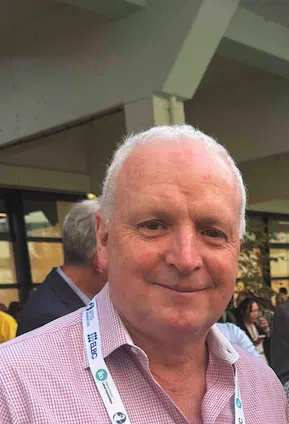
Mark Stevenson: Lead battery industry veteran, chair of the 10ILSC and founder of the Emerging Leaders Programme
“I kept receiving calls from a surprisingly wide range of people about lead,” Stevenson says. “It made me realise that the foundations aren’t there in many cases. People know their own area, but there can be gaps in their understanding of smelting, OH&S, batteries and the wider industry. The academy is an attempt to start filling those gaps.”
That distinction explains the choice of the word academy. Stevenson doesn’t see this as a workshop in which experienced delegates exchange opinions about subjects they understand. It is meant to teach. Several academy sessions have been given 35, 40 or 50 minutes, rather than the 10 or 20-minute slot common at industry meetings, and question periods and panels are built into the programme.
“The lecturers have time to explain themselves; they don’t have to rush,” he says. “This isn’t company-centric and it isn’t a series of sales presentations. If we discuss a battery breaker, the purpose is to explain how a breaker works, not to compare one manufacturer’s machine with another.”
The agenda
The academy begins with a welcome from Battery Council International executive director, Roger Miksad, and then Stevenson will introduce the “life and times of element 82”.
Huw Roberts of CHR Metals will put primary and secondary lead supply and demand into their global perspective; Edric Koh of the LME will explain how the exchange serves the physical market; and João Jorge of the International Lead and Zinc Study Group will show how it builds its statistics and forecasts.
The programme then moves from context to consequences. Steve Binks of the ILA will give a toxicological overview of lead. Randall Reyer of EnerSys and Jim Anderson of Crown Battery will examine ways of reducing workers’ blood-lead levels. Glencore Technology metallurgist Stuart Nicol will discuss the chemistry of secondary smelting, under the title “The Silent Killer”.
On the second day, Ecotech Energy Solutions chief Michael McDonagh will explain how a lead battery is made before Stevenson turns to “life in the furnace”. Daniele Silla of Engitec will cover battery breaking, desulphurisation and crystallisation; Benny Liu of Hunan RE Technology will introduce secondary smelting; and Alberto Bergamaschini of STC will consider recycling-plant design.
The final afternoon. Andreas Manhart of Oeko-Institut will address compliance monitoring and standard operating procedures for environmentally sound management of used lead batteries. Vinay Pathak of 3M will cover respiratory protection. Stevenson and L Pugazhenthy of the India Lead Zinc Development Association will examine waste, slag and informal smelting, while the BCI’s Roger Miksad will introduce Lead Battery 360°, the assurance programme intended to encourage responsible practice across the value chain.
A 45-minute closing panel asks one of the most difficult questions of all: what drives informal collection and smelting?
It is a syllabus for a day and a half, and Stevenson says it can’t cover everything. Subjects such as alloys and the Basel Convention could each consume more time. The ambition for Colombo isn’t to turn every delegate into a metallurgist, environmental manager and commodities analyst, but to provide a framework into which knowledge can fit.
Delegates will receive course notes and information about the lecturers and subject specialists. A glossary is being considered to explain chemical formulae, compounds and the industry’s shorthand.
“There’ll be gaps because we can’t do everything the first time,” Stevenson says. “But we want people to leave with a better understanding of lead, and to know who they can speak to when they need to go further. We want them to tell us what a second course should cover. If this works, a future academy could become a separate two or three-day programme.”
The conference
The conference preceding the academy provides the contemporary setting. Nearly two decades after the first event in Macau in 2009, secondary production now accounts for more than 70% of world lead output and has moved from being treated as an adjunct to primary production to playing a defining role in supply, quality and price.
That growing importance has brought scrutiny as well as opportunity.
Colombo’s conference sessions reflect both. The agenda spans the 2026-2027 market outlook, prospects for the next decade, conditions in India, China, Japan and sub-Saharan Africa, US policy, new technology and responsible sourcing. Trafigura’s Norman Mukwakwami will explain the trader’s approach to refined lead.
Equipment suppliers, recyclers, analysts, manufacturers, trade associations, researchers and NGOs will share the same platform.
That breadth matters because secondary lead’s achievement as a circular industry sits beside a reality. In well-run plants, used batteries can be collected, broken and processed under controlled conditions, with lead, plastics and acid recovered or treated.
Elsewhere, batteries are dismantled and smelted informally — effectively illegally.

Estimates vary but they suggest that between six million and 16.8 million people in low and middle-income countries are exposed to dangerous concentrations of lead around informal battery-recycling operations.
The figure includes workers, their families and neighbouring communities living around as many as 30,000 poorly controlled processing sites.
The total remains uncertain: informal smelting is rarely registered, environmental monitoring is limited and few affected communities have routine access to blood-lead testing.
Stevenson sees a second purpose for the academy: bringing newer people into the industry’s community. Large conferences of 700 or 800 delegates can be intimidating. Younger attendees listen from the edge while longstanding colleagues talk among themselves.
A smaller, education-led meeting offers more scope to approach an expert after a lecture, continue the discussion over dinner or a beer, and ask a basic question without feeling it is wasting anyone’s time.
At the time of our conversation, Stevenson said the Academy had attracted about 120 registrations. For a training course created from scratch, it has been well supported, particularly from the BCI and Roger Miksad. Miksad has worked alongside the conference team to build the academy, including the development of the program.
Longer-term possibilities include recorded lectures and remote learning, although Stevenson wants to see what works in Colombo before promising what comes next.
His immediate aim is to pass on his knowledge accumulated over almost half a century in lead smelting and batteries, and persuade other experienced figures to do the same.
“I wanted to leave something useful to the industry,” he says. “A specialist council might have helped a select few solve problems. Training can reach many more people, especially the young. If we can build their foundations, let them meet the older heads and give them the confidence to ask questions, they’ll become part of the lead community more quickly.”
That may be what makes Colombo special. Delegates will hear the forecasts, policy arguments and technology papers expected of an international conference. But they will be offered something less common: permission to return to first principles, connect the pieces and learn how to ask better questions.
Emerging Leaders Programme
The Emerging Leaders Programme offers incentives to attend. A limited number of registrations are being offered at $850 to those under 30, or under 35 with fewer than five years’ industry experience. Successful applicants receive entry to both the conference and Academy, their technical sessions and networking events, as well as a reduced rate for the 2027 BCI Convention and Power Mart Expo in the US.